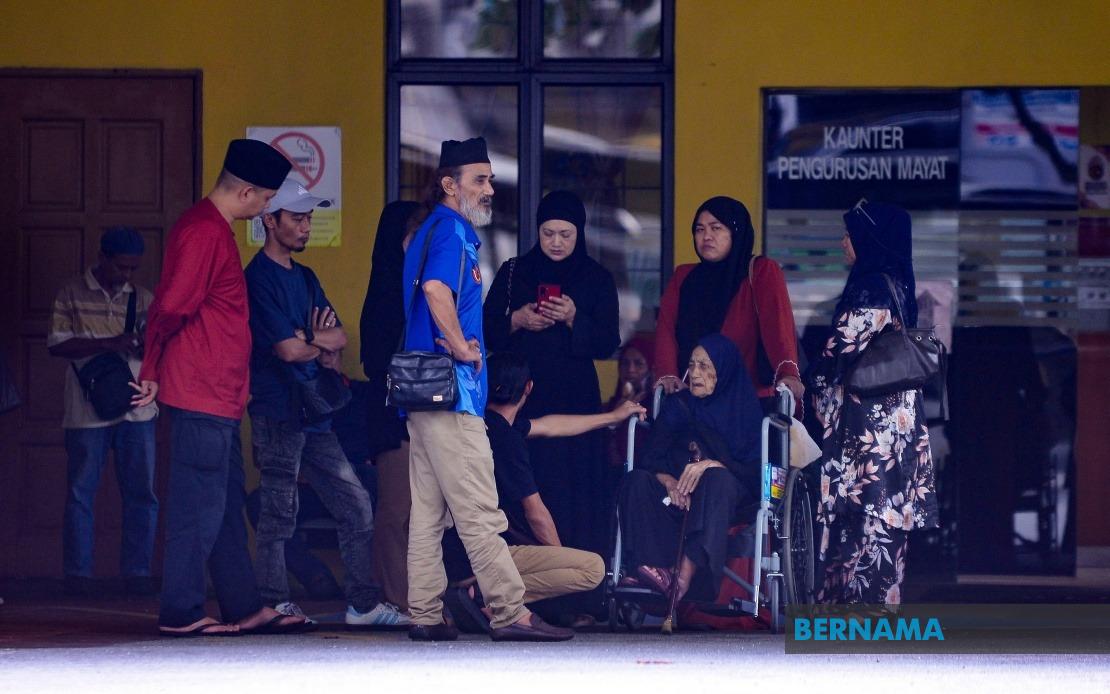
The fatal collision at Maju Junction has triggered fresh demands for transparency from grieving family members, who believe a comprehensive investigation is essential to establish accountability in the incident that claimed three lives in the early morning hours. Mohd Nadzri Razali, aged 69, whose brother-in-law Shaik Mohd Firdaus Shaikh Yahya perished in the crash, is particularly concerned about reports suggesting the Immigration Department's lorry may have breached traffic regulations at the intersection on Jalan Sultan Ismail.
According to Mohd Nadzri, spoken to at his residence in Taman Aman Fasa 2 within the Mambang Di Awam area, he has been informed that the lorry allegedly proceeded through a red traffic signal. "I heard that the light was red for that direction. That is what people are saying," he explained, underlining why he believes justice cannot be achieved without a meticulous examination of the circumstances. His plea reflects the broader anxiety among families affected by road incidents involving official vehicles, where power imbalances can complicate investigations.
The tragedy unfolded around 1 am when an empty Isuzu Black Maria lorry operated by the Malaysian Immigration Department departed from the Immigration Office in Kuala Lumpur, heading towards Chow Kit to conduct enforcement operations targeting undocumented migrants. As the lorry approached and entered the Maju Junction intersection, it allegedly crossed through the red light in its lane despite activating its beacon lights and siren. A Proton Saga, which held a green light and was proceeding straight through the intersection, found itself unable to avoid collision with the larger vehicle. The subsequent impact proved catastrophic, propelling the lorry into an uncontrolled skid that struck down four pedestrians—members of the same family—and an Inokom Matrix multi-purpose vehicle.
Three pedestrians lost their lives at the scene of the collision. Shaik Mohd Firdaus Shaikh Yahya, aged 53, succumbed to injuries sustained in the impact. His two daughters, Siti Nor Sazlin, 25, and Siti Darwisyah Auni, 12, were also fatally injured. Their mother, Norhayati Razali, aged 55, survived but remains hospitalized in critical condition at the Kuala Lumpur Hospital's Intensive Care Unit. The family is considering transferring her to either Hospital Ipoh or Teluk Intan for continued treatment, contingent upon her medical progression and recovery trajectory.
Mohd Nadzri described the emotional toll of losing three family members simultaneously as devastating, particularly when the family had recently experienced another bereavement just three months prior, with a family member passing away on May 30. He recalled that his last encounter with the deceased was approximately two weeks before the crash, when the family had travelled together to Teluk Bakong in Ayer Tawar to maintain and clean the graves of other relatives. The cumulative grief has compounded the family's suffering and underscores the importance of ensuring the investigation addresses all relevant factors.
The family has made arrangements to inter all three deceased in a single grave at the Muslim Cemetery located in Kampung Air Hitam Labu, Kampar, a choice that reflects both cultural tradition and the unified nature of their loss. This decision carries symbolic weight, as it keeps the three family members together even in death and provides a focal point for the bereaved relatives' ongoing mourning and remembrance.
Investigators have initiated proceedings under Section 41(1) of the Road Transport Act 1987, the statutory framework governing road accident cases in Malaysia. This legislative provision allows authorities to examine factors including driver conduct, vehicle maintenance, adherence to traffic regulations, and the circumstances immediately preceding the collision. However, the family's emphasis on transparency suggests concerns that without public scrutiny and detailed disclosure of findings, the investigation might not fully illuminate what transpired or whether systemic issues contributed to the accident.
The incident raises significant questions about emergency vehicle protocols in Malaysia, particularly regarding when and how vehicles with emergency lights and sirens should proceed through intersections controlled by traffic signals. Different jurisdictions maintain different standards; some permit emergency vehicles to proceed under certain circumstances, while others impose strict requirements that they must still yield or clear intersections with extreme caution. Understanding which protocols were applicable and whether they were followed will be crucial to any investigation.
For Malaysian readers, this incident reflects broader concerns about road safety and the accountability of government agencies. When official vehicles are involved in fatal collisions, the need for thorough, independent scrutiny intensifies, as public trust in institutions depends upon visible commitment to justice regardless of which party bears responsibility. The case also highlights the vulnerability of pedestrians at busy intersections and the need for consistent enforcement of traffic regulations that apply uniformly to all road users, including government vehicles.
The tragedy at Maju Junction serves as a stark reminder of how quickly circumstances can deteriorate on Malaysia's roads and the profound consequences for families left behind. Mohd Nadzri's call for transparency resonates with the fundamental expectation that authorities will conduct investigations with integrity and communicate findings openly, ensuring that bereaved families understand what occurred and that lessons are drawn to prevent similar incidents in future.

