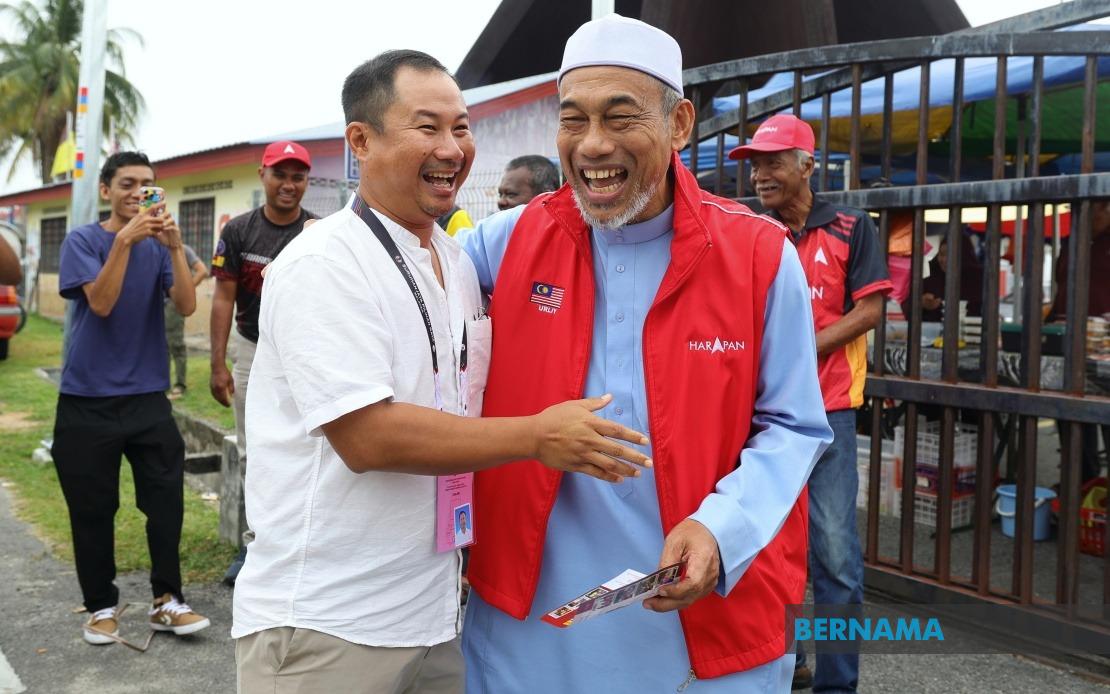
Political contests in Malaysia often pit families against one another, testing both personal relationships and democratic principles. In Negeri Sembilan's Klawang state seat, this dynamic played out on the campaign trail when incumbent Datuk Bakri Sawir of Pakatan Harapan and his cousin Danni Rais of Perikatan Nasional converged at Kuala Klawang weekend market, drawing voter attention while maintaining an unexpectedly cordial atmosphere as the election heated up in its second day.
The coincidental encounter at the market demonstrated how Malaysian electoral politics can navigate family ties without descending into acrimony. Both candidates worked the crowd separately, engaging traders and visitors in their respective pitches, yet the shared family background appeared to temper any confrontational edge. Observers noted moments where the cousins exchanged pleasantries and even humour as they traversed the same marketplace spaces, an apparent acknowledgment that blood relations need not become casualties of electoral competition.
Bakri's approach to the contest reflects a pragmatic philosophy about familial political opposition. When discussing his rivalry with Danni, he characterised it not as a personal struggle but rather as an opportunity to demonstrate service to constituents. This framing elevates the contest from petty competition to a higher civic purpose, suggesting that voters should evaluate candidates on merit and capability rather than fixating on personal dynamics between rivals. His perspective aligns with aspirations for mature democratic discourse in Southeast Asia, where election campaigns can debate substantive issues without degrading into character assassination or family feuding.
The incumbent's emphasis on maintaining electoral rules and standards indicates broader concerns about campaign conduct. When local authorities objected to flag placements on a stadium fence, Bakri's immediate compliance demonstrated willingness to prioritise orderly procedures over political advantage. This stance carries significance for how Malaysian elections function, as candidates who model respect for electoral regulations set expectations for broader campaign standards. His public reminder that political leaders cannot selectively ignore laws and simultaneously demand public obedience underscores an important principle about democratic governance and institutional credibility.
Klawang presents a complex political battleground with 13,355 registered voters determining the outcome. The three-cornered contest adds layers of strategic complexity beyond the familial dimension, with Bersatu's Muhammad Adib Musa offering a third option for constituents. This arrangement means neither Bakri nor Danni can rely on simple binary positioning; instead, they must articulate distinct visions that resonate with voters potentially considering alternatives. Such multi-candidate races often produce more nuanced policy discussions than straight fights, as candidates seek differentiation through substantive platform elements rather than merely attacking primary rivals.
The composition of Klawang's electorate and the participation of these particular candidates reflect Negeri Sembilan's political evolution. Bakri's incumbency carries the typical advantages of name recognition and legislative track record, while Danni represents a challenge from the PN coalition, which has gained traction across Malaysian states through various political realignments. The presence of a Bersatu candidate complicates traditional PH-PN dichotomies, suggesting voters in this constituency face genuinely different options rather than superficial variations on similar platforms.
Campaign dynamics in Malaysian state elections typically intensify as polling approaches, yet the Klawang situation suggests that personal relationships and local social bonds can constrain escalation. The marketplace setting itself—a space of routine commerce and community interaction—may encourage candidates to maintain behaviour standards appropriate for spaces where voters daily encounter one another outside partisan contexts. This environment differs markedly from staged rallies or social media campaigns, where anonymity and distance can embolden harsher rhetoric.
Bakri's specific plea for party machinery to conduct campaigns in orderly, respectful fashion carries particular weight given anxieties about campaign violence and intimidation in Malaysian elections. Party workers, often more zealous than candidates themselves, can transform electoral contests into contentious affairs through aggressive tactics. By publicly calling for discipline among party ranks, Bakri attempts to prevent subordinates from escalating conflict in ways that could damage family relationships or community harmony. This represents a form of leadership that recognises elected officials' responsibility for setting institutional tone.
The Electoral Commission's timeline—early voting on July 28 and general polling on August 1—compresses the campaign period, limiting opportunities for tensions to accumulate. Shorter campaigns can paradoxically promote civility, as candidates lack extended timeframes for escalating rhetoric or manufacturing manufactured controversies. For voters evaluating Klawang candidates, concentrated campaign activity means messaging remains focused on substantive issues rather than diffusing into personal attacks or family drama that might accompany longer contests.
For Malaysian observers assessing democratic health, the Klawang race offers a heartening model of how electoral competition and personal relationships need not prove incompatible. While political rivalry certainly exists between Bakri and Danni, their demonstrated capacity to compete without rancour suggests that Malaysian democracy can accommodate passionate disagreement while maintaining institutional respect. This balance remains essential as the country navigates increasingly polarised national politics, offering constituencies evidence that local-level campaigns can maintain standards that national discourse frequently abandons.
The Klawang contest ultimately tests whether Negeri Sembilan voters prioritise performance in office, policy positions, or other factors when electing state representatives. Bakri's track record as incumbent contrasts with Danni's fresh perspective and PN's alternative coalition positioning, providing genuine choice. The cordial campaign atmosphere they have maintained may allow voters to focus on such substantive distinctions rather than becoming distracted by manufactured personal drama, creating space for the kind of issue-focused electoral discussion that strengthens representative democracy across the region.

