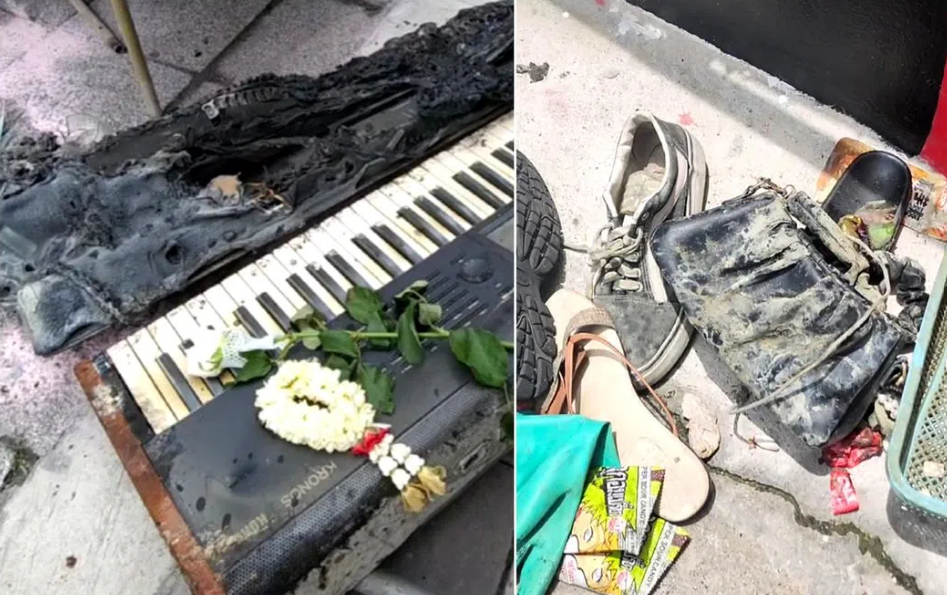
Suwanna Saeteaw's heart sank when she recognised her 25-year-old sister's mobile phone among the salvaged belongings displayed on a television news broadcast. What had been a faint hope—that Jarawee Sermsiri had somehow escaped the inferno that consumed the Rong Beer Na Lat Phrao bar and restaurant near Bangkok's Lat Phrao area shortly before midnight on July 12—crumbled in an instant. When Suwanna dialled the number, a rescue worker answered from the other end, confirming her deepest fears. Across the Thai capital, dozens of anguished families embarked on a grim odyssey through hospitals and forensic centres, scanning survivor lists and morgue registries in a desperate race against time and heartbreak.
The catastrophe represents the deadliest fire to strike Thailand in nearly two decades, surpassing even the infamous Santika club blaze that devastated Bangkok during New Year celebrations in 2009, which claimed 67 lives and left more than 200 injured. The scale of Tuesday's tragedy has reignited intense scrutiny of Thailand's fire safety enforcement mechanisms, particularly the alarming gaps in how regulations are applied to entertainment venues across the kingdom. The bereaved families' anguish underscores not merely a single structural failure but systemic weaknesses that have persisted despite decades of warning signs from previous disasters.
Suwanna's ordeal exemplifies the uncertainty gripping relatives awaiting confirmation of their loved ones' fates. Authorities explained they were collecting DNA samples to assist with identification, but warned the process would take approximately three days—a timeline that feels impossibly long for families suspended in limbo. "I'm heartbroken right now, but I'm still hoping that my sister's alive and receiving treatment at one of the hospitals," Suwanna told journalists on the evening of July 13, her voice wavering between despair and fragile determination. She had already spent hours navigating between different medical facilities, each offering no answers, each moment extending the torment of not knowing.
Investigators beginning their examination of the charred wreckage have focused on several critical safety failures that appear to have transformed the venue into a death trap. Bangkok Governor Chadchart Sittipunt indicated that fire safety officials are now examining whether combustible ceiling materials—suspected to have spread flames with alarming speed—contributed to the rapid conflagration. Emergency exits have become a focal point of investigation, with particular attention to whether exits were obstructed or rendered inaccessible in moments of panic. "The fire spread very quickly, reaching up to the ceiling. Smoke was likely the main cause of death," Chadchart explained to reporters, a stark reminder that invisible danger often claims more lives than visible flames in enclosed spaces.
National Police Chief Kitrat Panphet revealed distressing details about how victims perished, noting that the majority of bodies were discovered in toilet areas, suggesting patrons had sought refuge in the wrong locations as panic overwhelmed rational thinking. One exit door was found obstructed by a shelf, reducing evacuation capacity to single-file passage during a catastrophic emergency when seconds determined survival. The 50-year-old building's electrical systems are now under scrutiny, alongside decorative elements that may have accelerated fire spread. Police also sought to interview the bar's owner, currently hospitalised in intensive care, to understand operational decisions made before the tragedy.
The venue had been officially licensed to operate as a restaurant in a single-storey concrete structure and had passed a routine inspection just three months earlier in April, adding a troubling dimension to questions about inspection adequacy. Governor Chadchart indicated that approximately 300 patrons occupied the space when flames erupted, substantially below the bar's typical nightly capacity of 600 to 700 customers—a silver lining that nonetheless seems darkly meaningless to the bereaved. This detail highlights how Thai safety regulations, even when technically complied with, may not align with the venue's actual operational practices and crowding patterns during peak hours.
Amorn Pimanmas, president of the Thailand Structural Engineers Association, conducted an on-site inspection and identified the bar's critically low ceiling combined with combustible polyurethane foam decorations as catastrophic design flaws. These materials allowed toxic smoke to accumulate with terrifying rapidity, overwhelming occupants before escape routes could be located or accessed. "It's not like we don't have the law. It's the problem of how the law can be strictly enforced," Amorn observed, articulating a central tension plaguing Thailand's safety infrastructure—regulations exist but enforcement remains inconsistent and inadequate across the hospitality sector.
Chaiyo Piwisol, a 30-year-old restaurant worker who had visited the bar on three previous occasions, described an environment that felt inherently unsafe even before the fire. He recalled the space as perpetually cramped and congested, featuring narrow doorways that triggered instinctive unease. "The place had a lot of decorations, lights and other things hanging from the ceiling. I think there should have been stronger safety measures," he reflected, articulating observations that many patrons likely noticed but accepted as normal aspects of Bangkok's entertainment landscape. His retrospective assessment underscores how normalised inadequate safety has become in Thailand's bars and clubs.
Survivor Panathaporn Thongyord, merely 19 years old, managed to escape the inferno but lost a childhood friend in the process. Her account captures the trauma rippling through the survivor community and the unanswered questions that will haunt them indefinitely. "My friend told me, 'Just get out. Don't come back to help me'," Panathaporn recalled, her voice reflecting the impossible choices demanded by catastrophe. "I just want justice for my friend. I want to know why that back door couldn't be opened." These questions—deceptively simple yet profoundly important—point to failures in maintenance, design, and operational responsibility that extend far beyond any single venue.
Prime Minister Anutin Charnvirakul, who visited the fire scene in the immediate aftermath, acknowledged the presence of critical "blind spots" in fire safety protocols, areas where escape routes had not been properly identified or maintained. His warning that "there will be no leniency if any laws have been broken" suggests potential accountability measures, yet enforcement history in Thailand gives limited grounds for confidence. The tragedy has triggered renewed debate about whether existing regulations require strengthening or whether the fundamental problem lies in inconsistent application and inadequate inspection regimes across entertainment venues nationwide.
The Rong Beer Na Lat Phrao fire represents more than a discrete tragedy—it reveals institutional vulnerabilities that have persisted through multiple warnings from previous disasters. Thailand's entertainment sector operates within a regulatory environment where compliance appears fluid, where combustible materials remain commonplace in design schemes, and where emergency procedures are often treated as bureaucratic formalities rather than life-saving infrastructure. For families like Suwanna's, waiting for DNA results while holding photographs of missing loved ones, the systemic failures feel profoundly personal. Their anguish may yet catalyse meaningful reform, or it may fade as Thailand moves toward the next news cycle, the next scandal, the next tragedy that inevitably follows when safety standards remain mere suggestions rather than enforced requirements.

