The Federal Agricultural Marketing Authority's flagship Agro MADANI Sales programme has generated RM46.72 million in revenue during its first five months of operation this year, establishing itself as a significant catalyst for Malaysia's agricultural marketing ecosystem. Between January and May, the initiative organised 1,833 separate sales events across the country, bringing together local farmers, agripreneur ventures, and consumers in a structured marketplace format designed to eliminate traditional supply-chain inefficiencies.
The initiative represents FAMA's strategic push to modernise how Malaysia's agricultural sector connects with consumers. Rather than relying solely on conventional wholesale channels and retail distribution networks, the Agro MADANI approach creates direct transaction opportunities where producers capture more value and shoppers access fresher merchandise at competitive pricing. This dual benefit addresses two persistent challenges in Malaysia's food system: limited profitability for small-scale farmers and persistent consumer complaints about produce freshness and affordability in urban centres.
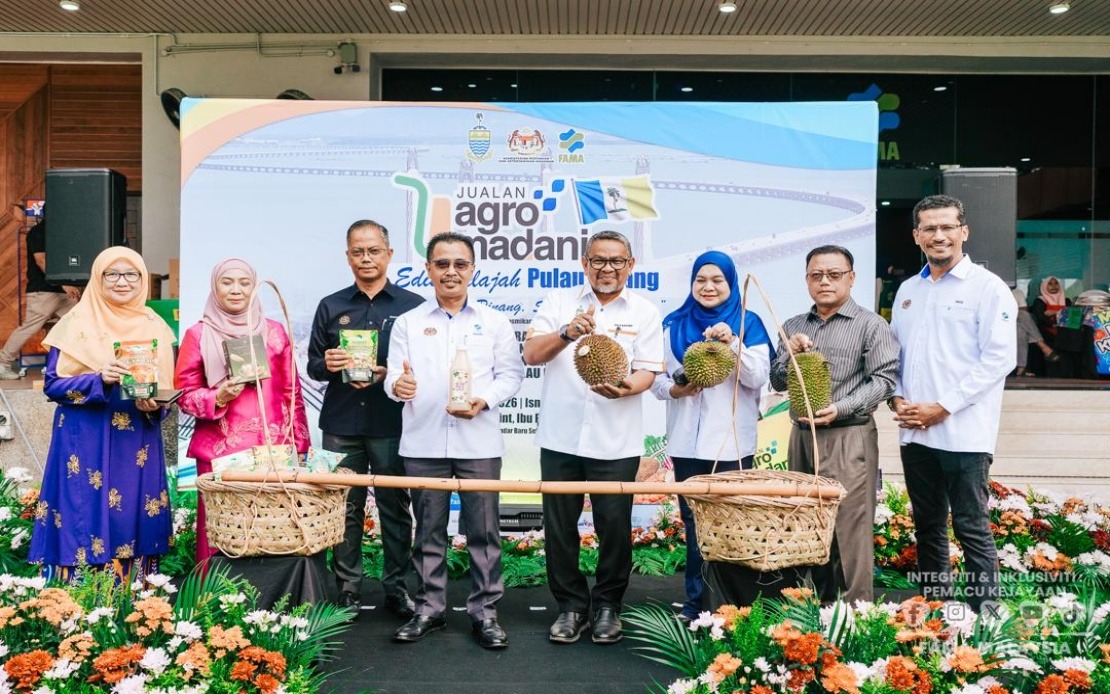
On Monday, FAMA showcased the programme's potential through its Penang edition, held at the agency's Selayang headquarters in collaboration with the Penang state government. The event exemplified how regional partnerships amplify the initiative's reach and effectiveness. Penang's involvement through its Rural Development, Agrotechnology, Food Security and Cooperatives Committee underscores growing state-level recognition that agricultural development requires coordinated effort across multiple government tiers. FAMA director-general Abdul Rashid Bahri and Penang State Economic Planning Division secretary Kamarul Azlan Mustaffa attended, signalling political commitment to sustaining momentum.
The Penang edition demonstrated the programme's capacity to mobilise local entrepreneurial talent. Forty-five individual sales lots accommodated thirty Penang-based vendors offering specialised agri-food products tailored to regional consumer preferences. The event organisers projected 2,000 visitors and targeted RM100,000 in sales, suggesting that smaller, regionally-focused iterations of the main programme generate proportionate economic activity. This scaling approach allows FAMA to expand geographical coverage without overwhelming individual events with excessive vendor numbers or logistical complexity.
A distinguishing feature of the Agro MADANI model is its emphasis on premium local agricultural products. The Penang event prominently featured Balik Pulau premium durians alongside specialist varieties including Black Thorn, Red Prawn, and Hor Lor durians, as well as Cempedak King. These high-value cultivars typically command premium pricing in established retail channels, but direct-to-consumer sales allow producers to capture margins previously absorbed by middlemen. For consumers, the opportunity to purchase directly from growers provides transparency regarding origin, harvesting practices, and freshness—factors increasingly valued in Malaysian urban markets.
The programme's integration with existing entrepreneurship development frameworks strengthens its impact on small business ecosystems. In Penang, FAMA collaborated with the Bumiputera Development Council through a joint entrepreneurship initiative, creating structured support beyond simple market access. This approach recognises that successful agricultural entrepreneurship requires more than occasional sales opportunities; it demands ongoing business development support, market intelligence, and relationship-building with established supply networks. By linking Agro MADANI participation to broader capacity-building programmes, FAMA creates pathways for vendors to graduate toward sustained commercial operations.
Cultural and culinary elements featured prominently in the Penang event's marketing strategy. Alongside fresh agricultural products, visitors encountered iconic Penang food experiences including nasi kandar, Penang laksa, char kuey teow, mee sotong, and air sarbat. This gastronomic dimension transforms commodity-focused markets into experiential events that appeal to broader demographics beyond traditional farmers' market shoppers. For Penang, a state built on strong culinary identity and tourism appeal, this positioning strengthens connections between agricultural production and the state's cultural economy.
The programme's financial trajectory through May suggests accelerating adoption. Generating RM46.72 million across 1,833 events calculates to an average event value of approximately RM25,500, indicating consistency in transaction volumes and vendor participation. Whether this momentum continues through the remainder of the year will signal whether Agro MADANI has achieved structural market penetration or represents a cyclical initiative dependent on sustained promotional effort. Malaysia's agricultural sector watches closely given ongoing concerns about youth participation in farming and rural income sustainability.
For Malaysian consumers, particularly those in urban areas, the Agro MADANI expansion offers growing convenience in accessing direct-from-source products. Urban food inflation and perceptions of supply-chain quality problems have created receptive consumer bases for alternative marketing channels. The RM100,000 sales target for a single Penang event, while modest compared to national totals, reflects genuine demand for direct agricultural purchasing options. Success metrics will ultimately depend on whether participants become repeat customers, suggesting the initiative builds lasting behaviour change rather than one-time event attendance.
The broader regional context makes Malaysia's agricultural modernisation efforts significant for Southeast Asia. As other regional economies grapple with similar supply-chain challenges, agricultural marketing innovation in Malaysia provides instructive models. The Agro MADANI approach—combining governmental coordination, entrepreneurship support, consumer engagement, and cultural integration—offers a replicable framework potentially valuable for Thailand, Vietnam, and Indonesia as they address their own agricultural sector modernisation needs.
FAMA's commitment to expanding the programme reflects government recognition that agricultural development transcends production efficiency alone. Marketing infrastructure, consumer education, and direct-to-consumer accessibility determine whether farmers capture fair value and consumers enjoy quality produce at reasonable prices. The RM46.72 million figure, while substantial in isolation, gains significance as evidence of systematic market transformation rather than peripheral agricultural promotion.

