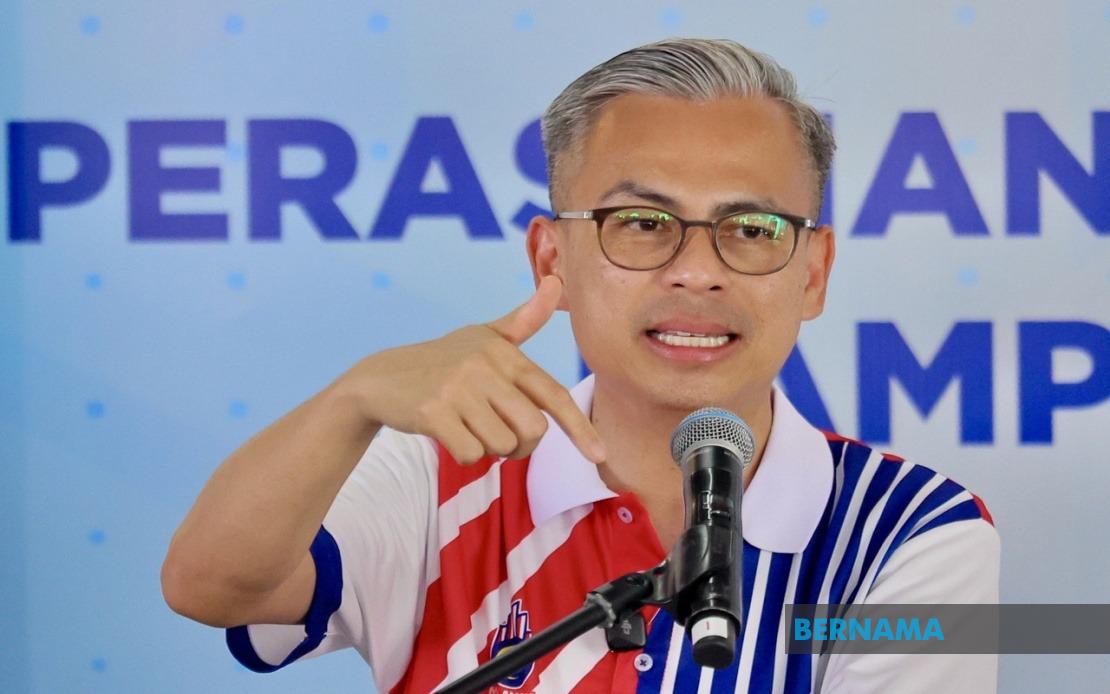
As the Johor state election campaign intensifies, Communications Minister Datuk Fahmi Fadzil has taken aim at unnamed individuals who created a fraudulent WhatsApp account impersonating Pakatan Harapan's Endau candidate, Saiful Nizam Samat. Fahmi's public condemnation, posted in the comments section of Saiful Nizam's official Facebook statement, characterises such conduct as symptomatic of desperation among political operatives willing to cross ethical boundaries in pursuit of electoral victory.
The impersonation scheme represents a troubling escalation in digital disinformation tactics during the Johor campaign. Saiful Nizam released a formal denial confirming he does not operate the WhatsApp account bearing his name and identity, emphasising that the fraudulent channel maintains no affiliation with him or his official campaign apparatus, known as Team SS. In his statement, Saiful Nizam articulated concern about the potential for public manipulation through the fake account, which had been actively soliciting constituents for campaign engagement purposes.
The fraudulent account employed Saiful Nizam's profile photograph and presented itself under a slightly altered name—"Saiful Samad"—suggesting either careless execution or deliberate obfuscation. Screenshots of conversations circulating on social media revealed the account actively claiming to represent the candidate as the purported future assemblyman for Endau, thereby lending false legitimacy to its communications. This distinction between "Saiful Nizam" and "Saiful Samad" points to a degree of sophistication in the deception, potentially designed to create plausible deniability for the account's operators.
Saiful Nizam's response extended practical guidance to voters navigating the digital landscape during the election period. He cautioned the public against sharing sensitive personal information with unverified digital contacts and encouraged constituents to verify any suspicious communications through Team SS's legitimate channels. This advisory reflects growing awareness among candidates that voters themselves have become targets of information manipulation tactics, with scammers potentially harvesting data or spreading misleading campaign narratives under the guise of official communication.
Fahmi's intervention carries particular weight given his portfolio as Communications Minister, a position that positions him as the government's public face on digital governance and information integrity issues. His characterisation of the perpetrators as willing to "do anything to win" suggests this incident exemplifies broader concerns within the ruling coalition about the standards and boundaries observed during electoral contests. The minister's willingness to comment publicly on an individual race underscores how digital impersonation has become a sufficiently widespread phenomenon to warrant intervention from high-level government figures.
The Endau state seat competition encompasses four distinct political contenders representing Barisan Nasional, Pakatan Harapan, Perikatan Nasional, and Parti Orang Asli Malaysia, creating a fragmented electoral battlefield where digital manipulation might prove particularly effective in influencing uncertain voters. In multi-cornered contests, small shifts in voter perception driven by disinformation can meaningfully alter outcomes, particularly in constituencies with tight margins. The deployment of impersonation tactics in such an environment suggests recognition among certain operatives that traditional campaigning approaches may prove insufficient.
This incident reflects a pattern increasingly evident across Malaysian politics, where digital platforms have become contested terrain during election cycles. Previous campaigns have witnessed similar episodes involving fake social media accounts, deepfakes, and coordinated messaging campaigns designed to shape electoral perceptions. The persistence of such tactics despite growing public awareness indicates that political actors continue calculating that the potential benefits outweigh reputational and legal risks, particularly if perpetrators remain unidentified.
The broader implications extend beyond Johor's immediate electoral contest. As digital communication channels proliferate and voter reliance on online information intensifies, the vulnerability to impersonation and disinformation expands correspondingly. Malaysian voters navigating the information ecosystem must increasingly develop critical evaluation skills to distinguish authentic candidate communications from fabricated ones. The burden of verification increasingly falls on citizens themselves, as platform moderation remains imperfect and attribution of fake accounts often proves difficult.
Authentication mechanisms on messaging platforms present ongoing vulnerabilities that bad actors continue exploiting. WhatsApp's verification features, while available, remain underutilised by many users, creating gaps that impersonators can exploit. Saiful Nizam's decision to direct constituents toward Team SS's official channels rather than relying on social media verification represents a pragmatic response to these platform limitations, essentially advising voters to revert to more traditional verification methods for election-related communications.
The incident also raises questions about accountability and enforcement in the digital political sphere. Without clear attribution of the fake account's creators, disciplinary or legal responses remain elusive. While Malaysian law provides frameworks for addressing electoral fraud and impersonation, prosecuting digital offences presents investigative challenges that often exceed resources available to relevant authorities, leaving such cases frequently unresolved and perpetrators unpunished.

