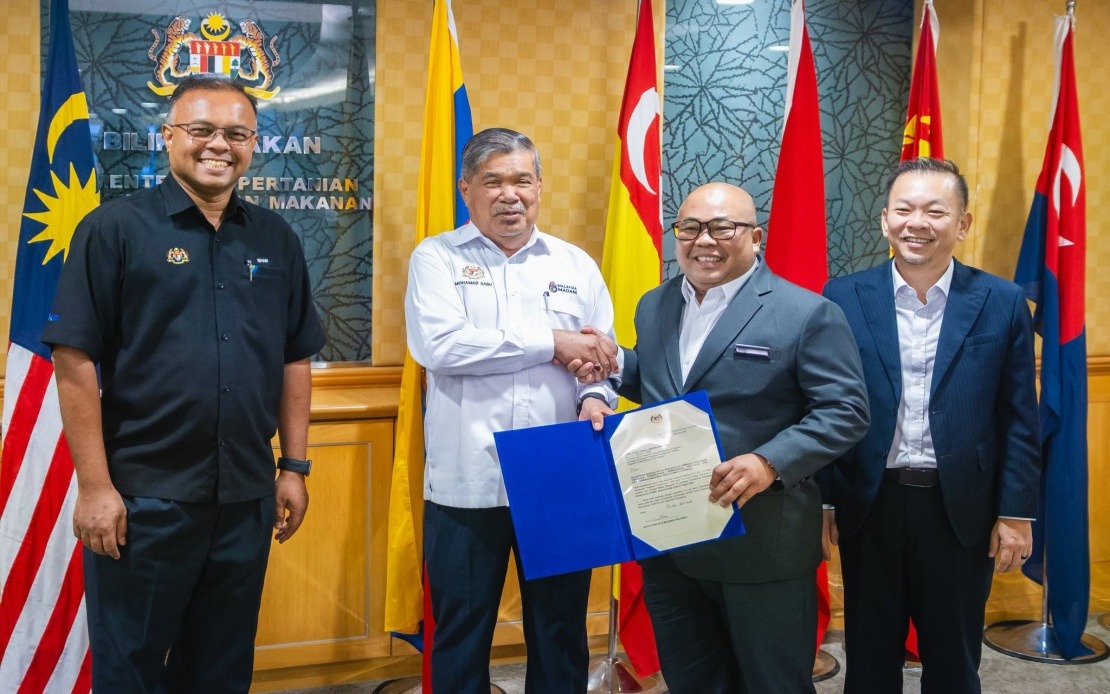
Faisal Iswardi Ismail has been elevated to the position of director-general at the Federal Agricultural Marketing Authority (FAMA), with his appointment taking effect from August 1. The official appointment letter was handed over by Agriculture and Food Security Minister Datuk Seri Mohamad Sabu on August 5, during a presentation ceremony held following the Cabinet meeting in Kuala Lumpur. The move marks a significant internal promotion within the agency's leadership structure, positioning Faisal to oversee FAMA's strategic direction in a critical period for Malaysia's agricultural sector.
Prior to his promotion, Faisal Iswardi served as deputy director-general responsible for food security and operations, where he gained direct exposure to the agency's operational challenges and market dynamics. His advancement reflects confidence in his ability to lead the organisation through an increasingly complex agricultural landscape marked by supply chain pressures and evolving consumer demands. The appointment represents continuity in leadership while bringing fresh perspectives from someone who has worked closely within FAMA's institutional framework.
In his formal remarks, Minister Mohamad Sabu acknowledged the significant responsibilities that accompany the director-general role. He emphasised that the trust invested in FAISAL and the broader FAMA organisation remains substantial, given the agency's pivotal function within Malaysia's agricultural ecosystem. The minister's comments underscore the government's commitment to elevating the profile and efficacy of domestic agricultural marketing operations at a time when food security concerns have become increasingly prominent across Southeast Asia.
FAMA's mandate extends across multiple critical functions that directly influence the livelihoods of hundreds of thousands of farmers and agribusiness operators throughout the country. The agency serves as the nexus between primary producers and end consumers, coordinating the marketing and distribution of local agricultural products while working to establish fair pricing mechanisms and reduce middlemen inefficiencies. Under Faisal's stewardship, these responsibilities will demand careful navigation of competing pressures from various stakeholder groups, including smallholder farmers, commercial agricultural enterprises, retailers, and food security advocates.
The strengthening of domestic food supply chains has become a matter of strategic national importance, particularly as global supply disruptions have demonstrated the vulnerabilities inherent in over-reliance on imported foodstuffs. Malaysia imports roughly 70 percent of its food requirements, a dependency that leaves the nation exposed to international price volatility and geopolitical supply shocks. FAMA's enhanced focus under new leadership could contribute meaningfully to reducing this import burden through improved domestic production efficiency and market access for local farmers, thereby enhancing overall economic resilience.
Increasing farmer incomes represents another central pillar of FAMA's institutional purpose, and this objective carries substantial political and economic weight. Rural agricultural communities continue to face structural challenges including land fragmentation, limited access to modern farming technologies, and difficulty securing premium prices for their produce. By optimising marketing channels and reducing post-harvest losses, FAMA can help translate improved productivity gains directly into improved household incomes for farming families, which remains essential for maintaining rural economic viability and stemming agricultural sector decline.
The agricultural sector's health extends beyond purely economic metrics to encompass food sovereignty, employment stability, and regional development equity. As urbanisation continues to accelerate and younger generations migrate away from agricultural pursuits, maintaining the attractiveness of farming as a livelihood option becomes increasingly challenging. Faisal's appointment therefore arrives at a juncture where FAMA's marketing and support functions could prove instrumental in making agricultural enterprises more commercially competitive and professionally rewarding, thereby contributing to the sector's longer-term sustainability.
Minister Mohamad Sabu's blessing for the appointment carried implicit recognition that agricultural development requires sustained institutional commitment and strategic coherence. The manner of the announcement, through formal presentation of appointment documentation following Cabinet deliberations, signals that FAMA's leadership carries weight within Malaysia's governance hierarchy. This positioning may facilitate greater resource allocation and inter-agency cooperation for initiatives addressing agricultural productivity and food system resilience.
For Malaysian agribusiness stakeholders and farming communities, Faisal's appointment presents both opportunities and expectations. The transition period will be closely monitored for signals regarding any shifts in FAMA's operational priorities, procurement policies, or sector engagement approaches. Market participants and industry associations will likely seek to establish productive relationships with the new leadership, viewing the directorship change as a potential juncture for advocating policy adjustments or resource reallocations. Faisal's previous operational experience suggests he brings working knowledge of FAMA's institutional constraints and stakeholder relationships, potentially enabling more rapid implementation of any strategic reorientation he deems necessary.

