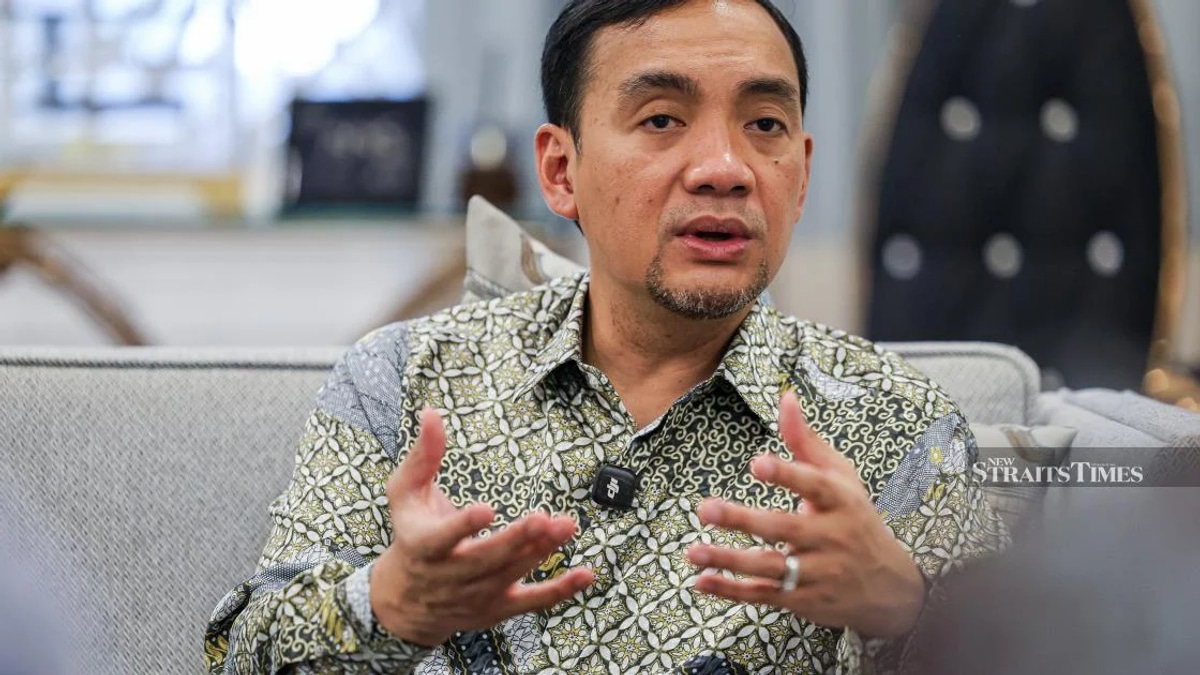
Communications Minister Fahmi Fadzil has reframed the political landscape shifting around Pakatan Harapan, arguing that newly formed parties should serve as catalysts for renewed energy rather than signals of decline. Speaking in Kota Baru, Fahmi suggested that the ruling coalition ought to leverage the competitive pressure to strengthen its grassroots machinery and reinvigorate connections with voters in the lead-up to forthcoming state-level elections.
The emergence of splinter groups and fresh political movements across Malaysia has created a more fragmented electoral environment, particularly in states where Pakatan Harapan holds or seeks power. Rather than viewing such entrants as threatening vote-splitting competitors, Fahmi's intervention reframes the challenge as an opportunity for the coalition to prove its organisational strength and appeal at the community level. This perspective reflects a confidence—or perhaps a necessity—that the coalition must project amid uncertainty about voter loyalty as the political marketplace becomes increasingly crowded.
Pakatan Harapan's performance since winning the 2022 general election has generated mixed public sentiment. The coalition's governance record has come under scrutiny, with some voters questioning the pace of reforms and the effectiveness of government policies. New parties capitalising on discontent or offering alternative visions have gained media attention, particularly among younger voters and those in specific demographic groups. Fahmi's call for the coalition to sharpen its ground game suggests internal recognition that simply holding office is insufficient to retain electoral dominance.
The timing of such remarks is significant given that several state elections lie ahead in Malaysia's political calendar. Kelantan, governed by PAS, and Terengganu, also under Islamic governance, are not coalition strongholds, but other states represent key battlegrounds. In these contests, the ability to mobilise voters, articulate a compelling vision, and address local concerns through robust on-ground presence often determines outcomes. Fahmi's emphasis on grassroots effort underscores that digital campaigning and top-level messaging alone cannot substitute for street-level political work.
The coalition faces particular challenges in maintaining cohesion among its component parties—Anwar Ibrahim's PKR, DAP, and Amanah—each with distinct constituencies and regional power bases. New entrants, some formed by dissidents from existing parties or former politicians, threaten to splinter the coalition's voter base. Fahmi's framing attempts to redirect coalition energy inward, toward strengthening rather than competing. This suggests a recognition that internal unity and committed voter engagement will determine electoral fortunes more than merely dismissing newcomers as irrelevant.
Contextually, Malaysia's political environment has shifted dramatically since 2020. The rise of Perikatan Nasional as a credible governing alternative, the departure of Mahathir and his faction from mainstream coalitions, and the formation of smaller parties with specific ideological or communal appeals have permanently altered the competitive landscape. Voters today have more choices than in previous decades, reducing the likelihood of any single coalition dominating through default. This structural change means that parties must actively earn support rather than assume loyalty based on historical voting patterns.
Fahmi's remarks also carry implications for how Pakatan Harapan communicates its narrative. Rather than adopting a defensive posture against new competitors, positioning these parties as motivating forces frames the coalition as confident and forward-thinking. This rhetorical approach can help counter perceptions of complacency that sometimes attach to governing coalitions, particularly those that include long-established parties. By acknowledging that external pressure spurs internal improvement, Fahmi implicitly validates voter agency and the health of democratic competition itself.
For Southeast Asian observers, Fahmi's statement reflects broader regional trends where traditional party structures face erosion from new movements and splinter groups. Thailand, Indonesia, and the Philippines have all experienced dramatic realignments driven by new entrants challenging incumbent coalitions. Malaysia's coalition politics, which have defined the country since independence, are not immune to such forces. The ability of Pakatan Harapan to adapt, strengthen internal processes, and articulate relevant policy responses will substantially influence whether it remains dominant or faces significant electoral reversal in coming state contests.
The immediate test of Fahmi's philosophy will come as state election campaigns intensify. Whether Pakatan Harapan translates this stated commitment to enhanced grassroots engagement into tangible improvements in voter outreach, issue-responsiveness, and local leadership development remains to be seen. The coalition's performance at the ballot box will ultimately indicate whether the energy and resources directed toward ground-level work prove sufficient to withstand competition from both established rivals and emerging political newcomers.
Looking ahead, Fahmi's comments signal that Pakatan Harapan's leadership views competitive pressure not as a terminal challenge but as a normalisation of Malaysian politics into a more open, multi-polar system. Whether this optimism proves justified will depend on whether the coalition can execute a genuinely reinvigorated campaign strategy and whether its messaging resonates with voters in an increasingly pluralistic political marketplace.