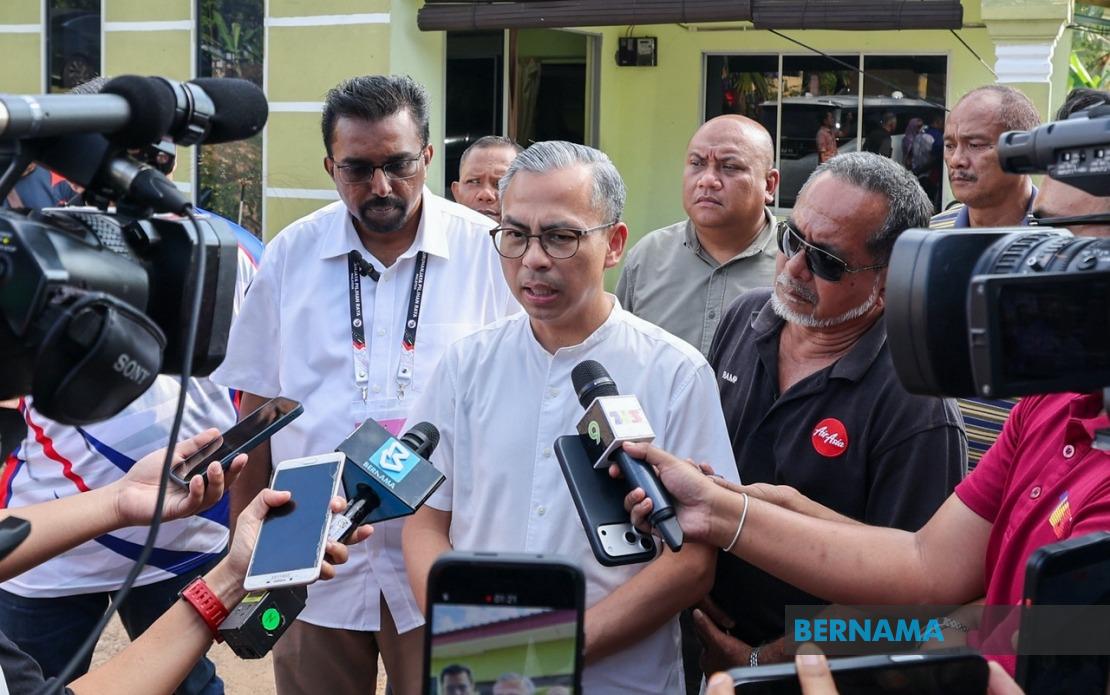
The government has signalled its commitment to opening the findings of the Royal Commission of Inquiry into Tabung Haji to public scrutiny, with senior cabinet ministers now actively advocating for swift disclosure of the final report. Communications Minister Datuk Seri Fahmi Fadzil has become the latest senior official to publicly champion the release of the inquiry's conclusions, arguing that transparency serves the interests of both individual depositors and the broader Malaysian public.
Fahmi's remarks, made during a campaign stop at Felda Palong 1 in Jempol, underscore growing momentum within government circles to move beyond confidentiality regarding the RCI's investigation into the hajj savings institution. The minister framed the disclosure as essential for citizens to develop informed understanding of the historical events and decisions that prompted the inquiry, which examined allegations centred on Tabung Haji's disposal of significant strategic assets. His comments reflect a broader policy orientation within the current administration toward accountability and public information access.
The push for transparency carries particular significance for Tabung Haji's substantial contributor base, which comprises millions of Malaysian Muslims who have entrusted their savings to the institution for pilgrimage and other purposes. For many depositors, access to the full RCI findings represents an opportunity to understand precisely what transpired during the period under investigation and the systemic failures or governance lapses that may have occurred. This matters considerably in a context where public confidence in major state-linked institutions directly influences savings patterns and long-term financial planning among ordinary Malaysians.
Prime Minister Datuk Seri Anwar Ibrahim has similarly endorsed the disclosure approach, indicating that the government stands ready to make the report accessible once appropriate protocols are observed. Anwar signalled that he would engage Chief Secretary to the Government Tan Sri Shamsul Azri Abu Bakar regarding the publication decision, suggesting a collaborative approval process across senior government machinery. The Prime Minister indicated expectations that the report would reach public domain no later than the Wednesday following his initial statement, establishing a concrete timeline for release rather than indefinite deferral.
The RCI's investigation examined complex allegations touching on asset sales, financial management practices, and governance decisions spanning a significant period. The inquiry's scope suggests extensive documentation and analysis of institutional decision-making processes at Tabung Haji. Public release would expose these detailed findings to expert analysis, media scrutiny, and broader public discourse, potentially generating valuable lessons regarding institutional oversight, fiduciary responsibilities, and regulatory frameworks applicable to similar entities across Malaysia's sovereign wealth and savings infrastructure.
Fahmi's invocation of transparency principles resonates within contemporary Malaysian political discourse, where demands for institutional accountability have intensified across multiple sectors. The minister specifically highlighted that Tabung Haji currently operates from a substantially improved position compared to the period examined by the RCI, suggesting that current management has implemented corrective measures. This framing attempts to reconcile transparency regarding historical difficulties with confidence in present institutional functioning—an important distinction for depositors concerned about current asset security.
The sequential statements from Anwar and Fahmi indicate coordinated messaging within the government hierarchy, with both the Prime Minister and Communications Minister advancing consistent public positions on disclosure. This coherence suggests the decision to release the report has moved beyond preliminary discussion toward settled government policy. The involvement of the Chief Secretary in final approval processes indicates awareness that document release involves consultation across major government agencies and potential coordination with other entities whose operations or decisions might be implicated in the RCI's findings.
For Malaysian media and civil society observers, the forthcoming report release represents a significant test case regarding how the government handles transparency regarding major state institutions. The Tabung Haji inquiry is sufficiently high-profile that widespread public interest will almost certainly accompany its disclosure, generating extensive media coverage and public commentary. The government's willingness to release potentially unflattering findings about institutional management during a previous period may influence public expectations regarding transparency in other sensitive institutional inquiries.
The timing and manner of disclosure will carry implications beyond immediate public understanding of Tabung Haji's specific circumstances. International observers monitoring Malaysian governance standards, transparency practices, and institutional accountability may view the RCI report release as indicative of broader government commitment to openness. Equally, domestic stakeholders evaluating government credibility and institutional reform efforts will assess whether the disclosed findings acknowledge systemic failures substantively or present developments in language that minimises accountability.
The prospect of public access to detailed RCI findings should prompt Tabung Haji management to prepare comprehensive communications addressing both the historical issues identified in the inquiry and the concrete measures implemented to prevent recurrence. Such proactive engagement can shape public interpretation of the report's disclosures and reinforce confidence in institutional transformation. The report itself will likely become subject to extensive analysis by financial sector analysts, governance experts, and political commentators, each interpreting its findings through distinct analytical frameworks.
As the scheduled release date approaches, attention will focus on whether the government adheres to its stated timeline and whether the disclosed report receives unredacted publication or undergoes selective editing. The completeness and accessibility of the document will determine the depth of public understanding possible. Malaysian depositors and contributing members of Tabung Haji will scrutinise the findings particularly closely, seeking clarity regarding the treatment of institutional assets and the protective frameworks now governing their savings.

