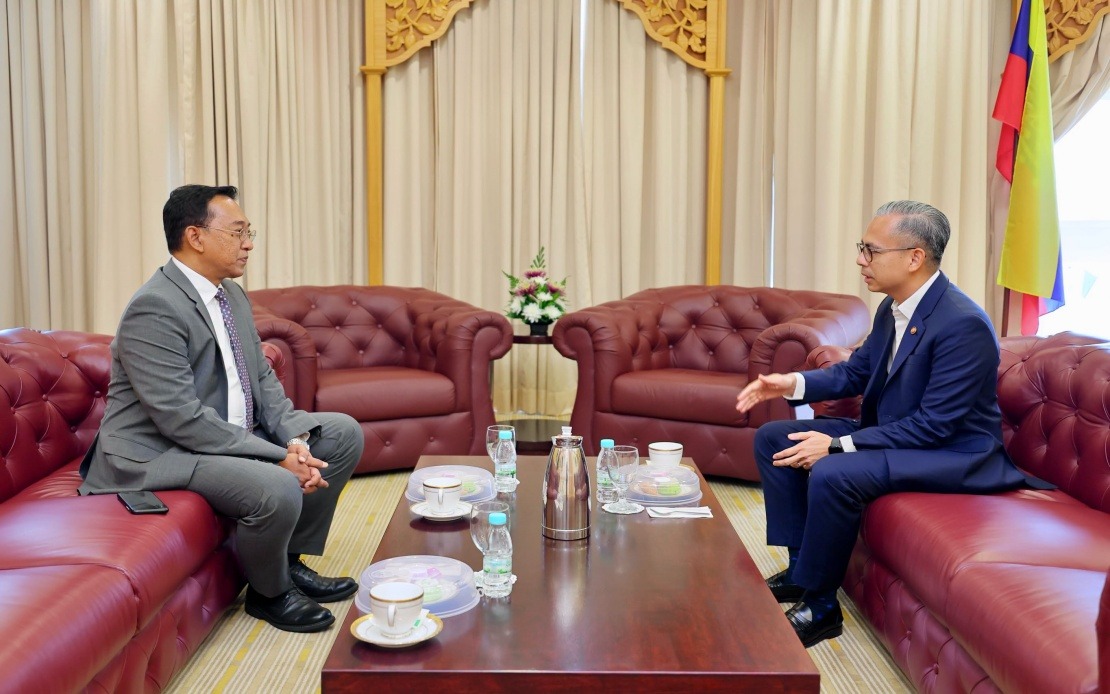
Malaysia's Communications Minister Datuk Fahmi Fadzil has met with the country's freshly appointed Ambassador to Lebanon, Anwar Udzir, in a courtesy call aimed at bolstering institutional ties and reviewing the diplomatic landscape affecting Malaysian interests overseas. The encounter, which took place in Kuala Lumpur on July 1, underscores the government's commitment to maintaining active engagement with its envoys across key regions, particularly in the Middle East where Lebanon holds strategic importance for Malaysian commerce, security coordination, and humanitarian initiatives.
Anwar Udzir formally received his letters of appointment from His Majesty Sultan Ibrahim, King of Malaysia, on May 18, 2026, marking the beginning of his tenure as head of Malaysia's mission in Beirut. His appointment reflects the government's priority in maintaining robust representation in Lebanon, a country navigating complex geopolitical dynamics and serving as a hub for Malaysian expatriates, businesses, and diplomatic activities throughout the Levantine region. The ambassador's posting comes at a time when regional stability and Malaysia's multilateral engagement require careful attention and sustained high-level contact.
During their discussion, Fahmi and Udzir exchanged perspectives on current developments affecting Malaysia's standing and interests at the international level, with particular attention to how Malaysia can strengthen its presence and advance its strategic objectives through Lebanon and the broader Middle Eastern theatre. The minister emphasized the importance of robust working relationships between his ministry and the diplomatic corps, recognizing that effective communication channels between government headquarters in Kuala Lumpur and missions abroad are essential for coordinating policy responses to emerging challenges and opportunities.
Fahmi's public endorsement of Udzir's appointment, shared via a Facebook post, conveyed confidence in the ambassador's ability to represent Malaysia's interests effectively in Lebanon. The minister expressed optimism about Udzir's capacity to navigate the complexities of Lebanese politics and international relations while upholding Malaysia's diplomatic standing and advancing bilateral cooperation in areas ranging from trade and investment to cultural and educational exchanges. Such formal acknowledgment from a senior cabinet minister signals organizational support and sets a positive tone for the ambassador's engagement with Lebanese counterparts and the international community in Beirut.
The foundation of their professional relationship, Fahmi noted, traces back to collaborative efforts during the Asia-Pacific Telecommunity Ministerial Meeting held in Tokyo, Japan, the previous year. That experience provided both officials with firsthand exposure to each other's working style and professional standards, creating a basis of familiarity and mutual understanding that facilitates more productive engagement. The minister's recollection of this prior interaction underscores how international forums and multilateral mechanisms create networks through which government officials develop working relationships that serve the broader interests of their respective nations.
Lebanon occupies a complex position in Malaysia's Middle Eastern diplomacy, serving as both a challenge and an opportunity for Malaysian engagement. The country's chronic political instability, economic difficulties, and regional proxy conflicts create a demanding environment for diplomatic work, yet Malaysia maintains significant interests in Lebanon including the presence of Malaysian expatriates, business communities, and cultural institutions. The ambassador's role involves not only traditional diplomatic functions but also protective oversight of Malaysian citizens and advancement of economic partnerships amid volatile circumstances.
The courtesy call protocol exemplified by Fahmi's meeting with Udzir reflects established diplomatic practices whereby newly posted ambassadors pay formal respect to senior government officials in their home capital before departing for their postings. This ritualistic dimension of international relations, though sometimes dismissed as ceremonial, actually serves substantive purposes by facilitating direct communication between political decision-makers and field representatives, allowing ministers to convey priorities and expectations while ambassadors gain insight into policy frameworks guiding their missions.
For Malaysian readers and observers of foreign policy, this meeting illustrates the government's structured approach to managing its diplomatic network and maintaining coherent international engagement. The Communications Ministry's involvement in hosting such courtesy calls, while primarily a matter of protocol, also reflects the ministry's broader coordination role in ensuring that Malaysia's messaging and policy positions remain consistent across multiple governmental agencies and overseas missions. In an increasingly interconnected world, such coordination becomes essential for projecting a unified national position.
Looking forward, Udzir's tenure in Lebanon will test his diplomatic acumen in managing Malaysia's interests within a country facing severe economic challenges, political fragmentation, and humanitarian crises. His success in this posting will depend partly on the support provided by ministries like Communications and Foreign Affairs in Kuala Lumpur, as well as his ability to build relationships with Lebanese officials and navigate the complex web of regional actors operating within Lebanon. The foundational meeting with Fahmi represents just the beginning of what will be an intensive diplomatic engagement requiring sustained attention and strategic thinking throughout his ambassadorial service.

