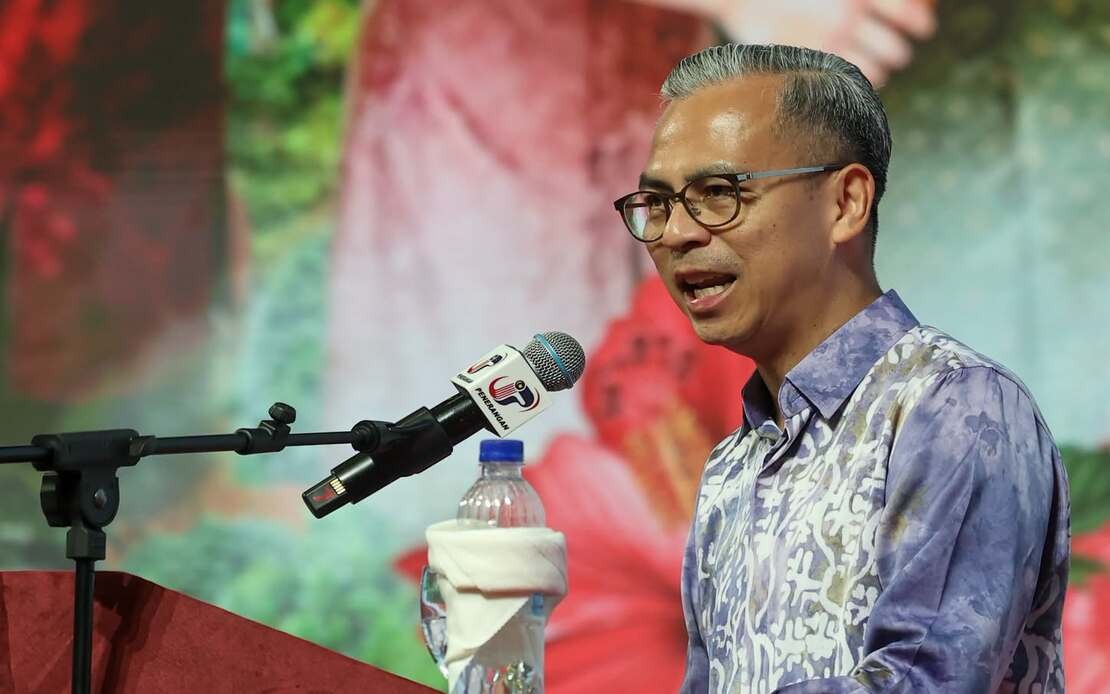
Communications Minister Datuk Seri Fahmi Fadzil has thrown his support behind a new patriotic composition that will anchor Malaysia's commemorative campaigns for the coming year. The minister's endorsement follows the public debut of 'Aku Berjanji', a song created and performed by celebrated artist Faizal Tahir, which has been designated as the official theme for the 2026 National Day and Malaysia Day (HKHM) celebrations. The premiere occurred during the launch of the 2026 National Month and Fly the Jalur Gemilang Campaign in Ipoh, an event that signalled the beginning of the country's build-up to these significant national observances.
Fahmi's commendation centred on the thematic resonance of Faizal's composition, which he identified as embodying core national values. In remarks distributed via social media, the minister highlighted how the song articulates messages centred on unity, collective harmony, and genuine affection for Malaysia. This alignment with official national messaging underscores the government's strategy of leveraging popular cultural figures and their creative output to reinforce civic identity and social cohesion during major national celebrations. The choice of an established recording artist rather than a conventional patriotic composition reflects contemporary approaches to public communication where mainstream entertainment channels emotional connection to national symbols.
The rollout of the campaign follows Prime Minister Datuk Seri Anwar Ibrahim's formal launch of the initiative, which has begun generating momentum across the country. The staging of such campaigns well in advance of actual celebrations allows for sustained engagement and broad cultural penetration, enabling the chosen theme song to become embedded in public consciousness through repeated exposure across radio, streaming platforms, and social media channels. This extended promotional window is particularly significant in Malaysia's multicultural context, where such messaging needs time to resonate across diverse linguistic and cultural communities.
Beyond celebrating the artistic selection, Fahmi issued a broader call for all Malaysians to embrace visible displays of national pride through the Jalur Gemilang. His appeal carried specific practical guidance, urging citizens to ensure that Malaysian flags displayed in homes, businesses, and public spaces are maintained in proper condition and installed correctly. This emphasis on the physical presentation of national symbols reflects a recognition that flag displays serve not merely decorative purposes but function as tangible expressions of civic commitment and patriotic identity.
The minister's concern extended to the emerging challenges posed by digital technology. Acknowledging the widespread use of artificial intelligence tools for generating images, Fahmi cautioned Malaysians to exercise restraint and critical judgment when deploying such technologies in contexts involving the national flag. His warning specifically targeted the risks of inadvertent errors or misrepresentations that could arise from AI-generated imagery, emphasizing that such mistakes could compromise the dignity and respect owed to the nation's most sacred symbol. This guidance reflects growing governmental awareness of how technological capabilities can unintentionally propagate representations that diminish rather than elevate national symbols.
The cultural significance of selecting a modern recording artist to define the emotional tenor of national celebrations deserves particular attention in the Malaysian context. Faizal Tahir's reputation as a serious composer and performer suggests that the government is positioning these 2026 festivities not as exercises in obligatory patriotism but as opportunities for authentic cultural expression. By featuring an artist known for thoughtful musical work rather than a formulaic anthem, the approach aims to generate genuine emotional investment rather than compliance-based participation.
The timing of this campaign launch in July 2026 provides nearly eighteen months for the theme song to achieve saturation within Malaysian popular culture. This extended runway allows multiple generations of Malaysians—from schoolchildren participating in national observance events to adult listeners encountering the composition through various media channels—to internalize the song's messages and associate them with national identity. The cumulative effect of repeated exposure, combined with the cultural credibility of Faizal Tahir as an artist, potentially creates stronger mnemonic anchoring than traditional governmental patriotic messaging.
The government's explicit guidance regarding AI-generated imagery of the Jalur Gemilang represents proactive policymaking in response to rapidly evolving technological contexts. As artificial intelligence tools become increasingly accessible to general users, the potential for unintended representations of national symbols grows proportionally. By publicly flagging this concern and encouraging cautious, thoughtful application of such technologies, the communications ministry is attempting to shape digital culture in ways that protect the integrity of national symbols while acknowledging the legitimate role of modern technology in everyday life.
For Southeast Asian observers, Malaysia's approach to national celebration campaigns offers instructive parallels to strategies employed across the region. Many ASEAN nations face similar challenges in maintaining national unity and pride while navigating increasingly digital, multicultural public spheres. The integration of contemporary music and artists into official national messaging, combined with practical guidance about physical flag displays and digital responsibility, reflects an understanding that national identity requires consistent reinforcement across multiple platforms and in forms that resonate with contemporary life.
Looking ahead to 2026, the success of this campaign will likely be measured not merely by the popularity of 'Aku Berjanji' but by its capacity to serve as a unifying reference point across Malaysia's diverse population. If the song achieves broad recognition and positive association with national values, it may establish a template for future campaigns. Conversely, if uptake remains limited to official channels and enthusiasts, it may suggest that top-down cultural initiatives face inherent limitations in contemporary media environments where audiences curate their own content consumption patterns.

