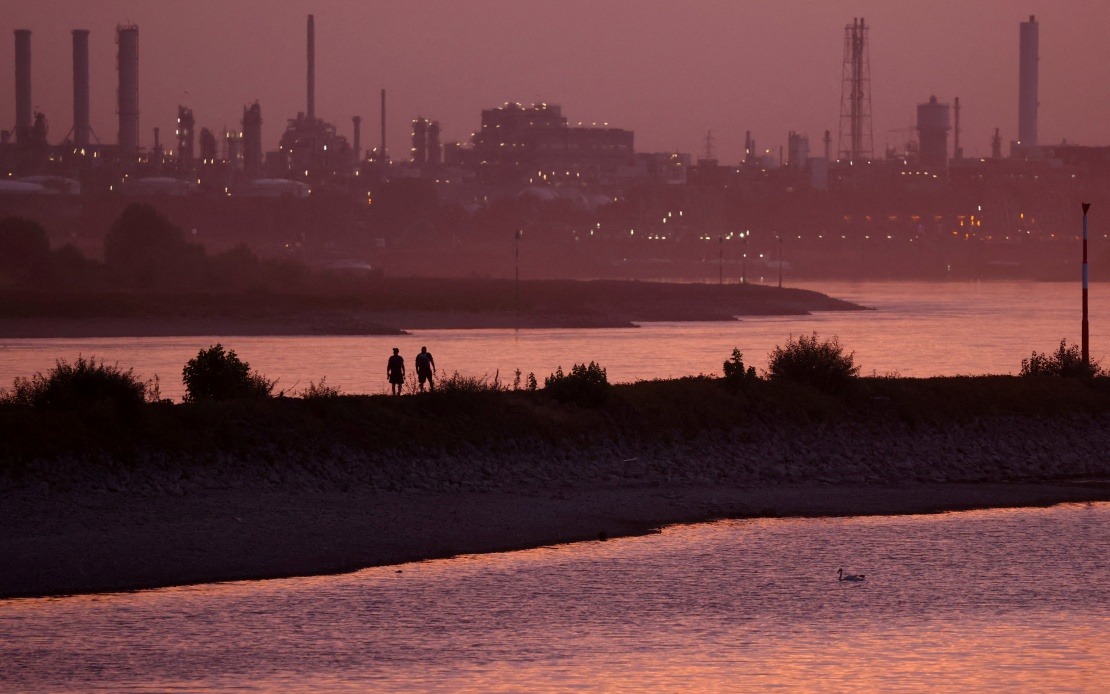
German explosives experts are gearing up for a delicate operation to neutralise a substantial World War II aerial bomb that emerged from the Rhine river near Cologne following an extended period of extreme drought and heat. The discovery underscores how environmental stress can resurrect remnants of Europe's turbulent past, creating immediate safety concerns for present-day residents and workers in the affected area. The incident illustrates the precarious relationship between climate conditions and the legacy of conflict that continues to shape modern urban management across the continent.
The 500-kilogramme United States bomb surfaced on Wednesday evening in the vicinity of Cologne's Rheinpark, one of the city's prominent recreational zones. Authorities have determined that approximately 360 individuals residing or employed within a 400-metre perimeter of the discovery site must vacate the location during the defusing operation. The evacuation zone encompasses residents of a retirement facility and workers at RTL television studios situated nearby, highlighting how such historical remnants pose risks to civilian populations decades after their original deployment.
The Rhine's dramatic water recession has become increasingly pronounced during the recent summer months. On Thursday, the river's gauge measured just 67 centimetres at Cologne, matching a historic minimum recorded mere days beforehand, with forecasts suggesting a further decline to 66 centimetres before the day concluded. This unprecedented shrinkage reflects broader climatic patterns affecting Central Europe, where sustained heat waves and reduced precipitation have stressed one of the continent's most vital waterways. The consequences extend far beyond the discovery of armaments, as the waterway has become increasingly difficult to navigate for commercial traffic.
The economic ramifications of the low water situation have already materialised across Germany's most important inland shipping corridor. Numerous vessels operating along the Rhine have been compelled to reduce their cargo loads substantially to avoid running aground on the shallow riverbed, creating bottlenecks in an essential supply chain that connects industrial heartlands with European markets. Shipping companies face mounting pressures to adapt operations, delay schedules, or reroute goods via alternative transportation methods, each option carrying additional costs and complexity. The timing of this crisis coincides with broader energy and supply chain vulnerabilities across Europe, amplifying concerns about economic stability.
Beyond the immediate shipping disruptions, the receding waterline continues to reveal long-buried wartime remnants scattered across the Rhine's bed. Military historians and salvage experts recognise that munitions like the Cologne discovery represent only the most visible and dangerous fraction of ordnance deposited in European waterways during and after World War II. The broader inventory of submerged weaponry, much of it destabilised by decades of submersion, creates an ongoing environmental and safety concern that environmental change is now accelerating. As water levels continue their downward trajectory, authorities anticipate encountering additional dangerous objects, necessitating expanded protocols for public safety and expert intervention.
The timing of the defusing operation remains unconfirmed as specialists conduct detailed assessments of the bomb's structural integrity and explosive composition. The complexity of such operations cannot be underestimated; these devices, having spent nearly eight decades underwater, may have undergone chemical degradation that affects their stability and predictability. Defusing teams must prepare contingency plans accounting for potential unpredictable detonation, necessitating careful cordon establishment and public notification procedures. The meticulous approach reflects lessons learned from previous incidents across Germany, where hasty handling of aged ordnance has occasionally resulted in unintended detonations causing injuries and extensive collateral damage.
Climatic projections offer little solace to Rhineside communities and commercial operators. Officials have indicated that water level recovery will be modest at best over the coming days, with no genuine prospect of substantial improvement emerging in the near term. Extended drought conditions across Central Europe suggest that the Rhine's current crisis may persist through the remainder of summer and potentially into autumn, depending on precipitation patterns. This protracted low-water scenario creates cascading challenges for hydroelectric generation, agricultural irrigation dependent on river access, and the vast industrial complex that relies on Rhine navigation for supply chain continuity.
For Southeast Asian observers, the Cologne situation offers instructive parallels regarding climate vulnerability and infrastructure resilience. Tropical regions face analogous challenges when monsoon patterns shift or become irregular, exposing riverine hazards and stressing water-dependent economies. The Rhine incident demonstrates that even wealthy, technologically advanced nations struggle when environmental conditions deviate sharply from historical norms, a cautionary reminder for developing economies with smaller safety margins and fewer resources. Malaysia's position as a Southeast Asian economic hub, reliant on shipping and water-dependent industries, means that climate-driven disruptions to major regional waterways could replicate similar cascading effects.
The broader geopolitical dimension merits attention as well. Europe's energy crisis, partially rooted in reduced Russian fossil fuel supplies following geopolitical tensions, intersects with the Rhine's water scarcity through reduced hydroelectric capacity precisely when demand remains elevated. This convergence of climate stress and geopolitical disruption reveals how seemingly disparate challenges compound into systemic vulnerabilities. Southeast Asian nations, navigating their own geopolitical complexities while simultaneously addressing climate adaptation, should recognise that infrastructure planning cannot treat these domains separately if long-term stability is to be achieved.
The Cologne bomb defusing, while a specific technical challenge for German authorities, ultimately reflects a wider phenomenon: how climate change is literally resurfacing historical legacies while simultaneously constraining the modern systems that support contemporary life. As water tables fluctuate and extreme weather becomes normalised, societies worldwide will confront both literal remnants of the past and unprecedented pressures on present-day infrastructure. The German response, methodical and safety-conscious, provides one model for managing such intersecting crises, though each region must develop approaches suited to its particular geography, climate patterns, and historical baggage.

