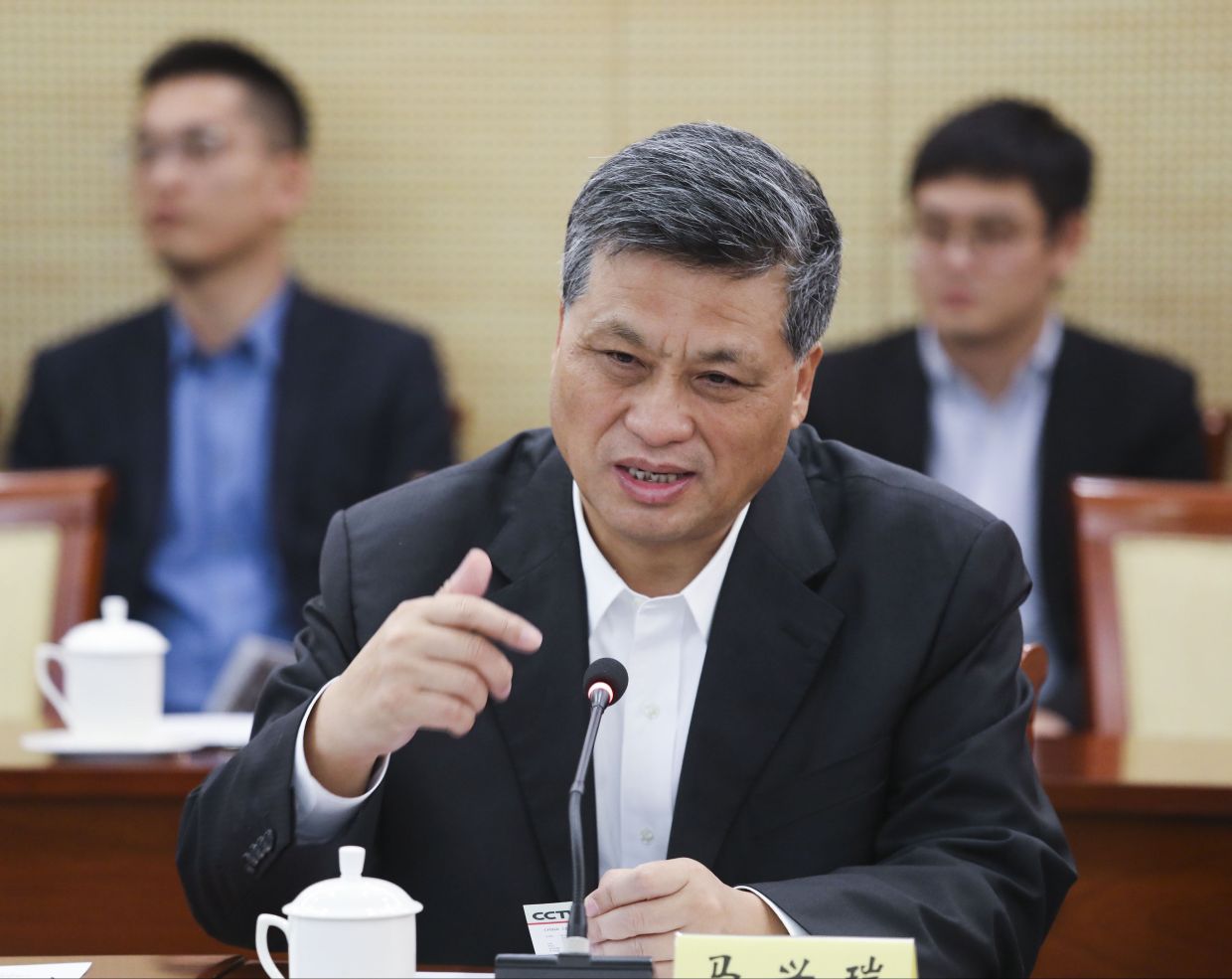
China's ruling Communist Party has formally approved corruption charges against Ma Xingrui, a 67-year-old former Politburo member who once oversaw the country's new-generation space rocket programme, marking a significant escalation in the party's ongoing anti-corruption crackdown. The Central Commission for Discipline Inspection, which serves as the party's primary disciplinary authority, submitted its damaging assessment on June 30, which was subsequently ratified by the Politburo itself, according to state media Xinhua. The development represents an extraordinary moment in Chinese politics—Ma is now the third member of this elite governing body to face investigation during the current leadership cycle that commenced in 2022, a frequency not witnessed for several decades and reflecting the scope of President Xi Jinping's anti-corruption efforts at the highest echelons of power.
Ma's career trajectory spanned several of China's most strategically important sectors and regions. After leading China's space rocket initiative, he was appointed deputy party secretary of Guangdong province in 2013, following a stint at the Ministry of Industry and Information Technology. His subsequent promotions saw him become party secretary of Shenzhen, then provincial vice-governor and eventually governor of Guangdong. In 2021, he was transferred to lead the politically sensitive Xinjiang Uygur Autonomous Region as party secretary, a role that automatically elevated him to Politburo membership at the party's 20th Congress in 2022. This trajectory demonstrates how Ma occupied positions of extraordinary influence over economic development, personnel appointments, and resource allocation—the precise levers through which the alleged corruption occurred.
The disciplinary commission's report presents a comprehensive indictment alleging that Ma systematically weaponised his official authority for personal enrichment and family advantage. Investigators found that he improperly accepted substantial gifts and financial payments, leveraged his position to secure discounted property purchases for relatives, and engaged in transactions exchanging power for sexual favours and money for sexual favours. More significantly, the charges indicate that Ma deliberately fostered an environment in which his relatives could capitalise on his influence to accumulate wealth, with the CCDI explicitly stating that his conduct created "rampant corruption across his family." This pattern suggests a deliberate strategy to convert public authority into a mechanism for private gain rather than isolated instances of misconduct.
The mechanics of Ma's alleged schemes reveal how officials can abuse their decision-making authority across multiple domains. Through both direct action and indirection via family members and associates, Ma allegedly intervened in business operations, project contracting, and job promotions to generate illicit financial benefits. He also misused his power over personnel decisions, particularly in cadre selection and appointment processes, improperly arranging positions for individuals in exchange for unstated considerations. The report indicates that vast sums of money and property were illegally transferred to Ma and his associates, suggesting a scale of corruption that extended far beyond minor infractions. His conduct directly contradicted the strict official conduct rules that Xi Jinping announced as central to his sweeping anti-corruption campaign following the 18th Party Congress, a fact that investigators explicitly noted when characterising his behaviour as "extremely serious in nature" with an "extremely bad influence."
The commission also found that Ma failed to provide truthful confessions during preliminary inquiries, a factor that typically compounds penalties in party disciplinary proceedings. Additionally, he stood accused of negligent supervision, allowing his own staff members to commit serious party and legal violations without intervention, which compounded institutional damage. His successor in Xinjiang, Chen Quanguo, preceded Ma in that critical post, and the region has since become a focal point for anti-corruption investigations, suggesting potential systemic vulnerabilities in how that region's administration has been overseen or how oversight mechanisms functioned under previous leadership.
The charges against Ma must be understood within the broader context of a sweeping purge of Xinjiang's administrative apparatus. Chen Weijun, former executive vice-chairman of Xinjiang's regional government, faced investigation charges announced in December, whilst Li Xu, former deputy commander of the Xinjiang Production and Construction Corps, saw his case made public in January. This pattern indicates that investigators have identified systemic corruption patterns within Xinjiang's governance structure, potentially implicating networks of officials who leveraged their positions during a period of significant political and economic activity in the region. For Southeast Asian observers, this dynamic illustrates how anti-corruption drives can ripple through political and administrative hierarchies, affecting both economic relationships and governance stability.
Paralleling Ma's downfall are the removals of two senior military figures from the Politburo, reflecting instability at the party's apex. He Weidong, former vice-chairman of the Central Military Commission, was expelled from both the party and military in October following separate investigations. These combined removals have reduced the Politburo from its established size to 21 members, representing material structural change in China's top governing body. The simultaneous fall of civilian and military figures suggests that Xi Jinping's anti-corruption initiative operates across all institutional domains without exempting security apparatus leadership, a message reinforced by the severity of punishments administered to high-ranking officials.
Ma's aerospace background provides additional context for understanding his networks and potential areas of vulnerability. During his tenure as general manager of the China Aerospace Science and Technology Corporation from 2007 to 2013, he simultaneously served as deputy commander-in-chief of China's manned space programme and commander-in-chief of the new-generation carrier rocket project. These positions placed him at the intersection of military-industrial complex decision-making, significant budgetary authority, and access to sensitive technological programmes. The CCDI's report noted that several of Ma's former subordinates from the aerospace sector have already been ensnared in anti-corruption investigations over recent years, suggesting that investigators have systematically pursued networks radiating from his previous positions and potentially uncovering corruption chains that extended across both civilian and defence-related sectors.
The handling of Ma's case carries particular significance for regional stability and international perceptions of Chinese governance. Malaysia and other Southeast Asian nations maintain substantial economic and defence relationships with China, and the stability of high-level Chinese decision-makers directly affects policy consistency and reliability of commitments. The removal of senior officials responsible for major infrastructure initiatives, technology projects, and regional coordination introduces uncertainty regarding ongoing bilateral arrangements and the continuity of leadership within institutions overseeing ASEAN-related policy. Additionally, the apparent systematic nature of corruption within Xinjiang's administration may prompt reassessments of how commercial activities, investment flows, and supply chain relationships have functioned within that region.
The confiscation of Ma's ill-gotten gains and his handover to the judicial system represent the final stages of party disciplinary proceedings, setting the stage for formal criminal trial. The severity of charges and the comprehensiveness of the investigation suggest that prosecutors will likely pursue substantial penalties, potentially including lengthy imprisonment. His case exemplifies how even officials at the apex of China's political structure remain vulnerable to anti-corruption mechanisms when their conduct is deemed sufficiently egregious. For Malaysian observers monitoring Chinese institutional dynamics, Ma's trajectory from aerospace leadership through regional administration to Politburo membership and subsequent disgrace illustrates the precarious nature of elite positions in contemporary China, where political fortunes can shift dramatically based on investigations that often remain opaque to external observers until formal charges are announced.

