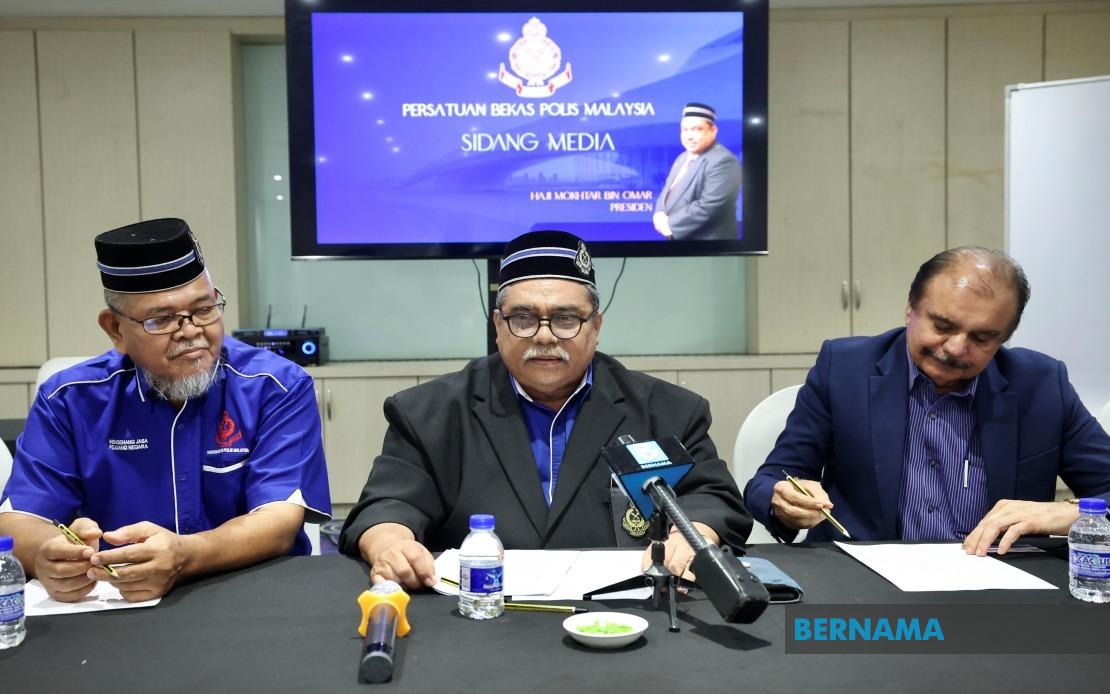
The Malaysian Ex-Police Association (PBPM) has launched a formal appeal to the government for the establishment of a regular monthly allowance aimed at supporting non-pensionable former police personnel. The initiative represents a significant advocacy push on behalf of a vulnerable segment of Malaysia's security services retirees who have been systematically excluded from pension schemes and now face mounting economic pressures. Speaking at a press conference in Kuala Lumpur, PBPM president Mokhtar Omar outlined the scale and urgency of the welfare challenge confronting these former officers as cost-of-living pressures intensify across the country.
The scope of the problem is substantial. According to association records spanning back to 1972, approximately 40,000 of PBPM's 86,000 registered members fall into the non-pensionable category. This group encompasses individuals who served in various operational capacities, including personnel from the Special Squad, Home Guard units, and those engaged as contract inspectors during the Emergency period. The heterogeneous nature of their service histories reflects the evolving organisational structures and employment practices within Malaysia's police force over the past five decades, yet they remain bound together by a common vulnerability: the absence of formal pension protections upon retirement.
Omar emphasised that these former officers made tangible contributions to the nation's security infrastructure during a period of significant internal threat. Many served during the Emergency, when armed insurrection required sustained counterinsurgency operations and security personnel bore considerable personal risk. Their efforts contributed directly to the stabilisation and development that Malaysia has since achieved. Yet despite this historical contribution, their current circumstances reflect a policy gap that leaves them without the retirement security afforded to pensionable personnel. The emotional dimension of this advocacy is evident: Omar noted that the surviving members of this cohort are now demographically limited, suggesting that any intervention would represent a time-limited financial commitment for government.
The financial parameters proposed by PBPM provide a concrete framework for discussion. The association has suggested a monthly special allowance ranging between RM300 and RM500 for eligible recipients. In the context of contemporary living costs in Malaysia, where urban households increasingly struggle with transport, food, and housing expenses, such an allowance would provide meaningful but modest support. The proposal reflects pragmatic calibration rather than extravagant demands, positioning the initiative as fiscally reasonable while addressing genuine hardship. For individuals without pension income, even a RM300 monthly supplement can mean the difference between subsistence and genuine deprivation.
Beyond the core allowance proposal, PBPM has articulated a broader welfare modernisation agenda. The association is seeking a comprehensive review of the Police Heritage Trust Fund (TAWP), which currently provides the primary welfare mechanism for former officers. Under the proposed expansion, TAWP would increase its assistance rates and broaden its remit to encompass education support, healthcare interventions, and disaster relief provisions. This reflects recognition that non-pensionable retirees face multifaceted vulnerabilities that a single monthly allowance cannot fully address. Healthcare costs, in particular, represent a growing burden for elderly former personnel, while education support for children and grandchildren represents an investment in family welfare across generations.
The demographic profile of this population carries particular poignancy. Those who served during the Emergency are now in their seventies or beyond, representing a diminishing cohort. Each year that passes without intervention reduces the population eligible for assistance, yet increases the average age and associated healthcare costs of those remaining. This temporal dimension lends urgency to the advocacy campaign. The implication is clear: government action now would represent a finite, time-bound commitment that would naturally diminish as the cohort ages and passes away. The window for meaningful intervention is narrowing.
Complementing the government advocacy, PBPM has launched its own fundraising initiative to bridge immediate welfare gaps. Datuk Dr Basant Singh Sidhu, the association's Information Chief, announced plans for an October fundraising dinner designed to mobilise corporate and private sector contributions. The RM1 million fundraising target reflects ambitious but achievable aspirations, targeting Malaysia's business community, multinational corporations, and philanthropically-minded individuals. Proceeds will support tangible welfare provisions including medical equipment, mobility aids such as wheelchairs, nutritional supplements, hearing aids, and other essential items addressing immediate health and living needs.
This dual-track approach—simultaneous government advocacy and independent fundraising—reveals strategic sophistication within PBPM's leadership. Rather than waiting passively for state intervention, the association is demonstrating proactive commitment to member welfare whilst maintaining pressure on policymakers. The fundraising campaign also serves a secondary function: it publicly highlights the welfare crisis, creating awareness amongst corporations and the general public whilst generating political pressure through philanthropic engagement. When major Malaysian companies publicly support former police welfare, the political cost of government inaction increases.
The underlying policy question extends beyond immediate welfare provision to encompass principles of national obligation and social contract. Non-pensionable status often reflected contractual or organisational categories rather than lower-quality service contributions. Many of these individuals faced precisely the same operational risks and made comparable sacrifices as their pensionable counterparts. The distinction in retirement treatment thus raises equity questions about how the state values different categories of security service. For Malaysia's broader security services, clarity about pension entitlements and retirement welfare sends important signals about institutional commitment to personnel welfare across career trajectories.
Regionally, Malaysia's approach to former security services welfare will be observed as a policy benchmark. Several Southeast Asian nations face similar challenges regarding non-pensionable retirees, informal security forces personnel, and contract workers lacking conventional benefits. How Malaysia addresses this demographic challenge through policy innovation or welfare expansion may influence approaches across the region. The PBPM advocacy campaign thus carries implications extending beyond the immediate 40,000 individuals affected, potentially establishing precedents for how contemporary governments treat historical security service contributors.
The timing of this advocacy coincides with broader Malaysian economic pressures affecting pensioners and fixed-income earners generally. Inflation erodes purchasing power, healthcare costs escalate, and housing remains expensive across major urban centres. Within this context, non-pensionable former police personnel represent a particularly sympathetic constituency: they lack the organised advocacy platforms of active-duty officers, they fall outside conventional civil service welfare frameworks, and they are demographically diminishing. Political responsiveness to their circumstances would represent targeted, fiscally constrained welfare intervention benefiting a specifically defined population.
Looking forward, success for PBPM will require sustained political engagement across government agencies. The Ministry of Home Affairs, which oversees police-related matters, would likely serve as the primary decision-making locus, though Treasury involvement would be essential for budgetary authorisation. Building cross-party political support, engaging civil society advocates, and maintaining public pressure through media engagement represent the logical continuation of PBPM's current strategy. The fundraising dinner in October will serve both immediate welfare purposes and as a public platform reinforcing advocacy messages as Malaysia's political calendar progresses.

