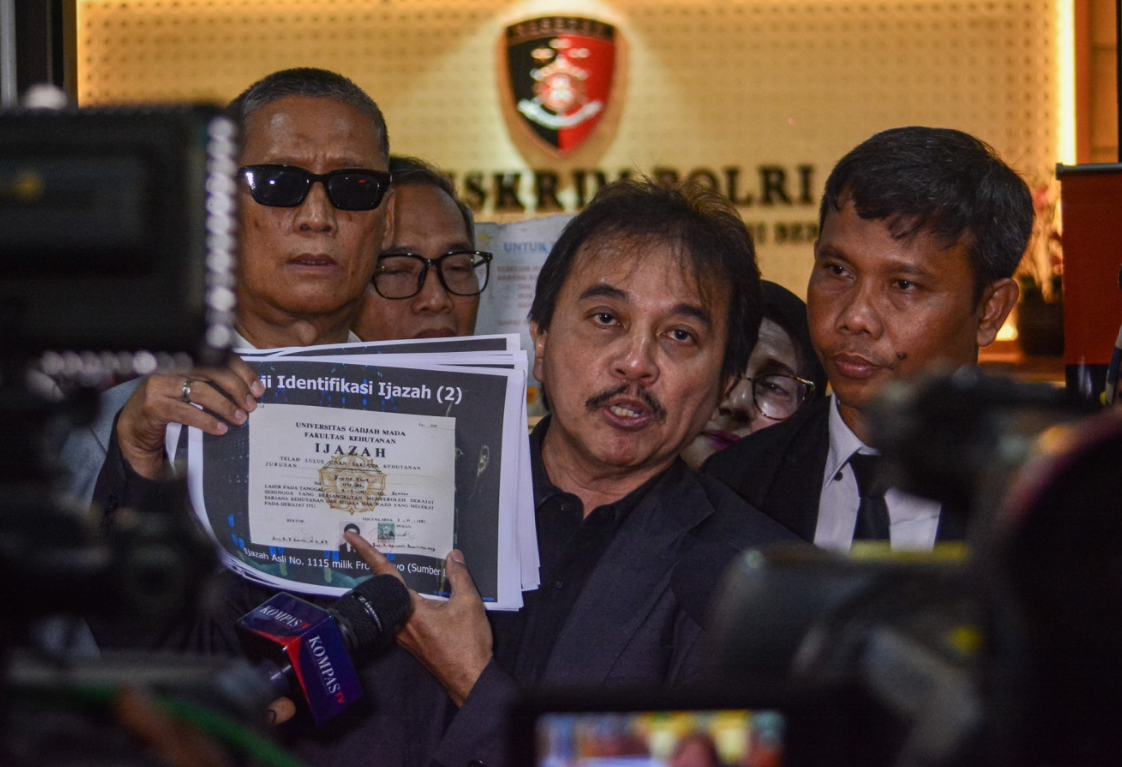
The Jakarta Police have moved decisively against two prominent figures at the centre of an ongoing dispute over former president Joko 'Jokowi' Widodo's academic qualifications, placing former youth and sports minister Roy Suryo and health activist Tifauzia 'Tifa' Tyassuma into detention. The arrests, conducted at their homes on Friday morning, represent a significant hardening of law enforcement's stance in what has become one of Indonesia's most contentious political controversies, with ramifications extending across the nation's institutional landscape.
Roy's legal counsel Ahmad Khozinudin confirmed that both individuals were apprehended as part of standard procedure preceding the case's advancement to the Jakarta Prosecutor's Office. The General Crimes Directorate of the Jakarta Police characterised the detention as a necessary procedural step required before transferring evidence and case materials to prosecutors. Senior Commissioner Iman Imanuddin, the investigation director, explained at a press conference that the measure aimed to streamline the justice system's administrative processes and prevent bureaucratic delays that might otherwise extend the proceedings. The police emphasised that the detention protocol included mandatory health examinations and verification of all collected evidence.
The substantive allegations against Roy and Tifa extend beyond mere defamation. Investigators have accused both individuals of manipulating electronic documents in support of their assertions that Jokowi's diploma lacked authenticity. These charges carry particular gravity under Indonesia's Electronic Information and Transactions Law, which imposes maximum sentences of six years imprisonment. The specific focus on digital manipulation reflects modern law enforcement's concern with how misinformation spreads and gains credibility through technological means, a challenge facing governments throughout Southeast Asia.
The diploma controversy itself has displayed remarkable longevity within Indonesian political discourse. Initial questions about Jokowi's university credentials emerged in 2019 through social media channels, reflecting how digital platforms can amplify institutional scrutiny. Rather than fading as such controversies often do, the matter evolved into a formal legal dispute. A civil lawsuit proceeded in 2022, followed by police investigations and additional court proceedings in 2025. This escalation pattern demonstrates how single allegations can crystallise into enduring institutional conflicts when they intersect with broader political tensions.
A pivotal moment arrived in May 2025 when the National Police formally concluded that Jokowi's diploma was genuine, subsequently closing their earlier investigation into forgery allegations. This declaration seemingly should have resolved the matter definitively. However, a case review conducted in July 2025 provided Roy Suryo and other critics with an opportunity to present their objections to the police findings. Rather than accepting the institutional determination, Roy and his associates renewed their challenges, effectively keeping the controversy alive and prompting the current law enforcement response.
Roy Suryo, who held ministerial office during the Susilo Bambang Yudhoyono administration, brings considerable political standing to his allegations. His credentials as a former senior government official lend his claims particular resonance within political circles and media discussions. However, this same position has evidently prompted authorities to pursue him with vigour, suggesting that those wielding institutional power view sustained challenges to official determinations as threats requiring robust legal responses. The contrast between the elevated positions critics occupy and their willingness to challenge state authorities illuminates tensions within Indonesia's democratic institutions.
Tifa Tyassuma, identified as a health activist, represents a different constituency within the coalition raising concerns about the diploma. The inclusion of civil society figures alongside political actors indicates that the controversy transcends party politics, encompassing diverse perspectives on institutional accountability and transparency. Health professionals and activists occupy specific moral positions within public consciousness, potentially amplifying the perceived legitimacy of their concerns among educated urban populations where such professionals command respect.
The legal counsel defending Roy and Tifa, Refly Harun, has characterised Friday's detention as excessive and procedurally questionable. His argument that the case transfer to prosecutors was not scheduled until Monday suggests that the immediate arrest served purposes beyond administrative necessity. This criticism touches on broader rule-of-law concerns: whether detention should be deployed only when genuinely required to prevent obstruction of justice, or whether it functions as a means of applying pressure during politically sensitive investigations. For Malaysian observers, such questions resonate with ongoing discussions about law enforcement's appropriate scope and the distinction between prosecutorial necessity and intimidation.
The defamation charges operate within a specific legal framework that has invited international scrutiny regarding press freedom and the right to question official claims. The Electronic Information and Transactions Law, while addressing legitimate concerns about digital manipulation and falsehoods, has drawn criticism from media watchdogs who note its potential to suppress legitimate public discourse. When applied to individuals challenging government-endorsed narratives, such laws raise questions about whether they protect institutional integrity or instead shield power-holders from accountability.
The police investigation has involved a broader cast than Roy and Tifa. Six other individuals were initially named as suspects, though prosecutors subsequently dropped charges against three—Eggi Sudjana, Damai Hari Lubis and Rismon Sianipar—following mediation. This outcome suggests that some pathways toward resolution existed within the investigative process, raising questions about why similar mediation efforts did not extend to Roy and Tifa. The selective application of legal pressure creates an impression of discretionary enforcement, a concern that extends throughout Southeast Asia regarding anti-defamation and digital crime legislation.
The Jokowi diploma case illustrates how institutional controversies develop momentum once they become legally embedded. What began as social media speculation has evolved into a six-year saga involving multiple court proceedings, police investigations, and prosecutorial actions. Each stage provides opportunities for renewed claims, counterclaims, and institutional responses, creating a self-perpetuating cycle that keeps the matter before public attention. This pattern raises strategic questions: whether legal actions effectively resolve institutional disputes or whether they instead entrench polarisation.
For regional observers, the case demonstrates how questions of institutional legitimacy play out differently within Indonesia's framework compared to other Southeast Asian democracies. The willingness to pursue defamation charges against critics, combined with the police's determination to validate the diploma's authenticity, reflects the stakes authorities perceive in controlling narratives about senior leaders' credentials. Whether the ongoing legal proceedings ultimately strengthen public confidence in institutional determinations or instead deepen suspicions about institutional integrity remains an open question with implications extending throughout the region's political systems.
The detention of Roy Suryo and Tifa Tyassuma marks a turning point in how Indonesian authorities manage challenges to official narratives. By escalating to custodial measures, law enforcement has signalled that sustained questioning of state determinations will face consequences. This approach prioritises institutional authority over the right to challenge official claims—a priority that shapes democratic space and the conditions under which public figures and civil society actors navigate political discourse throughout Southeast Asia.