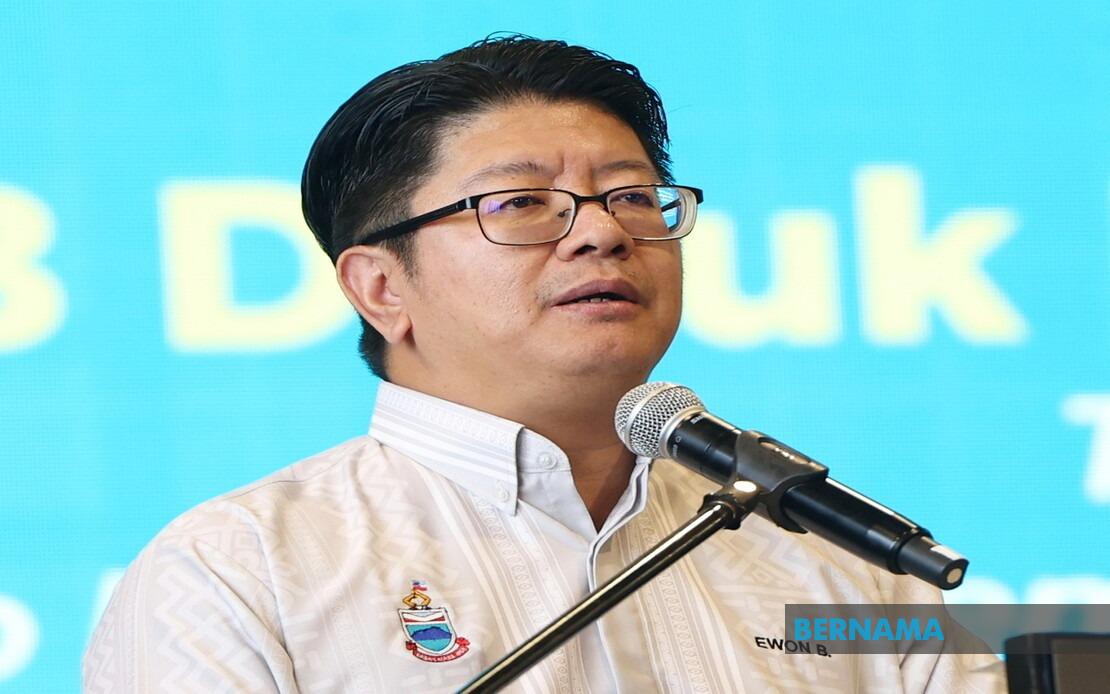
Datuk Ewon Benedick and Datuk Donald Peter Mojuntin have consolidated their grip on power within the United Progressive Kinabalu Organisation, securing unopposed re-election to their respective positions as president and deputy president for the coming 2026-2029 term. The outcome was determined at the 17th UPKO triennial delegates conference held in Penampang, where the party's membership chose continuity over change at the leadership level.
The absence of contests for the top two positions signals a degree of unity within UPKO's hierarchy, though such unchallenged elections raise broader questions about party dynamism and internal democratic engagement. When leadership positions go uncontested across multiple election cycles, it often reflects either exceptional party cohesion or, conversely, a climate where potential challengers may be discouraged from stepping forward. In the Malaysian context, where factional tensions frequently define coalition politics, UPKO's unified approach suggests the current leadership enjoys substantial backing among delegates, or at minimum, has managed to consolidate sufficient support to deter rivals.
Beyond the presidency and vice-presidency, the party's five vice-presidential positions similarly remained uncontested, with Jairaiaz Joseph, Datuk Wong Thien Fook, Datuk Pangiran Lalung, Datuk Basari Sarikun, and Datuk Dr Laurentius Nayan Ambu retaining their roles. This broader pattern of unopposed elections across the senior leadership tiers underscores the stability that Ewon's administration has achieved, though observers may question whether such seamless transitions necessarily serve the long-term interests of party renewal and institutional vitality.
In his closing remarks to delegates, Ewon struck a conciliatory tone, emphasizing respect for democratic norms while acknowledging the collective nature of party membership. His framing of the election as a unifying rather than divisive exercise reflects an understanding that even unopposed victories require rhetorical management, particularly in a party that exists within the broader context of Sabah's coalition politics. By describing UPKO as a "big family," Ewon sought to reinforce inclusive messaging at a moment when his continued leadership was being affirmed.
The newly elected leadership faces a specific responsibility that extends beyond party administration: presenting UPKO's policy positions to the state government and federal representation. Ewon's explicit mention of Sabah Chief Minister Datuk Seri Hajiji Noor, who chairs the ruling Gabungan Rakyat Sabah coalition, reflects UPKO's position as a coalition member dependent on alignment with broader GRS objectives. This arrangement creates inherent tensions between advancing party-specific interests and maintaining coalition discipline—a dynamic that becomes particularly acute when UPKO representatives participate in parliamentary or state legislative debates.
While the presidential and vice-presidential positions remained settled, significant changes occurred within UPKO's functional wings, suggesting that the party did embrace leadership renewal at subsidiary levels. Carlye Lajimin assumed the role of UPKO Youth chief, displacing the previous incumbent, while Newbaxter Tibin was elected as youth deputy chief. These generational shifts in youth leadership can prove consequential for party trajectory, as youth wings often serve as incubators for emerging national leaders and frequently influence broader party culture and policy orientations.
The women's division witnessed partial continuity, with Mohina Sidom defending her position as UPKO Women chief. Sidom's re-election underscores her standing within the party's female membership base and suggests consistent performance in that role. However, the elevation of Lomiti Jahan to the newly open deputy chief position indicates movement within female leadership structures and the emergence of new talent within party ranks. Gender representation in Malaysian political parties remains unevenly developed, making the presence of established female leaders within UPKO's hierarchy noteworthy, though the party should ensure such positions represent genuine influence rather than ceremonial roles.
The Young Generation wing also experienced leadership transition, with Emmanuel Atin elected as chief and Alison Chan as deputy chief. The existence of both youth and young generation divisions within UPKO's structure reflects an effort to capture different demographic cohorts, though the practical distinction between these wings—and potential duplication of function—warrants examination. Effective youth engagement requires clarity about how these parallel structures complement rather than compete with one another.
For Malaysian political observers, UPKO's internal dynamics carry significance beyond Sabah's borders. As a regional coalition partner within GRS, UPKO's stability or instability reverberates through Sabah's broader political settlement and affects federal coalition calculations. The party's decision to continue under existing leadership provides predictability for coalition partners and the state government, facilitating planning and policy coordination. However, the absence of contestation at senior levels may eventually breed stagnation if junior leaders perceive advancement pathways as blocked and ambitious members become frustrated with limited upward mobility.
The triennial conference setting provides a formal mechanism for party members to exercise democratic choice, yet the outcomes registered here demonstrate that formal democratic structures do not automatically produce competitive elections. Whether the party's unopposed leadership reflects authentic consensus, effective incumbent management, or reluctance among potential challengers to risk factional confrontation remains an open question. Malaysian political culture frequently prioritizes stability and consensus-building over vigorous internal competition, a tendency evident in UPKO's current trajectory.
Looking ahead, Ewon's leadership team must balance coalition responsibilities with party member expectations, navigate generational transitions evident in the elected youth leadership, and ensure that UPKO remains relevant within Sabah's evolving political landscape. The party's performance in the next triennial cycle—measured by electoral outcomes, policy influence, and membership satisfaction—will ultimately determine whether the 2026-2029 term represents effective continuity or missed opportunity for renewal.

