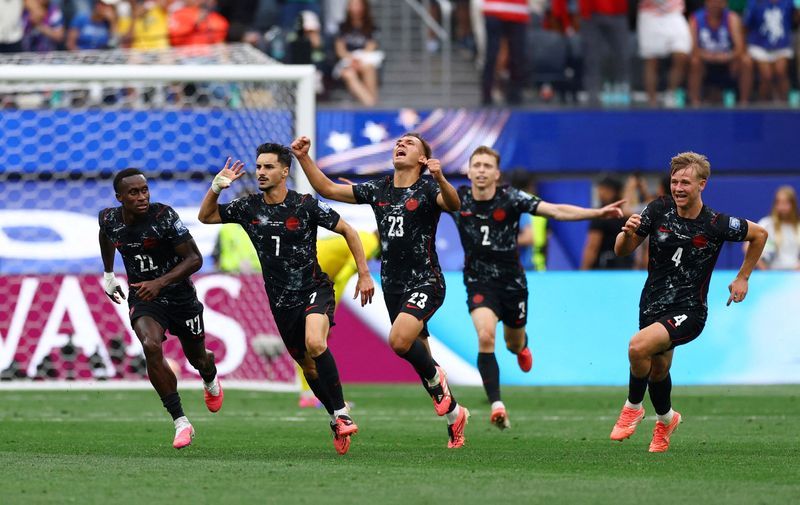
Canada has achieved an unprecedented milestone in their World Cup history, advancing to the knockout rounds for the first time ever after Stephen Eustaquio's stunning 92nd-minute goal handed them a 1-0 victory over South Africa at Los Angeles Stadium on Sunday. The strike, a rasping effort from just outside the penalty area past diving goalkeeper Ronwen Williams, arrived when the match appeared destined for extra time, providing a theatrical conclusion to the first knockout match of the tournament that has left both nations reflecting on contrasting outcomes in their tournament campaigns.
The decisive moment came as Eustaquio collected the ball at the edge of South Africa's penalty box and unleashed a powerful shot that found the back of the net, sparking jubilant celebrations among the Canadian supporters who had dominated the stands. For a Canadian squad playing their first knockout match in the tournament on foreign soil—they were forced to travel to Los Angeles after completing their group stage in Canada—the finish represented the culmination of relentless pressure and determination throughout a tightly contested encounter. South Africa, seeking to extend their tournament run, mounted desperate but ultimately fruitless attempts to equalise in the final moments before the whistle confirmed their exit.
Eustaquio's post-match comments reflected the emotional significance of the achievement for Canadian football. "We just kept believing, we kept pushing and I think we couldn't have imagined it any other way," he remarked, describing the sensation of striking the ball as a collective effort that transcended individual accomplishment. His words captured the sense that the entire squad had invested their combined will into the strike, a characterisation that resonated with the journey Canada has undertaken to reach this stage of the competition.
Canada head coach Jesse Marsch acknowledged the team's creative opportunities throughout the contest but lamented their inability to convert chances with greater efficiency. "And then it falls to Steph and I just hope he'll put it on frame and give it a chance and he buries it," Marsch reflected, indicating that while the team had generated possibilities, the execution had frequently fallen short until Eustaquio's decisive moment arrived. Following the final whistle, Marsch addressed his players in characteristically emphatic fashion, declaring them "Canadian heroes" and emphasising the historical significance of their breakthrough.
The opening forty-five minutes had been defined by cautious, tactically conservative football from both teams, each making their maiden knockout-round appearance in the World Cup. Canada's most threatening moment came seconds before halftime when a corner created havoc in South Africa's penalty area, with Moise Bombito's header nearly finding the net before being cleared off the line by Aubrey Modiba, and Tajon Buchanan's subsequent close-range attempt striking Williams directly in the chest. Moments later, Canadian frustration boiled over when Richie Laryea fell in the area under a challenge, prompting vociferous appeals for a penalty that were rejected following a VAR intervention, triggering audible displeasure from Canada's support base.
Marsch's visible frustration at the half-time interval, when he protested the penalty decision as he departed the field, underscored the mounting tension within the Canadian camp as they sought to break South Africa's defensive resolve. The second period saw South Africa adopt an even more conservative approach, displaying little urgency to dictate play despite possessing possession at times. Canada continued to probe, with opportunities emerging when Tani Oluwaseyi's shot forced a reaction from Williams before Jonathan David squandered the rebound, though Mbekezeli Mbokazi executed a crucial defensive interception to deny the Canadian striker.
South Africa's approach throughout the match suggested they were content to force proceedings toward the lottery of a penalty shootout, a tactical posture that ultimately proved costly when Eustaquio's breakthrough rendered their defensive strategy redundant. For South Africa and their 74-year-old coach Hugo Broos, the tournament represents a bittersweet conclusion. Having qualified for the knockout rounds at their fourth World Cup attempt—a genuine achievement given the strength of their group—Broos indicated this would be his final World Cup tournament, leaving ambiguity about whether he would continue in his role beyond the competition.
Canada's progression carries particular significance for Southeast Asian football observers, as it demonstrates how smaller football nations can leverage modern tactical structures and investment in player development to compete against more established football powers. The Canadian victory reflects a broader global trend whereby depth of youth development, coaching sophistication, and financial support for player pathways have begun to democratise success at international tournaments. For Malaysia and other ASEAN nations aspiring toward World Cup qualification, Canada's achievement offers both inspiration and a cautionary lesson about the sustained commitment required to establish competitive advantage.
The co-hosts will face either the Netherlands or Morocco on July 4 in Houston for a place in the quarter-finals, a fixture that will demand sustained intensity given Canada's narrow margin of victory and the formidable opposition awaiting them. That South Africa arrived at Los Angeles Stadium on the back of a disappointing final group match cannot fully explain their subdued performance, though the psychological weight of playing knockout football for the first time may have contributed to their inability to generate sufficient attacking impetus. Canada's next assignment will prove substantially more demanding, but their historic breakthrough ensures they can approach that encounter without the burden of seeking their first-ever round-of-16 victory.

