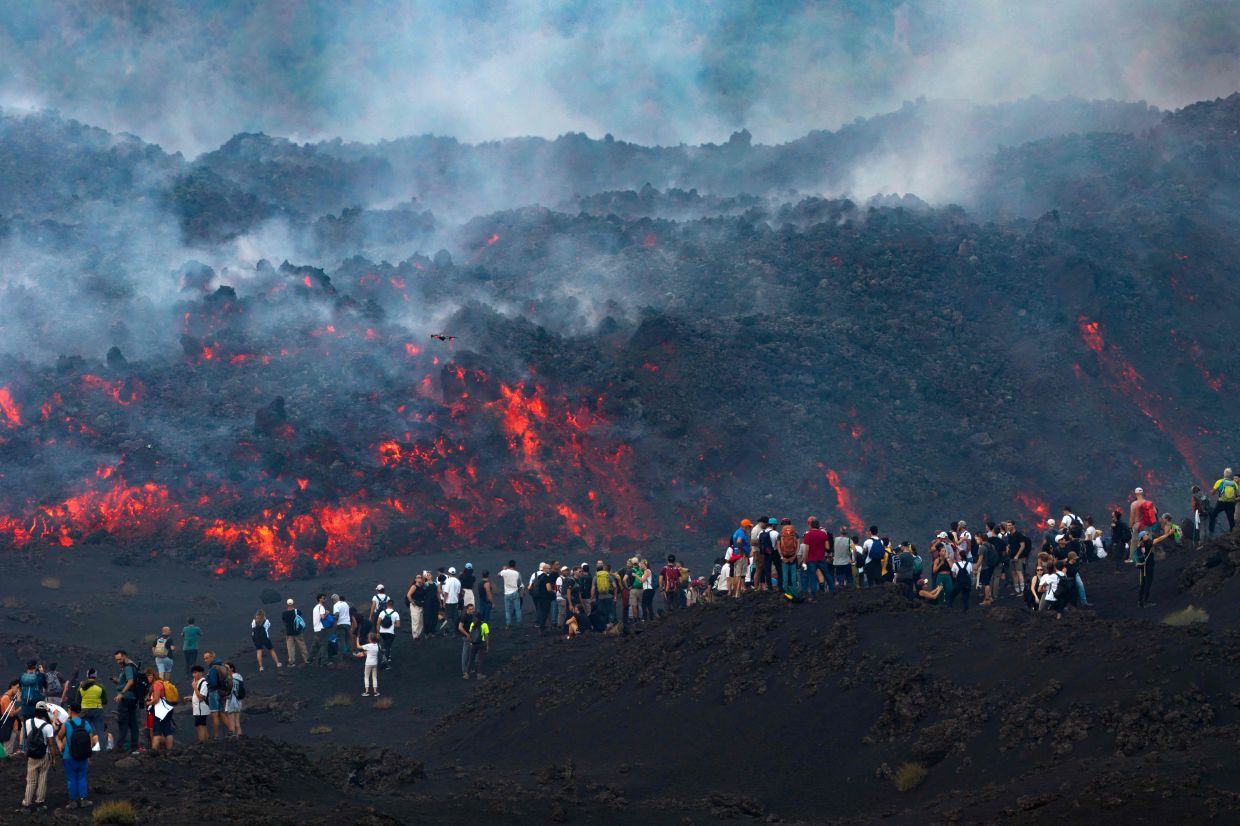
Breathtaking footage of molten lava cascading down the slopes of Mount Etna has prompted a tourist surge to Sicily's most iconic natural feature, creating both opportunity and apprehension for those managing access to Europe's tallest active volcano. The eruption, which has persisted for several days, has generated international media attention while simultaneously disrupting regional air traffic, yet paradoxically drawing more visitors eager to witness the raw power of nature firsthand.
The volcanic activity has transformed into what local operators describe as a "touristic eruption" – a phenomenon where the sheer visual drama of flowing lava becomes almost irresistible to observers despite the inherent dangers. Daniele Perricelli, a seasoned mountain guide running Guide Etna, reports his operation has shifted from handling dozens of evening visitors to fielding approximately 300 daily inquiries, triple the volume typically experienced during peak summer tourism. This surge reflects the magnetism of genuine geological spectacle, where the opportunity to observe one of Earth's most dynamic natural processes creates an almost gravitational pull on the human imagination.
The appeal transcends typical tourist demographics. Local residents themselves have joined the exodus up the mountainside, alongside international visitors and adventure seekers. Ernesto Maria Magri, another professional guide, observes that residents often venture upward without proper coordination or guidance, sometimes congregating in chaotic fashion around vantage points. The combination of untrained civilians and locals creates unpredictable crowd dynamics on narrow mountain paths, where collective enthusiasm can override individual caution.
Current regulations permit unguided access up to approximately 2,400 metres altitude, above which official guide accompaniment becomes mandatory. However, enforcement proves challenging when thousands ascend nightly. Perricelli has witnessed climbers in entirely inappropriate footwear – flip-flops – navigating unstable volcanic terrain where a single misstep could prove catastrophic. His fundamental concern centres on the mountain's inherent unpredictability; reading Etna's temperament requires intimate knowledge that spontaneous visitors simply cannot possess.
Social media has amplified the phenomenon, with high-profile figures such as Italian television personality Diletta Leotta drawing criticism for apparently positioning themselves dangerously close to active lava flows for photographic purposes. Yet guides clarify that safe proximity is achievable in lower-altitude zones where lava has already solidified and cooled to manageable temperatures, permitting visitors to stand mere metres from geological processes typically observed only through documentaries. This distinction between genuinely dangerous proximity and safely dramatic positioning remains poorly understood by the general public.
The volcanic activity has triggered a yellow alert from Italy's civil protection agency, representing the second-highest status on a four-tier warning system. This level indicates frequent eruptions with possible explosive episodes, though it falls short of the red alert that would necessitate comprehensive evacuation protocols. The distinction matters significantly for regional planning and resource allocation across eastern Sicily.
Airport disruptions constitute perhaps the most tangible consequence of the eruption for broader travel infrastructure. Catania International Airport, handling approximately 12 million passengers annually and serving as the primary gateway for eastern Sicily, has experienced repeated flight cancellations since the eruption intensified over the weekend. Hundreds of flights have been suspended, affecting not merely tourists seeking Etna experiences but also business travellers and residents whose plans bear no connection to volcanic tourism. For a region already navigating post-pandemic recovery and competitive pressures within Mediterranean tourism markets, such disruptions carry economic weight.
The eruption presents a curious contradiction within contemporary tourism dynamics. Traditional risk management suggests restricting access to active volcanic zones, protecting visitors from geological hazards. Yet the very spectacle that justifies the restrictions generates demand that overwhelms management infrastructure. Guide operators face genuine professional dilemmas: refusing business means lost income and disappointed customers, while accommodating surging demand stretches safety protocols to their limits.
For Malaysia and Southeast Asia, this situation carries resonance given the region's own volcanic landscape and tourism infrastructure challenges. Indonesia, with its numerous active volcanoes including Mount Merapi and others across its archipelago, understands these dynamics intimately. The question of how to balance geological tourism – increasingly popular as climate consciousness makes exotic experiences more valued – with genuine safety imperatives represents a persistent regional policy challenge. Etna's current circumstances offer cautionary lessons about the velocity with which viral imagery can overwhelm established management systems.
Local authorities now confront pressure to enhance monitoring and enforcement along Etna's lower slopes without completely prohibiting access that represents both cultural heritage experience and significant tourism revenue. Guides are advocating for stricter vigilance regarding unprepared climbers, suggesting that better communication about requirements and actual hazards might reduce the most dangerous behaviours without eliminating the phenomenon entirely. The broader challenge involves educating enthusiastic visitors that dramatic natural experiences require preparation, appropriate equipment, and respect for professional guidance – lessons applicable far beyond Sicily's volcanic slopes.

