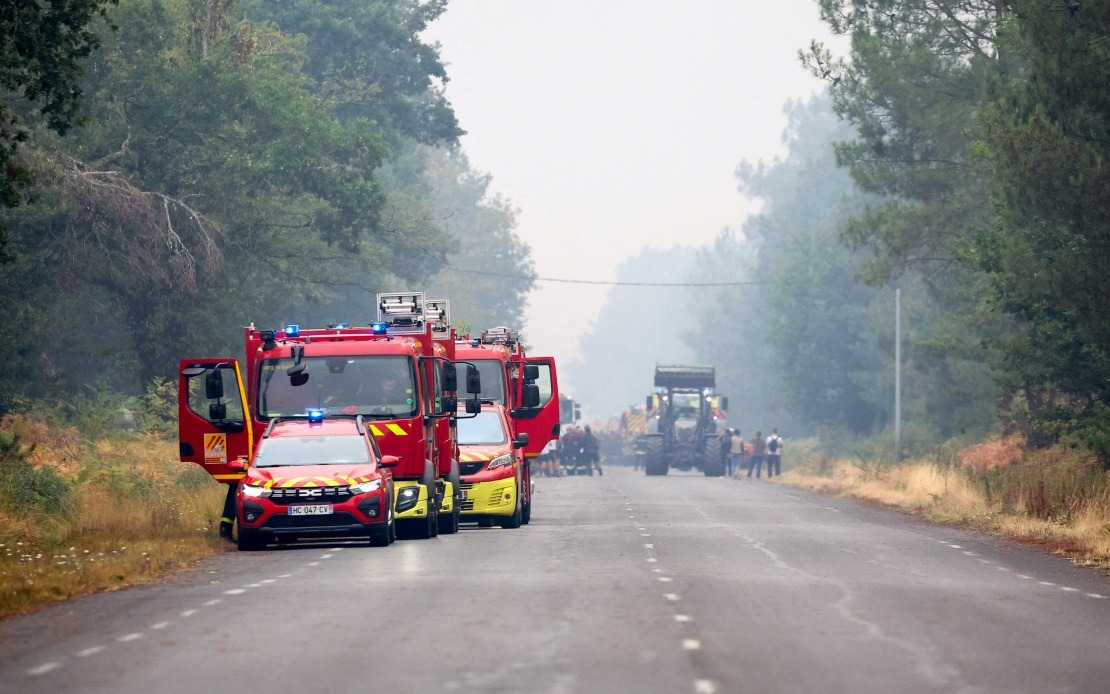
The unprecedented wildfire crisis engulfing southwestern France and eastern Spain showed tentative signs of abatement this week, as thousands of firefighters managed to contain several major blazes that had consumed vast tracts of forest and prompted widespread evacuations. Yet this temporary respite comes with a troubling caveat: weather forecasters are warning of an imminent heat wave that could reignite the catastrophe and complicate recovery efforts across both nations.
In the Gironde department of southwestern France, authorities reported Wednesday morning that the largest active wildfire had stabilised after days of intense fighting. Despite overnight flare-ups that required immediate suppression, firefighting crews managed to maintain control of the perimeter through the night. The prefecture credited the relatively calm overnight conditions and the sustained mobilisation of over 2,000 firefighters positioned along the fire's edge for preventing further expansion. The human toll of the emergency became evident in reports that 126 firefighters have sustained injuries battling this single blaze since its inception.
Elsewhere in France, progress has been more pronounced. The Var department in the southeast achieved full containment of a massive fire on Tuesday that had previously scorched nearly 4,800 hectares of woodland before firefighting units managed to suppress all active flames. Similarly, authorities in the southwestern Landes department declared the fire there contained on Monday after it had destroyed some 3,600 hectares, though up to 350 firefighters remained on standby to handle any potential resurgence.
The scale of the threat still gripping the region is underscored by the fact that 65 French departments remain under orange alert status due to elevated forest fire risk. This widespread precautionary stance reflects the volatile conditions that persist across France, suggesting that while individual fires may be contained, the underlying environmental conditions that spawned them have not fundamentally changed.
Spain confronts an equally severe situation with multiple active fires still demanding constant attention from emergency services. The Sierra Oeste region near Madrid demonstrated relative stability overnight without significant new outbreaks, yet firefighting operations continue unabated across Madrid, Avila, Toledo, Castellon, and Almeria. The most alarming blaze remains the Vall d'Uixo wildfire in Castellon province, which has raged since Saturday and has consumed 10,000 hectares while displacing 10,000 residents. Despite intensive efforts, this particular fire continues to defy containment attempts.
The evacuation crisis, while gradually easing, still affects thousands of Spanish residents. Municipal authorities in Madrid and Avila allowed 15 municipalities' populations to return home late Tuesday, while in Castellon, 9,000 residents gained permission to go back to their properties. Another 6,000 inhabitants from 11 municipalities in Toledo similarly received clearance for return. However, these partial retreats underscore the ongoing volatility of the situation, with 30 roads still closed across five provinces, hampering transportation and complicating both emergency response and rebuilding activities.
Meteorologists have issued an ominous forecast that casts doubt on the sustainability of recent containment gains. The National Weather Service Meteo-France has extended orange alert warnings across 16 additional departments in advance of a fresh heat wave expected to sweep the region. Spanish authorities similarly report preparedness measures for another period of extreme temperatures. These warnings carry particular weight given the established causal link between heat waves and wildfire severity; rising temperatures dry vegetation, increase fire spread rates, and make suppression efforts exponentially more difficult.
The cyclical nature of this crisis—fire followed by heat wave followed by renewed fire risk—points to fundamental climate vulnerabilities in both nations. The Iberian Peninsula and southwestern France have experienced increasingly intense summers in recent years, a pattern broadly consistent with climate projections for Mediterranean regions. The current emergency illustrates how climate change translates into tangible, immediate threats to civilian populations and emergency services.
For Malaysia and Southeast Asian observers, the European crisis offers sobering lessons about wildfire management and climate resilience. While Southeast Asian nations experience their own fire seasons, particularly during dry periods, the intensity and scale of European blazes demonstrate how rapidly fire can overwhelm even well-resourced emergency services. The coordination challenges visible in managing cross-departmental evacuations and road closures reflect complexities that would likely prove even more difficult in Southeast Asia's more densely populated regions.
The economic and social disruption from these fires extends far beyond immediate property damage. Tourism industries face collapse, agricultural productivity suffers, air quality deteriorates across vast regions, and the psychological toll on residents forced to evacuate repeatedly accumulates. France and Spain's ability to manage these cascading crises will likely influence European climate adaptation strategies for years to come.
Firefighting authorities stress that while containing existing fires remains the priority, preparation for the approaching heat wave has become equally critical. The cycle of stabilisation followed by deterioration reflects a region fundamentally stressed by climatic conditions beyond traditional management capacity. Unless underlying temperature trends reverse—an outcome no meteorologist currently anticipates—Europe may find itself permanently locked in this pattern of recurring crisis, preparation, and renewed emergency.

