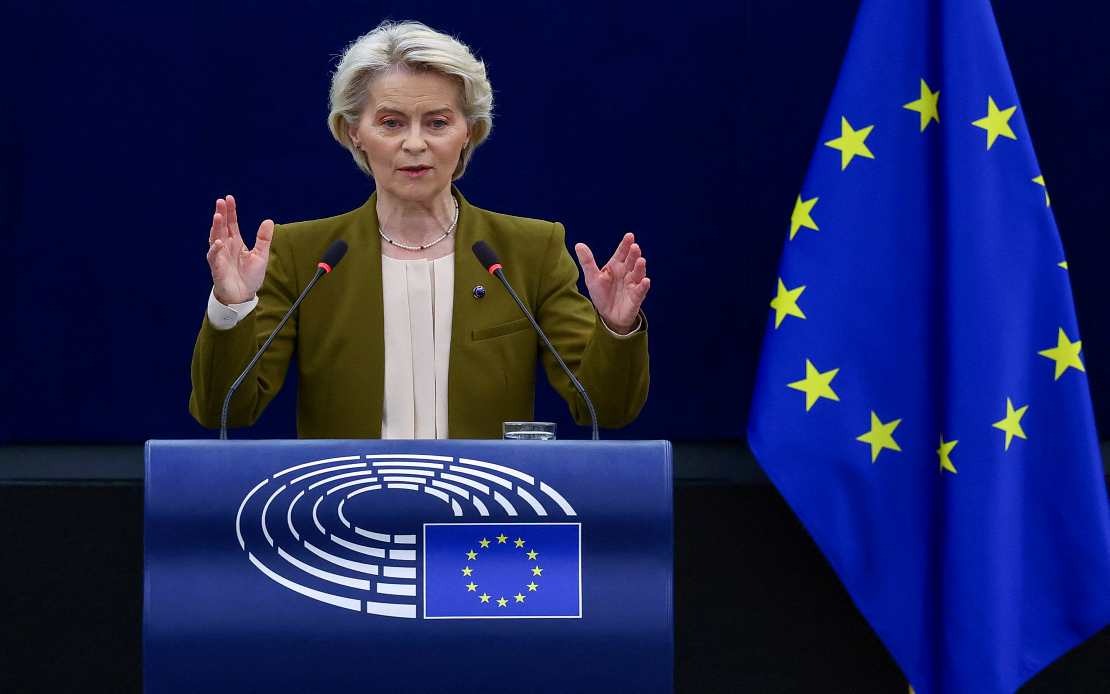
The European Union has committed €2.1 million in urgent humanitarian support to Colombia in the aftermath of a powerful earthquake that struck the South American nation earlier this week, leaving at least 181 people dead and thousands displaced. European Commission President Ursula von der Leyen confirmed the assistance package on Wednesday, emphasising the bloc's determination to stand alongside Colombian authorities as rescue and recovery operations intensify across affected regions. The financial commitment represents a rapid mobilisation of EU resources at a moment when the country faces mounting humanitarian challenges from the magnitude 7.4 tremor that devastated multiple provinces.
The earthquake, which struck with considerable force, has triggered a major humanitarian crisis requiring coordinated international response. Colombia's most vulnerable populations now face acute shortages of essential services, with infrastructure damage compounding immediate survival needs in the hardest-hit areas. The EU's financial package is explicitly designed to address these multifaceted crises through targeted material and cash assistance, reflecting a comprehensive understanding of post-disaster requirements that extends beyond emergency rescue to encompass longer-term recovery and stability.
Breaking down the aid allocation, the European Commission specified that resources will fund critical interventions across several domains. Health services represent a priority, given that earthquakes typically overwhelm medical facilities and create widespread public health emergencies. Water, sanitation, and hygiene provisions are equally essential, as damaged infrastructure often compromises access to clean water and creates disease transmission risks in crowded displacement settings. Shelter assistance addresses the immediate need for safe housing among people rendered homeless by structural collapse, while food assistance targets nutritional security during the recovery phase. The inclusion of cash transfers demonstrates sophisticated humanitarian practice, allowing affected communities direct agency in purchasing locally-needed goods and supporting economic activity in affected zones.
The speed of the EU response underscores institutional capacity for rapid decision-making during crises. On Tuesday alone, just days after the earthquake, the European Commission already disbursed €100,000 to the German Red Cross specifically deployed in the devastated departments of Chocó and Valle del Cauca. This initial tranche targeted 2,500 families facing the most acute hardship, with the German Red Cross leveraging its operational presence in Colombia to deliver immediate relief. This rapid initial response, followed by the substantial €2.1 million commitment, reflects both political will and practical capability to translate humanitarian concern into tangible assistance.
Beyond financial transfers, the EU has activated its satellite mapping and imagery services to enhance emergency response coordination. This technological dimension proves particularly valuable in disaster zones where ground-level infrastructure damage impairs conventional communication and navigation. Satellite-derived mapping enables emergency responders to identify accessible routes, locate displaced populations, assess infrastructure damage patterns, and prioritise resource deployment to areas of greatest need. Such technical support, often overlooked in aid discussions, frequently determines the difference between efficient and chaotic response operations.
The European Commission has emphasised that it maintains active dialogue with Colombian government authorities to ensure aid effectiveness and responsiveness. This coordination mechanism is crucial for avoiding duplication, identifying emerging needs as situations evolve, and ensuring that assistance aligns with national government priorities and local context. As initial search and rescue operations yield to medium-term reconstruction efforts, aid priorities will inevitably shift, necessitating flexible partnerships between international donors and recipient governments capable of rapid recalibration.
For Malaysia and Southeast Asian observers, this EU response offers several instructive lessons regarding international disaster assistance architecture. First, the rapid mobilisation of substantial resources demonstrates that developed economies retain both capacity and political motivation to support developing nations facing natural disasters, an assurance relevant to earthquake-prone regions throughout Southeast Asia. Second, the multi-sectoral approach—combining financial, technical, and logistical support—reflects best-practice humanitarian response that goes beyond symbolic gestures to address concrete survival needs across health, water, food, and shelter domains. Third, the emphasis on coordination with recipient authorities respects national sovereignty while ensuring effectiveness, a balance increasingly important as emerging economies exercise greater agency in international relations.
Colombia's earthquake disaster also highlights the universal vulnerability that wealthy and developing nations share regarding seismic activity. The Pacific Ring of Fire affects multiple Southeast Asian countries, particularly the Philippines and Indonesia, making Colombia's experience directly relevant for regional emergency preparedness planning. The EU's demonstration of support mechanisms and rapid resource mobilisation provides a template for how international institutions can respond effectively when natural disasters strike developing nations. For Malaysian policymakers and humanitarian professionals, observing how the EU coordinates satellite imagery services, manages financial transfers through established NGO networks, and maintains high-level political communication with affected governments offers practical insights for strengthening regional disaster response frameworks.
The broader geopolitical context deserves consideration as well. The EU's substantial assistance to Colombia reflects longstanding democratic partnerships and shared values within Western alliance structures. However, the principles of rapid, comprehensive, multi-sectoral humanitarian response transcend ideological boundaries and should inform how any developed economy or regional bloc responds to humanitarian crises. As climate change increases frequency and severity of natural disasters globally, the mechanisms demonstrated through the EU's Colombian response will become increasingly central to international relations and cooperation frameworks. Southeast Asian nations, which increasingly face complex disaster challenges spanning earthquakes, floods, typhoons, and environmental degradation, benefit from studying how established international institutions mobilise resources, coordinate response operations, and balance immediate relief with longer-term reconstruction imperatives in post-disaster settings.

