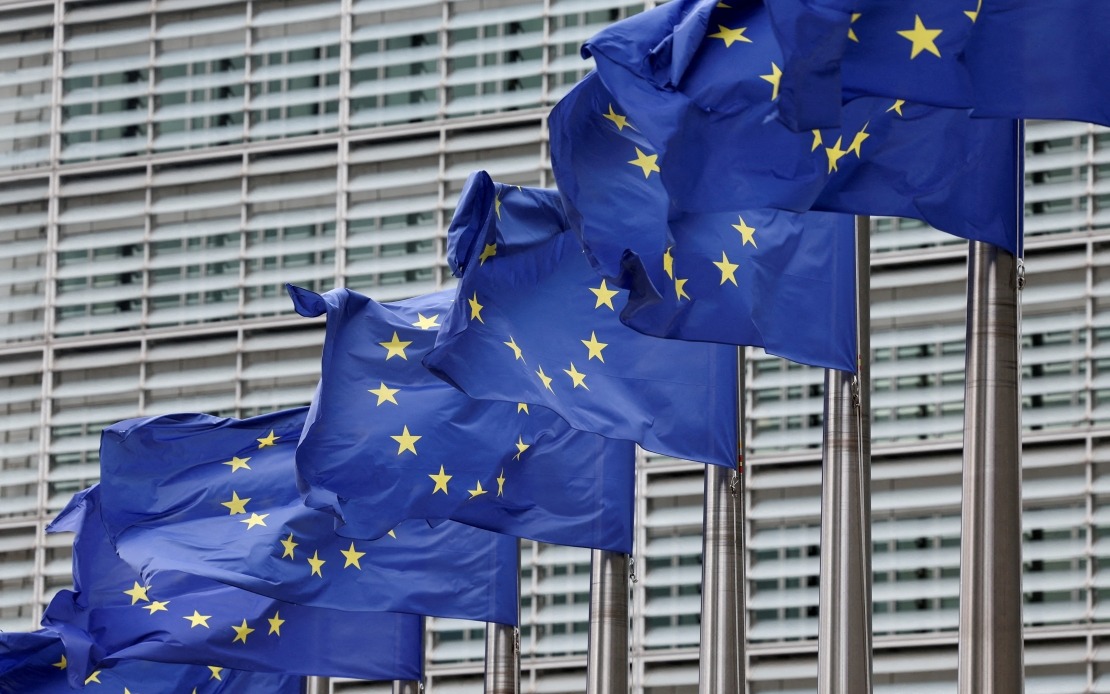
The European Union's foreign affairs leadership will convene in Brussels on Monday to assess intensifying geopolitical challenges across multiple regions, with a contentious debate over settlement sanctions expected to dominate discussions on the Israeli-Palestinian conflict. The gathering represents a critical juncture for EU cohesion, as the bloc grapples with whether to escalate its response to Israeli settlement policies through targeted trade restrictions—a move that threatens to expose deeper fractures within the union's collective decision-making framework.
Brussels has already assembled a comprehensive menu of potential measures for consideration by the 27 member states, ranging from selective import bans on goods originating from Israeli settlements to broader commercial restrictions. These options reflect months of deliberation within European Commission corridors, as officials attempt to calibrate a response that adequately addresses growing international criticism of settlement expansion while remaining politically feasible within a fractious membership. The technical groundwork is complete; what remains uncertain is whether political will can align across the continent to implement such measures.
The ideological fault line running through the EU has become increasingly visible on this issue. Spain, Ireland, and Belgium have positioned themselves at the vanguard of a hardline faction, explicitly demanding severe sanctions targeting Israel's settlement programme. Their advocacy reflects domestic political pressures and strong public opinion in these member states, where Palestinian solidarity movements command substantial support. Conversely, Germany and other nations have resisted such escalation, citing concerns about proportionality, the risk of destabilising the broader region, and the complications such measures might introduce to future diplomatic efforts. This transatlantic division echoes historical patterns of disagreement on Middle Eastern policy, though the intensity has noticeably sharpened.
The procedural architecture of EU decision-making adds another layer of complexity to Monday's deliberations. Should member states formally classify any trade restrictions as foreign policy sanctions—the natural categorisation given their political objectives—unanimous approval becomes mandatory. This requirement effectively grants each member state veto power, a threshold that has consistently proven insurmountable on contentious Middle Eastern matters. The unanimity requirement has long been criticised as an impediment to coherent European action, enabling single nations to obstruct measures that command broad support elsewhere in the bloc.
Alternatively, were the restrictions reframed as purely commercial or trade-related measures rather than formal sanctions, the threshold would drop to a qualified majority. Under this calculation, 15 of the 27 member states representing at minimum 65 per cent of the EU's combined population would suffice for adoption. This procedural workaround has been employed occasionally in EU history to circumvent unanimity requirements, though it remains controversial and risks accusations of circumventing proper deliberation. Whether Brussels will pursue this technical manoeuvre on the settlement question remains an open question, and its deployment would certainly provoke sharp reactions from dissenting member states.
The Palestinian territories dispute sits alongside other critical regional instability in the EU's West Asian portfolio. Ministers will also address the evolving situation regarding Iran, reflecting heightened tensions and the potential for further escalation in an already volatile region. The inclusion of Iran-related discussions underscores how interconnected Middle Eastern dynamics have become, with developments in the Israeli-Palestinian context reverberating across a broader geopolitical landscape where Saudi Arabia, the Gulf states, and other regional powers maintain significant stakes in the outcome.
Russia's ongoing invasion of Ukraine will claim significant attention during the Brussels gathering, with ministers expected to move toward additional sanctions targeting Russian individuals, entities, and organisations complicit in the conflict. The trajectory of anti-Russian measures has involved successive waves of escalating restrictions since February 2022, progressively targeting oligarchs, financial institutions, and sectors critical to Moscow's war-fighting capacity. However, crafting an ambitious new sanctions package that incorporates substantial trade restrictions has proven technically and politically challenging, as the EU balances the imperative to degrade Russian capabilities with concerns about economic consequences for member states dependent on Russian energy and commodities.
The more advanced nature of the Russia discussions—where broad consensus has already crystallised around additional measures—presents a stark contrast to the settlement question. While disagreement persists regarding the scope and sectoral focus of new Russian sanctions, the fundamental commitment to escalating pressure enjoys overwhelming backing across EU capitals. This divergence highlights how geopolitical proximity and perceived direct threat can crystallise European unity in ways that more distant conflicts struggle to achieve. Ukraine's central European location and the existential stakes for NATO members have concentrated minds in a manner that Palestinian settlement policy, however morally significant, has not.
Ukrainian Foreign Minister Andrii Sybiha has received an invitation to participate in informal consultations with the EU ministers, a diplomatic gesture that reflects Kyiv's continuing integration into European security discussions and the priority attached to maintaining coordinated responses to Russian aggression. Sybiha's participation will likely amplify discussions about the trajectory of military support, potential humanitarian initiatives, and the parameters of any future settlement negotiations. The Ukrainian minister will presumably also emphasise the interconnections between European unity on Ukraine and the broader credibility of EU foreign policy across other theatres.
For Southeast Asian observers, these EU dynamics carry instructive lessons about the challenges of maintaining consensus within regional groupings facing competing interests and divergent threat perceptions. The ASEAN experience mirrors certain EU tensions, particularly regarding how member states balance principle against pragmatism when confronted with powerful actors. The settlement question also resonates within Southeast Asia given the historical parallelism between colonial occupation and contemporary territorial disputes, though the comparison remains delicate and contested among regional analysts and policymakers.
The outcome of Monday's Brussels gathering will shape not merely EU credibility on Palestinian issues but also signal broader conclusions about the bloc's capacity to execute coherent foreign policy in an increasingly multipolar world. Should the union fracture publicly over settlements while achieving consensus on Russia, it risks appearing inconsistent and undermines claims to principled leadership. Conversely, achieving breakthrough agreement on settlements could demonstrate renewed European agency on Middle Eastern matters, though such success seems improbable given the current alignment of member state positions and the structural constraints embedded in EU decision-making procedures.

