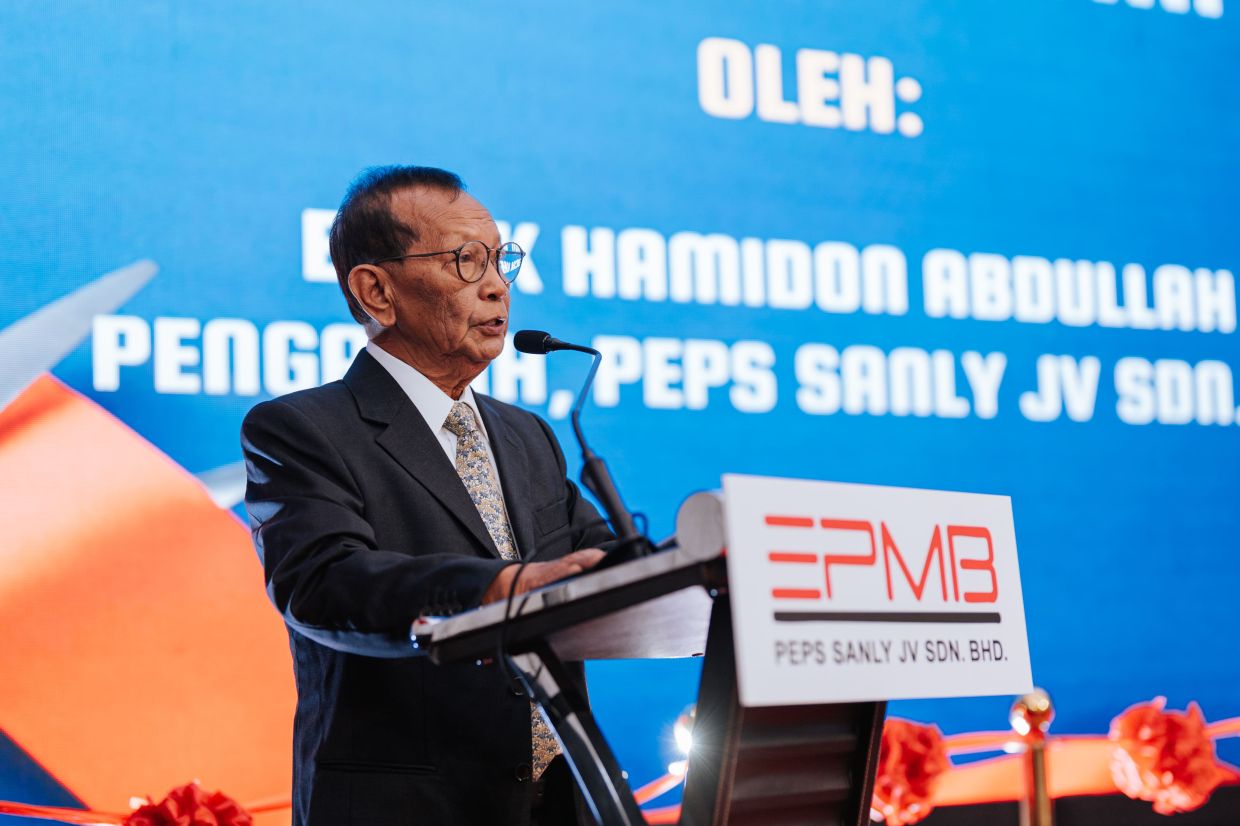
EPMB has commissioned a major new manufacturing facility in Tanjong Malim, operated through a partnership between the company and China-based Sanly Auto Parts Co Ltd. The joint venture entity, Peps Sanly JV Sdn Bhd, established its operations within the Automotive High Technology Valley (AHTV) in October 2025, representing a significant expansion of domestic component manufacturing capabilities for Malaysia's national automobile manufacturer.
The new production plant spans 9,909 square metres and has been engineered to deliver substantial manufacturing volume, with current operational capacity set at 40,000 complete car sets monthly. This translates to an annual production potential of 480,000 sets, positioning the facility as a meaningful contributor to Proton's component supply requirements. The facility will focus on manufacturing critical chassis assemblies, including front corner modules, subframe modules and rear axle module configurations.
These components are destined for several Proton models across the current and upcoming product lineup. The facility will supply parts for the AMA01-based Proton Saga, as well as the existing Persona and Iriz models that form the backbone of Proton's domestic sales. Looking forward, the Tanjong Malim operation will also support production of the upcoming AMA02 and AMA05 platforms, indicating EPMB's commitment to supporting Proton's medium-term product strategy and regional expansion ambitions.
The venture with Sanly Auto Parts was formalised in February 2025 following a period of strategic negotiations. The partnership targets the localisation of chassis component manufacturing, beginning with the Proton Saga AMA01 platform but extending across multiple models. This approach aligns with broader Malaysian industrial policy encouraging domestic manufacturing of complex automotive components rather than reliance on imported assemblies.
EPMB's executive chairman, Hamidon Abdullah, framed the collaboration as a critical step in strengthening the company's supply chain architecture. By partnering with Sanly, EPMB gains access to substantial technical expertise in metalworking processes, assembly methodologies and automotive chassis systems design—domains in which the Chinese firm has developed considerable capabilities serving multiple original equipment manufacturers. This knowledge transfer arrangement is central to improving the competitiveness of Malaysia's automotive supply sector.
The partnership structure also provides EPMB with indirect exposure to China's automotive manufacturing ecosystem and the cost-competitive production methodologies that have made Chinese suppliers increasingly influential in global vehicle component supply chains. Sanly's existing relationships with Geely-Volvo entities and other Chinese original equipment manufacturers create a potential bridge to technology and process innovations that EPMB can subsequently deploy across its operations.
Hamidon Abdullah emphasised that the collaboration delivers tangible benefits to Proton through enhanced cost efficiency without compromising quality assurance standards. The ability to produce complex chassis modules domestically at competitive pricing is particularly valuable given the margin pressures facing automotive manufacturers globally. Local production reduces logistics costs, shortens supply chain lead times and improves inventory management compared to importing fully assembled components.
This expansion deepens EPMB's relationship with Proton, which has endured nearly four decades. Throughout that period, EPMB has evolved from a basic component supplier to a sophisticated tier-one and tier-two supplier capable of handling entire module assembly and systems integration. The company has adapted to successive generations of Proton vehicle platforms, providing critical input during the transition from legacy Waja and Perdana models through to the modern AMA architecture.
Proton's strategic direction increasingly emphasises regional growth beyond Malaysia and electric vehicle development, objectives that require a reliable, flexible and cost-effective supply base. The Tanjong Malim facility supports both dimensions of this strategy—by enabling local production efficiency that translates into competitive export pricing, while simultaneously building domestic manufacturing capacity that can be repurposed or expanded for electric vehicle component production as Proton advances its EV roadmap.
The timing of the facility's commissioning reflects broader shifts within Malaysia's automotive industry. As regional competitors including Thailand and Indonesia develop increasingly sophisticated local supply chains, Malaysian component manufacturers must continuously invest in capability and capacity to retain their relevance. EPMB's partnership with Sanly represents a pragmatic response to this competitive pressure, leveraging foreign technical expertise and capital to strengthen local manufacturing competitiveness.
The Automotive High Technology Valley location underscores the strategic importance of this investment. The AHTV clustering initiative, centred in Perak, aims to establish Malaysia as a regional hub for advanced automotive component manufacturing. By situating this facility within the designated zone, EPMB positions itself to benefit from supporting infrastructure, talent pools and potential collaboration opportunities with other automotive suppliers and research institutions developing within the valley.
Looking ahead, the scale and scope of the Tanjong Malim operation suggest EPMB and Sanly may view this as a foundation for broader collaboration. Chassis components represent a logical starting point for localisation, but the partnership potentially extends to other assemblies and systems as capabilities mature and production volumes justify expansion. This phased approach to manufacturing expansion represents prudent business strategy in an automotive sector facing prolonged transition and uncertainty.

