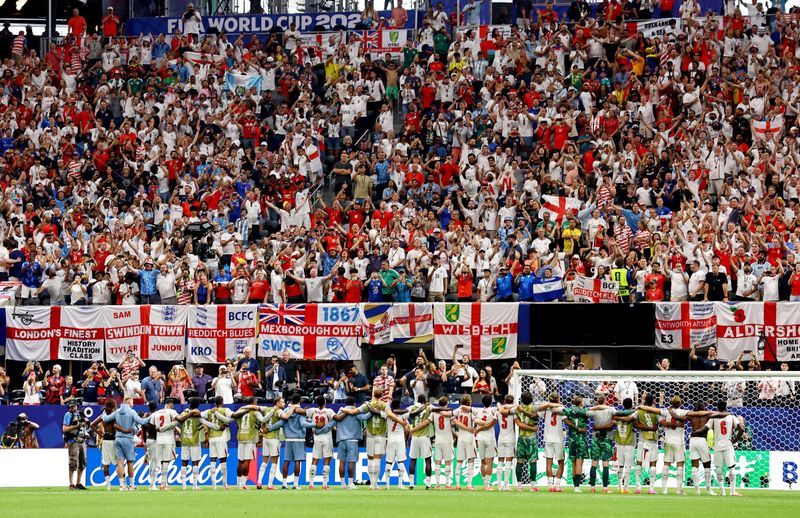
England's World Cup campaign took a sudden, terrifying turn when underdogs DR Congo seized the initiative on Wednesday, scoring early and forcing the favourites into unfamiliar and deeply uncomfortable territory. The team's opening victory over Croatia had promised dominance, yet subsequent performances against Ghana and Panama had already sown seeds of doubt about Thomas Tuchel's defensive arrangements. When Brian Cipenga fired DR Congo ahead within the first ten minutes at Atlanta Stadium, those lingering concerns crystallised into something far more immediate and visceral—the genuine prospect of an early exit.
The significance of England's predicament could hardly be overstated. This marked the tournament's first moment the Three Lions had conceded an opening goal, and more troublingly, England's historical record offered zero comfort: they had never recovered from a halftime deficit in World Cup football. The psychological weight pressed down visibly on supporters and players alike. The stadium's atmosphere shifted from expectant to ominous, with fan cameras capturing the anxiety etched across faces, supporters gripping their beers as if steadying themselves for disappointment. The contrast was stark between England's movement-heavy approach and DR Congo's resolute, organised structure—goalkeeper Lionel Mpasi standing between the visitors and further damage with an impenetrable resolve that frustrated every English attacking gesture.
DR Congo's heroic display during the opening period cannot be dismissed as mere nuisance value. The Congolese side executed a tactical masterclass in compression and defensive discipline, making England's attacks feel laboured and predictable. Yoane Wissa's strike against the post moments before the interval emphasised how perilously close DR Congo came to extending their advantage, while a disputed penalty appeal from Harry Kane further illustrated England's desperation. The half-time whistle arrived without any English goal, leaving the dressing room conversation focused on restoration rather than rhythm.
The turning point emerged gradually after the interval. Tuchel's interventions—repositioning Declan Rice to right back and introducing the attacking impetus of Eberechi Eze in midfield—gradually shifted the momentum. Jude Bellingham's incisive runs and Marcus Rashford's prowling edge began fraying DR Congo's defensive shape. The pressure accumulated relentlessly, though Mpasi's spectacular reflexes repeatedly denied clear opportunities. That tension became almost unbearable, the manager visibly agitated in his technical area, his frustration boiling over even at minor tactical lapses from his own players.
Kane's 75th-minute equaliser—a deft glancing header that just brushed Mpasi's fingertips—released an explosion of accumulated tension throughout the stadium. The goal marked England's 83rd international strike from their captain and represented far more than a statistical milestone. It signalled the restoration of narrative control, the reassertion of expected superiority after a sustained period of vulnerability. Barely had the crowd's roar subsided before Kane struck again in the 86th minute, definitively securing passage to the last sixteen and ending a remarkable comeback sequence.
This victory held particular historical resonance. England had not staged a World Cup comeback since their 1990 quarter-final triumph over Cameroon, precisely 36 years prior to the minute. That distant memory carried weight for a squad determined to write their own chapter, though Tuchel's measured post-match assessment acknowledged the uncomfortable reality: England had been pushed to the brink by opponents ranked far below them in conventional measures of strength. His emphasis on resilience and belief masked the underlying concern that this victory, while undoubtedly earned, had exposed systemic defensive weaknesses that more formidable opponents would eagerly exploit.
The immediate challenge—Mexico—represents a fundamentally different proposition. Whereas DR Congo's game plan revolved around preventing England from expressing themselves, Mexico's attacking tradition suggests a contrasting battle awaits. England must shift from breakthrough mode to defensive solidity, from patience and pressure to reactive compactness. Kane acknowledged this duality, recognising that knockout football demands different skills and mindsets from successive opponents. The psychological adjustment required should not be underestimated, particularly given the residual tension still coursing through the squad's consciousness.
The venue compounds these challenges substantially. Mexico City's Azteca Stadium towers over 2,200 metres above sea level, creating atmospheric conditions radically different from the humid Atlanta environment. The thinner air reduces oxygen availability, fundamentally altering physical demands for professional athletes accustomed to sea-level football. The ball's aerodynamic properties shift noticeably at such altitudes, travelling faster and behaving less predictably than players typically experience. For an England squad already emotionally drained from their gruelling comeback, these physiological obstacles represent an additional layer of difficulty.
The progression from containing a defensive-minded opponent to managing a high-altitude attacking threat illustrates knockout football's escalating complexity. DR Congo tested England's nerve and composure under sustained pressure; Mexico City will test their physical endurance and oxygen availability. Tuchel's squad, having rediscovered their winning habit, must now demonstrate whether they can translate that momentum into sustained dominance against increasingly challenging circumstances. The real examination of their World Cup credentials remains ahead.

