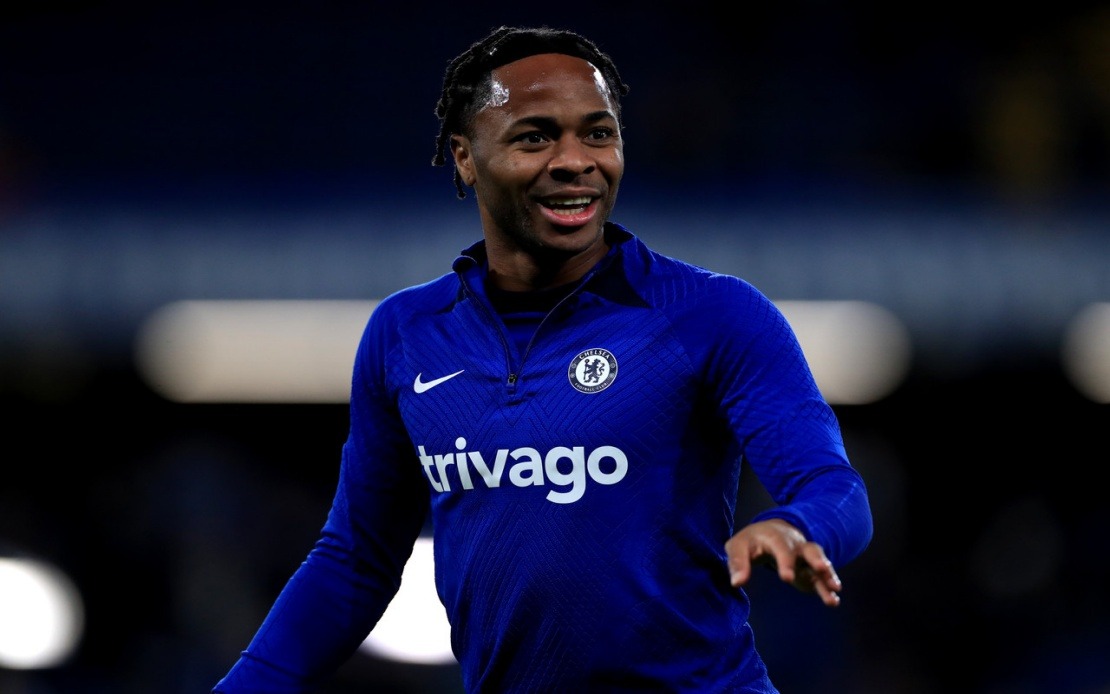
Raheem Sterling, the decorated Manchester City and England forward, now faces serious charges stemming from a traffic incident that occurred on the M3 motorway in southern England. Hampshire and Isle of Wight Constabulary confirmed that the 31-year-old has been charged with dangerous driving, possession of nitrous oxide for inhalation purposes, and failing to provide a specimen following a single-vehicle crash involving a Lamborghini near Minley interchange on May 28. A magistrates' court hearing is scheduled for September 15 at Basingstoke.
The collision, which involved only the single vehicle, resulted in no injuries, according to police statements. Sterling, who resides in Berkshire, is accused of operating the vehicle in a manner deemed dangerous under the Road Traffic Act. The charge regarding nitrous oxide—commonly known as laughing gas—represents a separate legal matter, as possession of the substance for human consumption has become a significant enforcement priority across United Kingdom law enforcement agencies in recent years.
Sterling's illustrious football career spans nearly two decades at the highest levels of European club and international competition. The forward, born in Kingston, Jamaica, and raised in England, developed through Queens Park Rangers' academy system before progressing to Liverpool, where he established himself as a promising young talent in the Premier League. His move to Manchester City in 2015 marked a transformative period, during which he became one of the most prolific wingers in world football and a cornerstone of the club's domestic dominance.
At Manchester City, Sterling accumulated an impressive trophy collection that underscores his contributions to the club's era of sustained success. He secured four Premier League titles, five League Cups, and the FA Cup in 2019, establishing himself among the most decorated players of his generation. His attacking prowess and consistency made him a regular starter throughout his seven-year tenure at the Etihad Stadium, during which Manchester City reasserted itself as England's dominant force under managers including Roberto Guardiola.
Sterling's international career also reflects distinction at the highest level. Representing England across 82 appearances, he scored 20 goals while contributing to the national team's recent resurgence under Gareth Southgate. Notably, he played a key role in England's run to the 2018 World Cup semifinals and featured prominently as the Three Lions reached the Euro 2020 final, a tournament that demonstrated the team's competitive maturity on the continental stage.
Beyond the pitch, Sterling cultivated a significant profile for activism on social issues, particularly regarding racial equality and anti-discrimination efforts within professional football. His sustained advocacy against racism and discrimination earned him recognition in the 2021 Queen's Birthday Honours, where he was appointed an MBE for services to racial equality in sport. This honour reflected his willingness to speak publicly about intolerance during an era when racial tensions in English football drew international scrutiny, including during Euro 2020 when England players faced controversy over fan reactions to the taking of the knee.
His career trajectory since leaving Manchester City illustrates the volatile nature of professional football at the elite level. After joining Chelsea in 2022, Sterling found himself gradually marginalised, experiencing diminished playing opportunities that prompted the club to arrange a season-long loan to Arsenal for the 2024-25 campaign. Following this temporary assignment, he subsequently moved to Feyenoord in the Dutch Eredivisie on a short-term arrangement, suggesting an attempt to relocate his career outside English football entirely.
The charges now facing Sterling come at a juncture when his career momentum had been disrupted by competitive circumstances. The case raises questions about the pressures and challenges confronting elite athletes during periods of professional uncertainty and transition. For Malaysian and Southeast Asian sports enthusiasts familiar with Sterling's performances in the Premier League and international competitions, the incident represents an unexpected development in the trajectory of a player who had cultivated a progressive public image.
The magistrates' court proceedings scheduled for September 15 will determine the trajectory of these legal matters. Such charges carry potentially significant consequences for Sterling's professional standing and future opportunities, regardless of their ultimate resolution. The case also reflects broader societal concerns about road safety and substance use issues that transcend professional football, touching upon public health and legal enforcement priorities that resonate across jurisdictions including Malaysia.
As the hearing approaches, the incident serves as a reminder that prominence in professional sport does not insulate individuals from legal accountability. For a player whose public identity has been substantially shaped by his advocacy for equality and ethical conduct, the legal proceedings present a complex narrative arc. The resolution of these charges will likely influence both Sterling's career prospects and his broader public standing beyond the football field.

