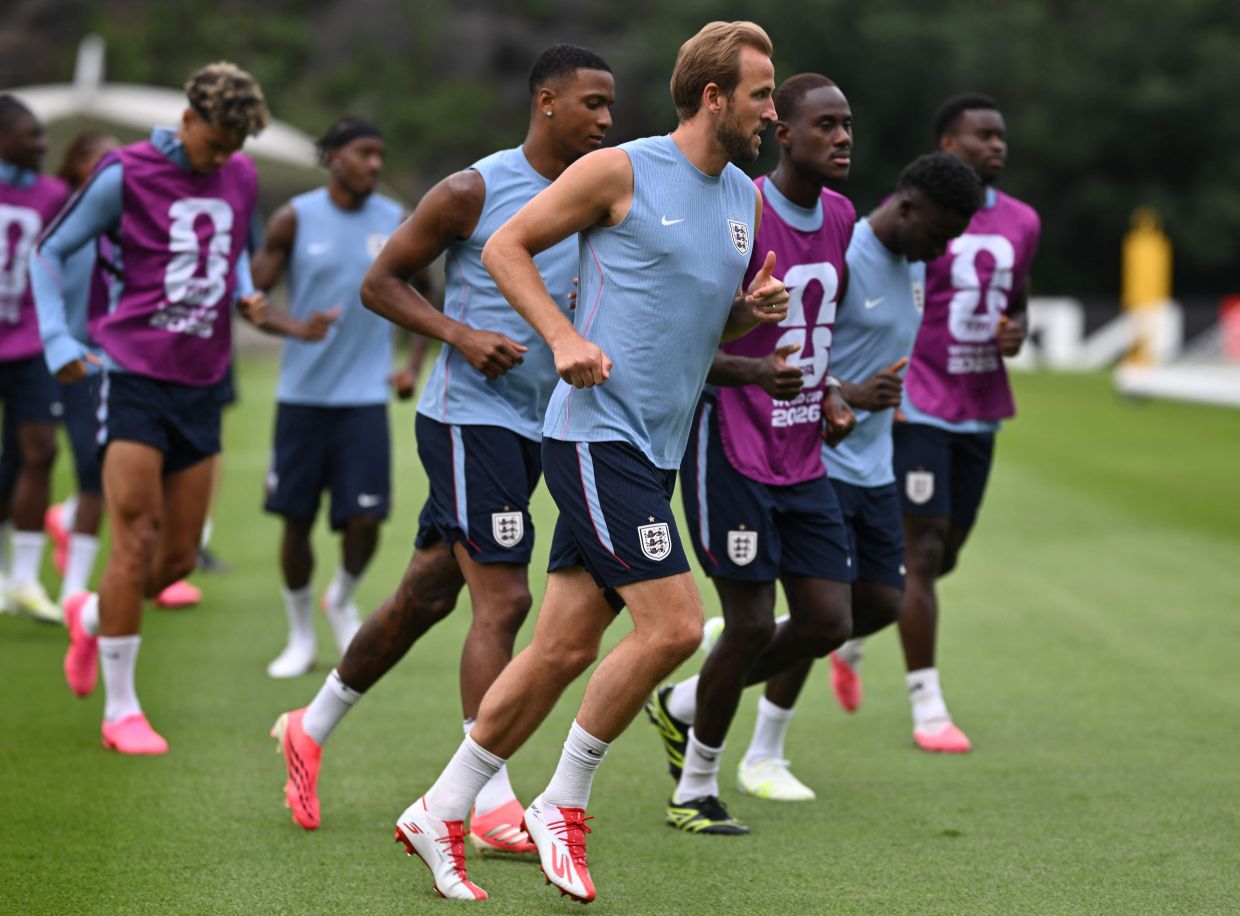
England prepare to tackle Mexico in one of the tournament's most compelling knockout encounters, with both nations eyeing a quarter-final berth in matches unfolding across the United States. The Three Lions' trip to the Estadio Azteca carries enormous historical baggage—their last visit came 40 years ago for the infamous 'Hand of God' clash against Argentina—and manager Thomas Tuchel acknowledges the weight of expectation hanging over his team as they seek to navigate a hostile environment and secure passage to the next round.
The magnitude of Sunday's fixture in Mexico City cannot be overstated. England entered this World Cup tournament with genuine aspirations of ending a 60-year drought for a major international title, yet their campaign has stumbled considerably through the group stages. A sluggish display against the Democratic Republic of Congo required a dramatic late intervention from captain Harry Kane, whose brace salvaged a 2-1 victory and earned passage to the knockout phase. Such unconvincing performances have prompted serious questions about whether England possess the consistency and cohesion required to challenge for the trophy, particularly when facing opponents of Mexico's calibre.
Mexico arrives at this fixture in starkly contrasting form. Javier Aguirre's side has demonstrated remarkable solidity on home territory, winning all four domestic matches without surrendering a goal—a defensive record that starkly contrasts with England's vulnerability. Their 2-0 elimination of Ecuador secured Mexico's first knockout victory in 40 years, and capturing the scalp of a fourth-ranked FIFA nation would represent a seismic achievement. The prospect of knocking out England before their own supporters creates an intoxicating narrative for the Mexican camp, though Aguirre has tempered expectations by acknowledging his team's underdogs status and insisting a near-perfect performance will be required.
Altitude presents a tangible physical challenge that England cannot dismiss. The Azteca's elevation of 2,240 metres above sea level creates physiological demands that foreign teams struggle to overcome, a factor Tuchel has repeatedly highlighted. The England manager expressed frustration that his squad lacks the time to acclimatise adequately, noting the impossibility of meaningful adaptation in the four-day preparation window. This geographical disadvantage compounds existing defensive concerns that have plagued England throughout the tournament, particularly vulnerability to pace operations down the right flank—a sector Tuchel must urgently fortify against Mexico's attacking intentions.
Yet Tuchel's visit to the stadium drew him into the emotional intensity surrounding this fixture. The manager acknowledged the visceral atmosphere and historic significance of the venue, recognising that this represents a genuine World Cup occasion transcending ordinary competitive matches. The iconic nature of the stadium, combined with Mexico's domestic advantage and passionate support, creates an environment where England's technical superiority and ranking advantage may become secondary considerations. Managing such intangible factors—crowd noise, psychological pressure, and historical narrative—will prove as consequential as tactical preparation.
Weather represents an additional unpredictable variable. FIFA initially contemplated advancing the 6pm local kickoff time (4am Monday Malaysian time) to circumvent forecast thunderstorms, ultimately deciding against rescheduling. Meteorological predictions still indicate storm activity around match time, though temperatures of approximately 21°C will provide some relief compared to the near-record 38°C conditions when France defeated Paraguay in Philadelphia on Saturday. Such climatic fluctuations can disproportionately affect team fluidity and technical execution.
Simultaneously, Norway and Brazil contest the other round-of-16 pairing in New Jersey, where similarly ominous weather forecasts and regional flood warnings from the U.S. National Weather Service have created uncertainty. Brazil's status as five-time champions makes them prohibitive favourites, yet Norway boasts a potent attacking catalyst in Erling Haaland, whose five-goal tally across three appearances represents extraordinary tournament efficiency. The Manchester City forward faces familiar opponents in Brazil's defensive line—Gabriel Magalhaes from Arsenal and PSG's Marquinhos have both encountered Haaland in club competition—yet familiarity may not translate to successful containment against such prolific form.
Carlo Ancelotti has demonstrated characteristic composure regarding the Haaland challenge, expressing confidence that his defenders' accumulated experience against the Norwegian striker provides adequate preparation. Rather than elaborate tactical schematics, Ancelotti trusts his defenders' intimate knowledge of Haaland's tendencies acquired through repeated Premier League and European encounters. This philosophical approach suggests Brazil's coaching staff prioritises organisational solidity and defensive discipline over elaborate defensive innovations.
Norway's Stale Solbakken has counselled his team against becoming overwhelmed by occasion, urging focus on the match itself rather than the magnitude of facing a continental superpower. This measured approach acknowledges Brazil's favouritism while rejecting the notion that the South Americans possess the commanding superiority that characterised previous iterations of their programme. The evolution of global football has democratised elite competition, with traditional powerhouses no longer possessing the overwhelming technical advantages that once seemed insurmountable.
The quarter-final landscape emerges from these contests with substantial implications for tournament trajectory. France and Morocco have already secured last-eight positions, establishing themselves among the competition's elite. The victors of England-Mexico and Norway-Brazil duels will complete the quarter-final field, creating distinct geographical and stylistic patterns in the final eight. A European semi-final between England and Norway, or a North American-South American configuration, would reshape tournament dynamics and create novel competitive narratives.
For Malaysian and Southeast Asian audiences, these fixtures possess resonance beyond tournament fascination. England's struggles illuminate the unpredictability pervading modern international football, where established hierarchies no longer guarantee success. Mexico's domestic dominance demonstrates how home advantage transcends conventional preparation advantages, creating environments where collective willpower and crowd support become tangible competitive advantages. Norway's Haaland exemplifies how individual brilliance can elevate national aspirations, suggesting that smaller football nations retain pathways to transcendent achievement through exceptional player development and tactical ingenuity.
The convergence of these matches represents World Cup football at its most compelling—uncertainty, historical resonance, atmospheric intensity, and genuine competitive balance combining to create occasions where outcomes remain genuinely unpredictable. Whether England and Brazil progress, or Mexico and Norway secure unlikely victories, these matches promise to define World Cup legacies and reshape tournament narratives heading into the knockout acceleration.

