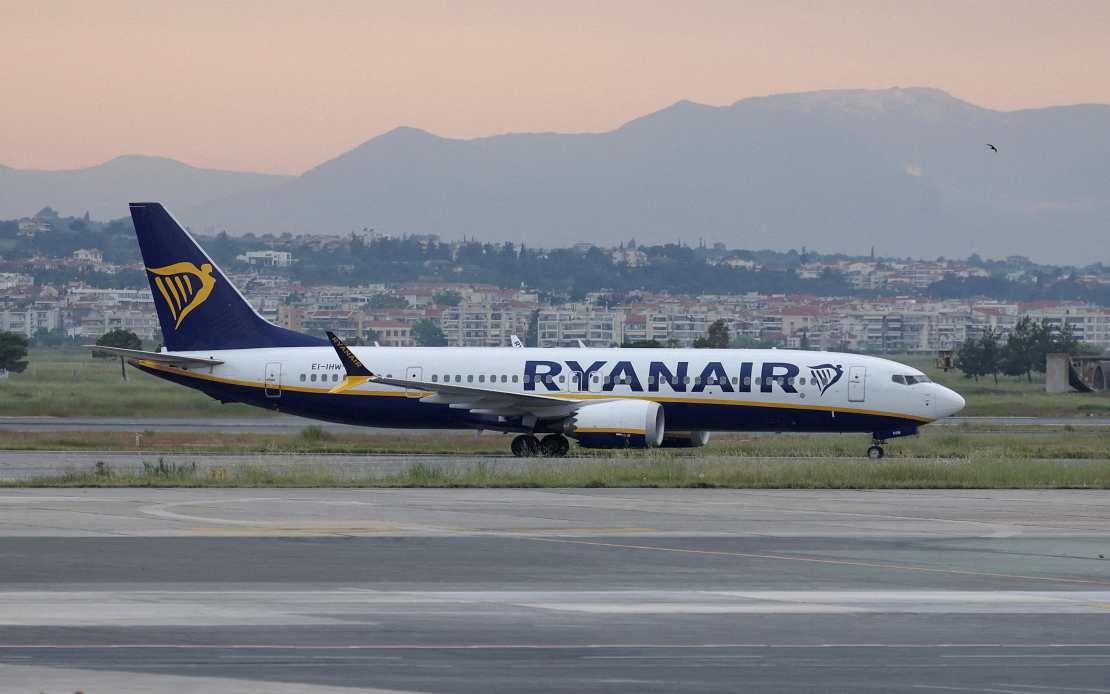
A detailed investigation by the US National Transportation Safety Board has revealed the precise sequence of events that led to a terrifying incident aboard a Ryanair flight operating from Thessaloniki to Munich in July, when engine fragments catastrophically breached the aircraft's pressurised cabin and nearly ejected a passenger into the open air. The incident, which occurred on a Malta Air aircraft flying under the Ryanair banner, underscores the potential consequences of combined mechanical failure and wildlife hazards at high altitude, drawing fresh attention to aviation safety protocols across European airspace.
According to the NTSB report released Thursday, the catastrophe unfolded during the critical climbing phase immediately after departure from Thessaloniki International Airport in Greece. The aircraft's right engine experienced a fan blade failure—a sudden structural breakdown in the rotating components that compress air for combustion. This failure, occurring whilst the aircraft was ascending and cabin pressurisation was being maintained, unleashed a cascade of mechanical consequences that would have been impossible to predict or prevent once initiated.
The force generated by the fan blade separation proved violent enough to dislodge multiple fragments from within the engine casing. These high-velocity pieces of metal penetrated the aircraft's structural integrity at two distinct points. The primary breach occurred through a passenger cabin window situated at row 11, whilst secondary damage affected the lower fuselage skin positioned behind the right wing-to-body fairing. The dual perforation of the pressurised section created a differential pressure scenario that subjected nearby passengers and the aircraft structure to extreme forces.
The passenger occupying seat 11F found themselves in an extraordinarily perilous situation. The force of air rushing outward through the compromised window lodged the individual partially within the damaged window frame, effectively creating a critical medical emergency at 30,000 feet. The entire window assembly had been completely detached by the impact, leaving nothing between the passenger and the void outside. What likely saved this person's life was the immediate intervention of fellow travellers in the cabin, who managed to overcome the powerful decompression forces and pull their fellow passenger back to safety inside the aircraft.
The investigation also uncovered evidence suggesting that bird ingestion may have contributed to or exacerbated the engine failure. Researchers discovered bird remains, including feathers, embedded in various sections of the engine. Whilst bird strikes are a known hazard in aviation and aircraft engines are designed with considerable tolerance for such impacts, the combination of bird ingestion and the subsequent fan blade failure raises questions about whether multiple factors converged to create conditions for failure. The presence of avian material at multiple engine locations suggests the bird may have caused initial damage that compromised structural integrity.
The incident occurred during the most vulnerable phase of flight—immediately after takeoff when the aircraft is gaining altitude and crew attention is concentrated on systems normalisation. The timing is significant for Southeast Asian aviation operations, where routes frequently traverse regions with high bird populations and where takeoff and landing phases account for the majority of safety-critical moments. Airlines operating in tropical and subtropical regions, including Malaysian carriers, regularly contend with bird hazard management at their home bases and along regional routes.
Despite the severity of the structural damage and the extraordinary circumstances surrounding the partial ejection of a passenger, the crew successfully managed the emergency. The aircraft returned safely to Thessaloniki, where it landed without further incident. The injured passenger received medical attention for injuries sustained during the incident. The successful recovery of the aircraft, despite the catastrophic cabin breach and extreme decompression, reflects both sound aircraft design principles and effective crew training in emergency management.
For Malaysia and the broader Southeast Asian region, this incident carries several implications. Ryanair and other European carriers frequently operate flights that connect through Middle Eastern hubs to Asian destinations, and similar aircraft types operate in the region. The investigation's findings regarding engine integrity and structural vulnerability in decompression scenarios inform ongoing safety monitoring across all airlines using comparable equipment. The Malaysian Civil Aviation Authority and regional carriers maintain close coordination with international safety bodies on such investigations.
The NTSB investigation demonstrates the importance of comprehensive post-incident analysis in identifying root causes and implementation factors. The discovery of bird remains suggests that wildlife management at airports remains an ongoing concern, even in mature aviation systems like those in Europe. For Malaysian airports, which experience their own seasonal bird migration patterns and resident bird populations, the investigation reinforces the need for rigorous bird control and monitoring programs.
This incident also highlights the critical role of passenger awareness and quick thinking in aviation emergencies. The fellow passengers who prevented the injured individual from being completely ejected into the atmosphere acted instinctively and effectively, demonstrating that cabin occupants can play a vital role in managing extreme situations. Malaysian airlines and their regional counterparts regularly include such scenarios in their safety briefings and crew training protocols.
The investigation's completion and publication provide closure on this dramatic incident whilst simultaneously informing industry-wide safety improvements. Engine manufacturers and aircraft operators will review their protocols for fan blade inspection and maintenance intervals. Airlines may also reassess cabin safety procedures and passenger seating assignments near windows, particularly on aircraft known to operate routes with significant bird hazard corridors. For the region's aviation authorities and operators, the detailed findings serve as a reminder that even in modern aircraft with multiple redundant safety systems, a convergence of failures can still create genuinely life-threatening situations requiring exceptional circumstances and human intervention to resolve successfully.

