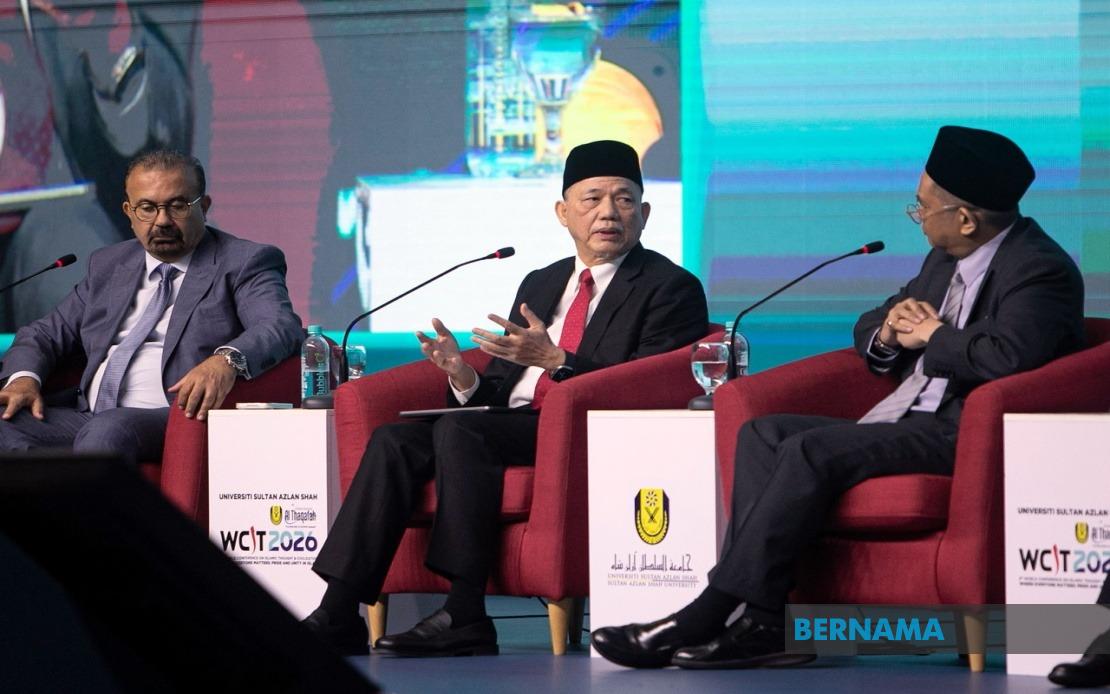
Deputy Prime Minister Datuk Seri Fadillah Yusof has warned that energy security and maritime security have become inseparably intertwined, with recent global tensions demonstrating how regional conflicts thousands of kilometres away now cascade into immediate consequences for ordinary Malaysians. Speaking in his capacity as Energy Transition and Water Transformation Minister at the 8th World Conference on Islamic Thought and Civilisation in Ipoh on July 21, Fadillah underscored that these two previously distinct policy domains now shape one another in ways that reverberate through every aspect of national economic life.
The Deputy Prime Minister's remarks came against the backdrop of escalating hostilities between the United States and Iran, a situation that has sent ripples through international markets and logistics networks. Fadillah explained that the immediate consequences extend far beyond volatile energy futures trading. When tension erupts in critical chokepoints such as the Strait of Hormuz—through which nearly one-third of the world's seaborne traded oil passes—the effects permeate the entire global supply chain, affecting electricity tariffs, petrol pump prices, freight costs, and the purchasing power of consumers in Southeast Asia.
The minister painted a concrete picture of how regional instability translates into household impact. Beyond the direct cost of crude oil and refined products, secondary effects multiply rapidly. Insurance premiums for vessels transiting contested waters climb substantially, pushing up the cost of maritime transport. Shipping companies pass these expenses downstream to importers and retailers, ultimately reflected in the prices that Malaysian families pay for groceries, manufactured goods, and consumer services. Even sectors seemingly unrelated to energy, such as retail and food distribution, face margin compression as their logistics costs rise unexpectedly.
Fadillah's intervention is particularly significant given Malaysia's strategic geographic position. The country straddles the Strait of Melaka, one of the world's most critical maritime passages, through which roughly one-quarter of global maritime trade by volume flows annually. Any disruption to freedom of navigation in these waters—whether through conflict, piracy, or environmental disaster—would instantly compromise Malaysia's role as a trading hub and transit point. The Deputy Prime Minister implicitly signalled that Malaysia recognises itself as both a potential victim of such disruptions and a stakeholder in maintaining regional stability.
The government's preferred approach, as articulated by Fadillah during the panel discussion featuring Sultan Nazrin Shah, emphasises calibrated diplomacy rather than confrontational posturing. This stance reflects Malaysia's historical reliance on an open, predictable, and rules-based international trading architecture. For over a century, Malaysian prosperity has depended on secure sea lanes and reliable access to global markets. The country cannot afford to become entangled in great-power competition or regional military escalation, as the economic costs would be catastrophic.
Fadillah's framing carries implications for Malaysia's diplomatic orientation in the current geopolitical climate. By positioning the country as a friend to all nations and emphasising the primacy of stable trading relationships, the Deputy Prime Minister was signalling Malaysia's commitment to neutrality and consensus-building through international forums. This approach contrasts with other regional actors who have sometimes tilted visibly toward one geopolitical pole, accepting potential trade-offs in stability for security guarantees or economic benefits.
The interconnectedness of energy and maritime security also underpins Malaysia's broader transition agenda. As the country seeks to diversify its energy portfolio through renewable and alternative sources, supply chain security becomes paramount. Critical minerals required for battery production, wind turbine components, and solar panel manufacturing traverse global maritime routes that remain vulnerable to disruption. A credible energy transition strategy therefore cannot be divorced from efforts to safeguard maritime commerce and regional peace.
Fadillah's comments arrive as Malaysian policymakers grapple with longer-term energy security challenges. While oil and gas remain central to the national energy mix and government revenues, the volatility demonstrated by recent tensions underscores the risks of over-reliance on hydrocarbon imports. Simultaneously, the regional importance of the Strait of Melaka means that Malaysia must invest in diplomatic capital and cooperative security mechanisms to preserve freedom of navigation. The government is effectively signalling that stability in the Strait of Melaka is a national security priority on par with energy diversification.
The Deputy Prime Minister's remarks also reflect an understated acknowledgement that Malaysia's insulation from major-power competition is diminishing. The presence of significant external military assets in regional waters, heightened tensions in the South China Sea, and the occasional military incidents in major shipping lanes have already demonstrated that Malaysian economic interests cannot be taken for granted. Strategic depth through diplomatic engagement and regional partnership is increasingly vital.
For Southeast Asian economies more broadly, Fadillah's intervention carries a cautionary message. The region's prosperity has been built on predictable access to global markets and stable energy supplies. Yet great-power competition, proxy conflicts in the Middle East, and the militarisation of critical maritime chokepoints now threaten this foundation. Regional powers must recognise that energy and maritime security are mutually reinforcing and require coordinated diplomatic responses rather than unilateral measures.
Moving forward, Fadillah's emphasis on responsible, dialogue-driven approaches suggests Malaysia will continue pursuing multilateral frameworks for maritime security and energy cooperation. Participation in mechanisms such as the ASEAN Regional Forum and engagement with organisations focused on maritime safety reflect this commitment. The challenge lies in translating these diplomatic principles into concrete arrangements that can mitigate the impact of distant geopolitical shocks on Malaysian households and businesses.

