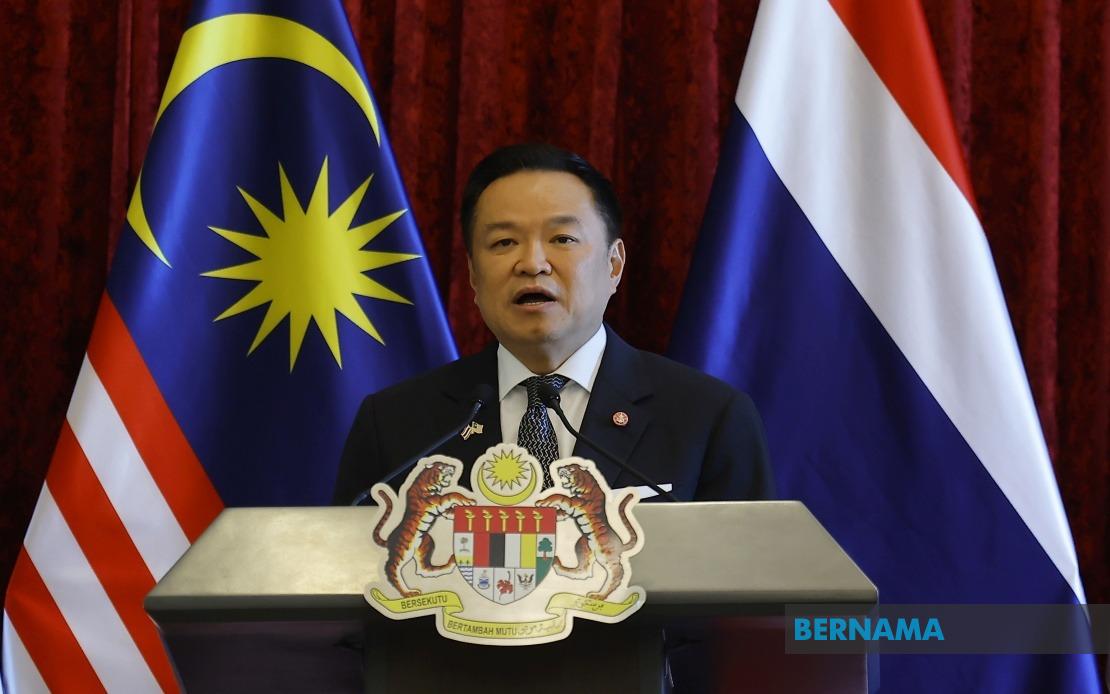
Thai Prime Minister Anutin Charnvirakul has reiterated that resolving the longstanding violence affecting Thailand's southern border provinces remains a core objective for his administration. Speaking at a joint press conference with Malaysian Prime Minister Datuk Seri Anwar Ibrahim in Putrajaya on Thursday, Anutin underscored the strategic linkage between achieving peace and enabling sustainable development in these conflict-affected areas. The remarks come as both nations continue diplomatic efforts to address security challenges that have persisted for nearly two decades in Thailand's Pattani, Yala, and Narathiwat provinces.
The Thai premier articulated a philosophical approach to regional stability, noting that establishing peace provides the necessary foundation upon which economic development and social progress can be built. Conversely, he suggested that development initiatives themselves serve as stabilizing forces that reinforce peace. This cyclical perspective reflects a growing international consensus that security and prosperity are inextricably linked, particularly in border regions where poverty and grievances can fuel insurgent movements. For Southeast Asia, where multiple nations grapple with similar cross-border security challenges, this framing carries broader relevance beyond Thailand's immediate context.
An important dimension of the bilateral engagement involves Malaysian facilitation of the Southern Thailand Peace Dialogue, a mediation process that has become increasingly significant as direct negotiations between the Thai government and various stakeholders have stalled in recent years. Anutin explicitly acknowledged Malaysia's facilitative role, offering formal appreciation for Kuala Lumpur's contribution to this delicate diplomatic initiative. Such recognition from Bangkok carries weight, as it validates Malaysia's position as a trusted neutral party capable of hosting sensitive negotiations involving multiple actors with competing interests and grievances.
The peace dialogue process has become more structured following recent institutional arrangements. Malaysia's facilitation efforts are now led by Datuk Mohd Rabin Basir, a former director-general of the National Security Council who was specifically appointed to this position on July 1, 2024. This appointment signals Malaysian commitment to upgrading the quality and seriousness of its mediation efforts. On the Thai side, Thanat Suwannanont, who serves as director of Thailand's National Intelligence Agency, has been designated as the chief negotiator. The pairing of security-focused officials from both nations suggests an emphasis on building trust and ensuring that any agreements reached can be effectively implemented.
The dialogue table itself includes the Barisan Revolusi Nasional, the primary armed group involved in the southern Thailand conflict. The BRN's participation marks a critical development, as direct engagement with the main insurgent organization had been inconsistent in previous peace efforts. The involvement of this actor demonstrates that the current peace process, supported by Malaysian facilitation, has achieved a level of inclusive participation necessary for meaningful negotiations. Malaysia's ability to maintain channels with all major parties reflects its diplomatic standing and historical relationships with key stakeholders.
Prime Minister Anwar's public affirmation that Malaysia categorically does not tolerate violence carries particular significance given the cross-border dimensions of the conflict. Malaysia has long been concerned about spillover effects from Thailand's southern insurgency, including cross-border militant movements and transnational criminal networks that exploit insecurity. Anwar's commitment to cooperate with Thailand in prosecuting those responsible for violence addresses these concerns head-on, signaling to both the Thai government and international observers that Malaysia takes shared security responsibilities seriously. Such assurances are essential for building the inter-agency cooperation necessary to address sophisticated transnational threats.
The bilateral security cooperation extends beyond mediation into operational realms. Thailand and Malaysia have established mechanisms for intelligence sharing, joint patrols, and coordinated law enforcement operations targeting insurgent groups and criminal networks operating in border areas. These practical cooperation frameworks complement the higher-level diplomatic dialogue process. For Malaysia, such arrangements serve multiple national interests: they help prevent the use of Malaysian territory for insurgent sanctuaries, disrupt criminal smuggling networks that destabilize both nations, and enhance the country's counter-terrorism capabilities by facilitating intelligence exchange with a neighboring state intimately familiar with regional security dynamics.
The focus on southern Thailand's development needs reflects recognition that security interventions alone cannot resolve the underlying drivers of conflict. The provinces experiencing insurgency have historically lagged in economic development, educational access, and governance quality compared to other regions of Thailand. Development initiatives that create employment opportunities, improve educational infrastructure, and enhance government service delivery can address the grievances that insurgent organizations exploit for recruitment. Malaysia, which has experienced its own insurgency challenges in earlier decades, understands this dynamic well and likely brings relevant lessons from its counter-insurgency experience to bilateral discussions.
The regional implications of the southern Thailand peace process extend throughout Southeast Asia. The Association of Southeast Asian Nations has consistently emphasized that addressing transnational challenges requires sustained regional cooperation. Thailand's conflict affects ASEAN's collective security environment through its impact on maritime piracy, human trafficking, drug smuggling, and terrorism financing in the region. A successful resolution would strengthen ASEAN's capacity to address these transnational threats more effectively. Malaysia's role as facilitator therefore carries significance beyond bilateral Thai-Malaysian relations, positioning the country as a key player in regional stability architecture.
Looking forward, the appointment of experienced security officials to lead both the Malaysian facilitation effort and the Thai negotiating team suggests a shift toward more intensive engagement. The previous years of sporadic dialogue have given way to what appears to be a more sustained diplomatic initiative. However, the structural challenge remains formidable: reconciling the political objectives of the Thai state, the demands of the Barisan Revolusi Nasional, and the concerns of the affected Muslim-Malay population in southern Thailand. The success of this mediation will depend on whether all parties can move beyond maximalist positions toward compromise solutions that address core grievances while maintaining the stability essential for development.
For Malaysian policymakers and observers, the developments in southern Thailand carry practical implications for Peninsular Malaysia's security. The states of Kedah, Perlis, and Kelantan, which border Thailand's conflict zones, have potential vulnerabilities to spillover instability. Additionally, Malaysia's growing role as a regional mediator carries both opportunities and responsibilities. Successful facilitation of the southern Thailand peace process would enhance Malaysia's diplomatic standing and demonstrate its capacity to manage complex multilateral negotiations. Conversely, if the process stalls or breaks down, questions about Malaysian effectiveness in regional diplomacy could emerge.
The commitment expressed by both Thai and Malaysian leaders therefore represents more than symbolic diplomatic messaging. It reflects genuine mutual interests in addressing a conflict that affects both nations' security, development prospects, and regional standing. The institutional arrangements being put in place, including the appointment of senior officials dedicated specifically to this initiative, suggest that both governments are moving beyond rhetorical commitment toward substantive investment in the peace process. Whether this intensified diplomatic engagement can overcome the structural obstacles that have hindered previous peace efforts remains to be seen, but the current trajectory suggests that 2024 may represent a significant turning point in efforts to resolve one of Southeast Asia's longest-running internal conflicts.

