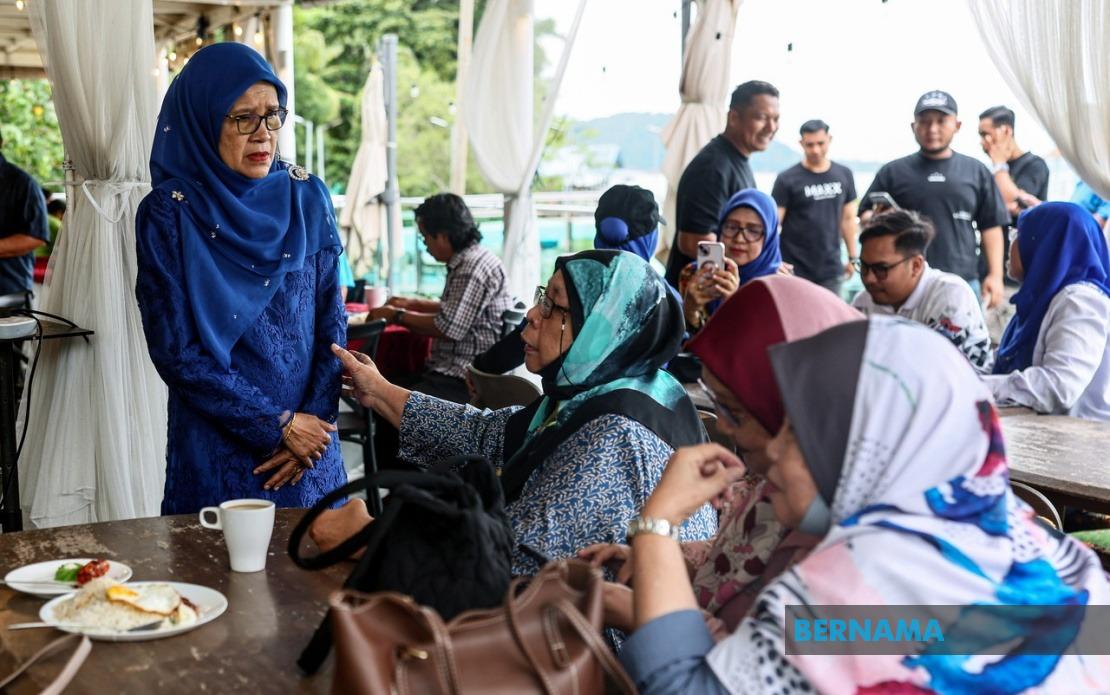
The Endau state constituency in northern Johor is shaping up as a compelling electoral contest that pits the demonstrated governance record of an experienced incumbent against the ambitious economic blueprint of a younger, academically-grounded challenger. This battle between continuity and reform will unfold across 28,767 registered voters as part of the broader 16th Johor state election, where 172 candidates compete for 56 seats, with polling scheduled for July 11 following early voting on July 7.
Alwiyah Talib, widely known by her affectionate moniker Kak Awi, represents continuity through her two terms as Endau's state representative under Barisan Nasional. The incumbent has constructed her electoral narrative around concrete service delivery, emphasising the tangible projects and initiatives she has championed during her tenure. Her campaign message centres on the notion that political sincerity demonstrates itself through sustained effort rather than campaign rhetoric, a positioning that resonates particularly with voters who have witnessed her work over multiple years.
Central to Alwiyah's platform is a comprehensive strategy to diversify and elevate Endau's tourism economy beyond its current role as a mere transport hub to the offshore islands. She envisions transforming the hinterland through strategic development of homestay and agritourism destinations including Kampung Stay@Teluk Buih, Penyabong, and Tanjung Resang—locations that already demonstrate strong visitor appeal and weekend occupancy rates. This inland tourism push complements rather than competes with the established island tourism sector, creating a more resilient and multi-faceted visitor economy. By repositioning Mersing and its surroundings as sustainable tourism destinations in their own right, she aims to challenge the prevailing perception that the region exists primarily as a gateway rather than a compelling destination.
Education constitutes the second pillar of Alwiyah's development agenda. She has identified a critical infrastructure gap in secondary education, with students currently dependent on a single secondary school facility. Her commitment to establishing an additional secondary school in Pekan Endau addresses this bottleneck while signalling her determination to ensure educational advancement reaches all demographic segments throughout the constituency. This inclusive approach to education—spanning primary, secondary, and tertiary levels—reflects an understanding that sustainable development requires comprehensive human capital investment across all life stages.
Alwiyah's personal positioning as a political leader emphasises her refusal to accept complacency, characterising the electoral process itself as a demanding battle requiring uncompromising sincerity. This framing suggests that her incumbent status carries no guarantee of security, but rather represents a continuous mandate that must be earned through demonstrable commitment and authentic engagement with constituent needs.
Her principal challenger, Saiful Nizam Samat, offers a markedly different proposition grounded in academic credentials and systemic economic thinking. At 42 years old and currently pursuing doctoral studies in economics, Saiful Nizam brings an intellectual framework focused on structural transformation rather than incremental improvement. His candidacy represents Pakatan Harapan's first-time venture into this constituency, potentially signalling the coalition's strategic interest in expanding its electoral footprint in Johor despite the state's traditional Barisan Nasional dominance.
Saiful Nizam's platform centres on what he terms "Fishermen's Economy 2.0," a modernisation agenda designed to fundamentally restructure how fishing communities generate income and participate in the broader economy. Rather than treating fisheries as a traditional sector requiring subsidy or paternalistic support, his approach emphasises sustainability and entrepreneurial empowerment. The ripple effects of a revitalised fisheries sector would extend through local supply chains and service economies, creating employment multiplication that particularly addresses rural youth migration—a persistent challenge across Malaysia's coastal regions where younger residents consistently relocate to urban centres seeking better opportunities.
Parallel to fisheries reform, Saiful Nizam proposes systematic support for Small and Medium Enterprises through digital marketing training, business development programmes, and strategic opportunity creation. This reflects recognition that economic diversification requires not merely infrastructure investment but also skill development and market access provision. His emphasis on digital-era business capabilities acknowledges that rural enterprises cannot remain competitive without technological adoption and modern marketing competencies.
Educational ambitions within Saiful Nizam's platform extend beyond physical infrastructure to encompassing skills and financial accessibility. His proposed Endau Children's Education Fund specifically targets removing financial barriers that prevent capable students from accessing quality education, a targeted intervention addressing poverty-related educational exclusion. Technical and Vocational Education and Training alongside Science, Technology, Engineering and Mathematics programming represents his attempt to align educational outputs with actual labour market demands, a pragmatic approach recognising that Malaysia's economic transition requires these skillsets urgently.
The four-cornered contest additionally includes Hasnul Hakimi Hussien representing Perikatan Nasional and Jati Awang contesting under Parti Orang Asli Malaysia colours, adding complexity to electoral dynamics though neither has articulated comprehensive platforms matching their major-party counterparts. The presence of indigenous representation through ASLI's candidacy reflects Endau's demographic composition and the specific concerns of Orang Asli communities that may not align with mainstream party agendas.
The fundamental tension between these two leading candidates reflects broader Malaysian political themes: whether demonstrated stewardship and incremental progress outweigh comprehensive reform blueprints, and whether established networks delivering concrete services matter more than intellectual frameworks promising systemic transformation. For Endau voters, this choice involves assessing whether Alwiyah's proven commitment to tourism development and educational infrastructure expansion better serves their interests than Saiful Nizam's more ambitious restructuring of economic fundamentals and targeted youth retention strategies.
Alwiyah's previous defection from Perikatan Nasional to Barisan Nasional between elections introduces questions about political loyalty and strategic positioning, though her framing emphasises that her commitment to constituent service transcends party affiliation. Saiful Nizam, as a first-time candidate, brings fresh energy and intellectual credentials but lacks demonstrated governance experience, presenting voters with the classic trade-off between proven delivery and ambitious potential.
The outcome in Endau will provide significant indicators regarding Malaysian voters' receptiveness to reform-minded younger candidates offering structural economic transformation versus established leaders demonstrating consistent service commitment. Beyond the constituency itself, this contest reflects shifting electoral dynamics in Johor and Malaysia's broader political realignment, particularly regarding generational preferences and the competition between continuity and change that dominates contemporary Malaysian politics.

