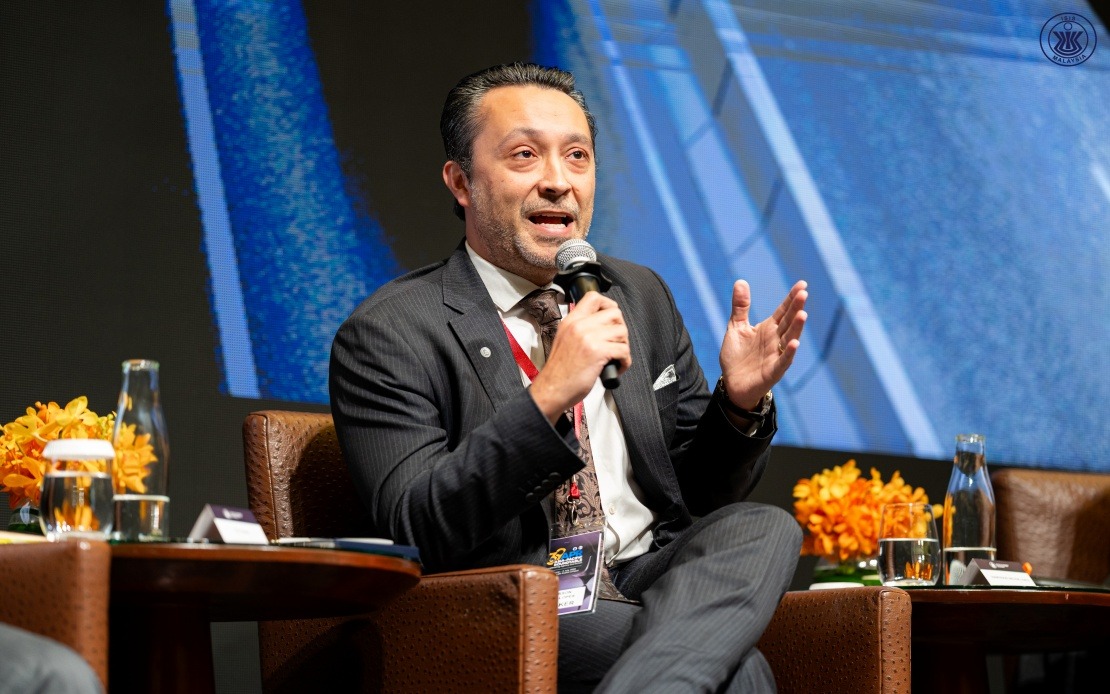
The world is entering a critical juncture where rising economies from the Global South must stake out their own strategic priorities instead of deferring to the agendas of established middle powers, according to leading international relations scholars speaking at a major regional forum in Kuala Lumpur. The distinction between emerging and established middle powers represents more than mere semantics; it reflects fundamentally divergent political realities, historical trajectories, and visions for global governance that demand separate consideration as the post-World War Two liberal order gradually fragments.
Dr Dawisson Belém-Lopes, Professor of International and Comparative Politics at the Federal University of Minas Gerais in Brazil, drew this sharp distinction while addressing the 39th Asia-Pacific Roundtable at the Institute of Strategic and International Studies (ISIS) Malaysia. Countries including Malaysia, Brazil, India, Indonesia, Turkiye, and Mexico constitute an emerging cohort of middle powers whose aspirations and constraints differ markedly from the established middle powers that have historically benefited from or adapted to American-led global arrangements. These emerging economies have never aligned comfortably with the postwar liberal international order that privileged Western institutions and norms, instead consistently advocating for comprehensive structural reforms that would redistribute power more equitably across the international system.
The historical and geopolitical circumstances distinguishing these two tiers of middle powers cannot be overstated. While established middle powers developed their foreign policies within the framework of an American security umbrella and multilateral institutions shaped by Western preferences, the emerging middle powers have had to navigate international affairs from positions of exclusion or marginalisation. Their different developmental experiences, regional security challenges, and relationship to global economic structures mean that adopting wholesale the strategies of established middle powers would require abandoning their own legitimate interests and authentic priorities. Belém-Lopes emphasised that the Global South has accumulated sufficient resources and institutional platforms—including development banks, regional trading blocs, and diplomatic mechanisms—to chart autonomous courses without the constraints that earlier generations faced.
The timing of this strategic reassertion carries particular weight given the accelerating dissolution of the existing global architecture. Peter Varghese, Chancellor of the University of Queensland and former secretary of Australia's Department of Foreign Affairs and Trade, characterised the current moment as a liminal period where the American-dominated post-war system is progressively unravelling, yet no replacement framework has solidified. This interregnum creates both vulnerability and opportunity for middle powers. The transition stems not merely from contemporary policy choices but from profound structural transformations that transcend any single administration's tenure. China's continued economic ascendancy, the inevitable movement toward multipolarity as power diffuses away from traditional Western centres, the erosion of the Washington Consensus as an economic development model, and the resurgence of identity and cultural politics as organising principles in international relations all contribute to systemic destabilisation.
Yet Varghese cautioned against assuming that agency alone suffices to construct a functional new world order. The very complexity and interconnectedness of contemporary global challenges—climate change, pandemics, nuclear proliferation, financial instability—demand multilateral frameworks that take years or decades to establish. Rather than pursuing isolated national strategies, countries should prioritise strengthening regional cooperation architectures and cross-regional partnerships that can provide stability during this turbulent transition. For Southeast Asian nations like Malaysia, this implies deepening institutional ties within ASEAN while simultaneously cultivating selective partnerships across the Indo-Pacific and beyond.
Dr Ken Jimbo, Professor of International Relations at Keio University Japan, offered a regional perspective on how these global shifts will play out in Asia. Despite apparent withdrawals or recalibrations in American foreign policy, the United States will continue to depend fundamentally on regional partnerships to advance its strategic objectives throughout the Indo-Pacific. Even under an explicitly prioritised America First agenda, Washington requires the participation and alignment of powers like Japan and broader regional cooperation to maintain its influence. Conversely, regional powers dependent on maritime trade and security guarantees have strong incentives to maintain free and open rules-based arrangements, creating mutual interests in sustaining aspects of the existing order even as it transforms.
This dynamic creates complex negotiations for middle powers navigating between competing great powers. Malaysia and comparable emerging economies occupy pivotal positions where they maintain credibility with multiple major powers while remaining free of binding commitments to any single bloc. This flexibility constitutes genuine strategic capital that should not be squandered through premature alignment or ideological commitment to either the declining Western-centric order or an alternative that may prove equally constraining. The emergence of new institutional platforms, from the BRICS infrastructure bank to expanded regional development mechanisms, provides Malaysia with genuine alternatives for pursuing development and security objectives without subordinating itself to legacy institutions shaped by other powers' preferences.
The panel discussion underscored that the Global South's increased assertiveness reflects authentic material changes in global distribution of economic and political power, not mere rhetoric or posturing. With larger resource pools and institutional alternatives now available, emerging middle powers can legitimately claim independent agency in shaping their international strategies. This shift threatens the comfortable assumption that middle powers would naturally defer to established powers within their respective regions or functional domains. Instead, the evolution points toward a more genuinely multipolar system where middle powers negotiate from strengthened positions and must grapple seriously with interests that may not align with traditional patron-client relationships.
For Malaysia specifically, this transition demands careful navigation of several concurrent strategic challenges. The country must pursue genuine engagement with both American and Chinese spheres of influence while maintaining room for independent policy choices on issues from trade to security architecture. Regional cooperation through ASEAN provides a crucial platform for aggregating middle power influence and preventing domination by any single great power. Simultaneously, Malaysia can build valuable partnerships through institutions like the Belt and Road Initiative, regional development banks, and diplomatic forums that do not require ideological alignment with any particular great power. The era where middle powers assumed their interests naturally aligned with those of established powers has definitively passed, replaced by a more fluid and contested international environment where emerging economies must actively define and defend their own strategic preferences.

