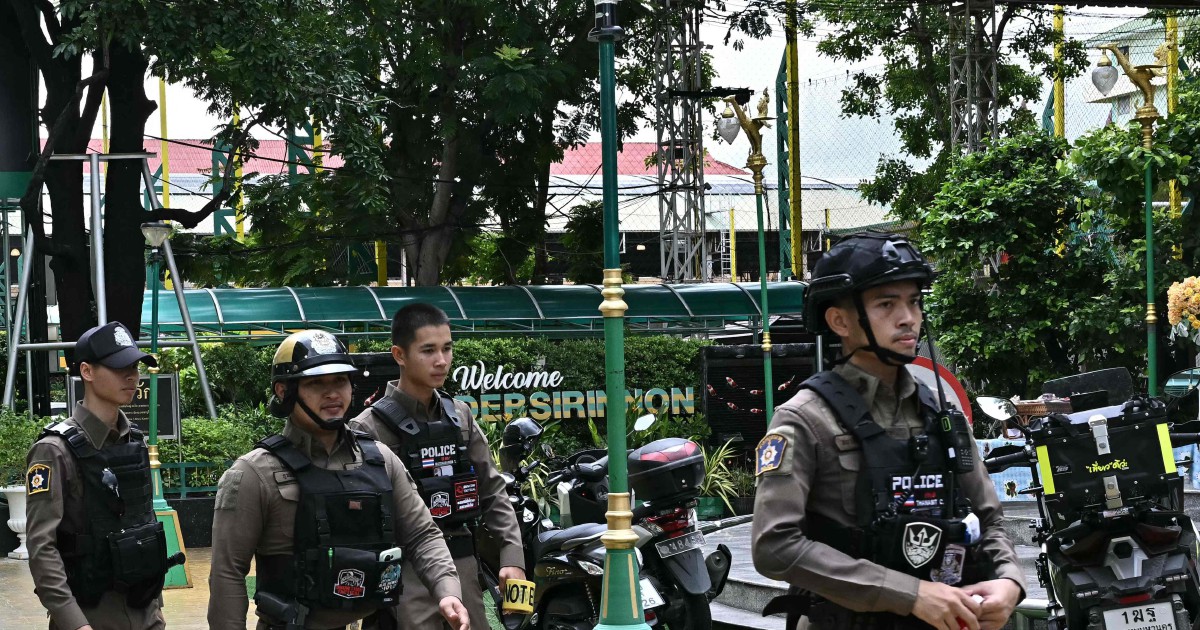
Authorities in Thailand have been holding at least eleven French citizens in custody since the beginning of the summer following their apprehension with substantial quantities of cannabis discovered in their baggage. The disclosure came from a police source speaking to AFP on Tuesday, shedding light on what appears to be a coordinated international drug operation catching nationals from the European Union in Southeast Asia's grip.
The exact circumstances surrounding the arrests remain partially unclear from initial reports, though the pattern suggests a organised effort to transport narcotics across borders. Such operations typically involve sophisticated logistics networks that exploit tourism routes and commercial shipping pathways between Europe and Southeast Asia. Thailand, despite its reputation as a tropical holiday destination attracting millions of Western visitors annually, has become an increasingly common nexus for international drug trafficking operations targeting distribution networks across the region and beyond.
The detention of eleven individuals of the same nationality points to a carefully planned scheme rather than isolated instances of personal drug possession. This clustering effect frequently indicates involvement of smuggling rings that recruit participants through various incentives—often presented as lucrative opportunities or straightforward courier work with minimal risk. For readers in Malaysia and the broader Southeast Asian context, such cases underscore how porous borders and interconnected travel routes create vulnerabilities that criminal organisations systematically exploit.
Thailand's legal framework regarding narcotics offences carries severe penalties that Western visitors often underestimate. Possession of cannabis in significant quantities can result in lengthy prison sentences, substantial fines, and additional complications when navigating a foreign judicial system. The French nationals now face navigation of Thai courts where legal protections and procedures differ markedly from European standards, potentially complicating diplomatic efforts to secure their release or transfer.
The timing of arrests during summer months aligns with peak tourism seasons when airport security screening handles substantially higher passenger volumes. This period provides cover for smugglers, as increased throughput sometimes correlates with reduced scrutiny intensity. Border control agencies throughout Southeast Asia, including Malaysia's Customs and immigration services, have repeatedly noted that summer represents a particularly challenging period for detecting contraband within legitimate passenger flows.
French diplomatic missions in Thailand are presumably engaged in assessing the situation and ensuring appropriate consular support reaches the detained nationals. However, the scale of this particular case—involving more than ten individuals—suggests potential complications in negotiating bilateral arrangements. Malaysia's own experiences with French nationals facing legal difficulties have demonstrated the complexity of providing consular assistance when serious criminal charges are involved and local judicial processes remain ongoing.
The broader context of drug trafficking in Southeast Asia reveals how the region has become increasingly central to international narcotics distribution. Criminal networks have developed sophisticated methods for moving contraband from production areas in the Golden Triangle region through transit points like Thailand, before distribution to markets in Europe, Australia, and beyond. Understanding these networks requires recognising Thailand's geography and infrastructure as natural chokepoints that enterprising smugglers have learnt to navigate effectively.
For Malaysian audiences, this case carries particular relevance given Malaysia's own efforts to combat drug trafficking and the reality that organised international smuggling operations regularly attempt to move contraband through Malaysian territory. Cooperation between Thai, Malaysian, and other regional law enforcement agencies has grown substantially in recent years, yet the continued success of major operations demonstrates persistent gaps in intelligence sharing and inter-agency coordination across Southeast Asia.
The involvement of European nationals specifically raises questions about recruitment patterns among Western populations. Criminal organisations increasingly employ sophisticated marketing techniques and social media to identify vulnerable individuals—often young people facing financial hardship—and position courier work as straightforward, low-risk employment. The narrative of a lucrative "free holiday" abroad conceals the legal jeopardy and personal consequences awaiting those who accept such arrangements.
As investigations proceed, the French authorities and Thai law enforcement will likely collaborate to determine whether these individuals acted independently or formed part of a larger organisation. The revelation that multiple nationals were apprehended suggests coordinated action, possibly targeting distribution networks across Southeast Asia or beyond. Such findings would elevate the seriousness of charges and potentially implicate additional parties across multiple jurisdictions.
The case also highlights persistent vulnerabilities in customs enforcement at major airports and border crossings throughout the region. Despite technological advances and training improvements, determined smugglers continue developing innovative methods for concealing contraband within standard luggage and cargo. Malaysia's own customs authorities face similar challenges, processing thousands of international arrivals daily while remaining vigilant against increasingly sophisticated concealment techniques.
For the detained French nationals, the coming months will involve protracted legal proceedings within the Thai justice system. Without prior knowledge of specific charges or evidence gathered, predictions about outcomes remain speculative. However, the scale and apparent sophistication of the operation suggest authorities possess substantial evidence, likely secured through surveillance, intelligence cooperation, or direct observation during apprehension. The individuals now face extended periods in Thai custody while legal processes unfold according to Thai law, a prospect that underscores the permanent life-altering consequences that drug trafficking operations carry for all participants.

