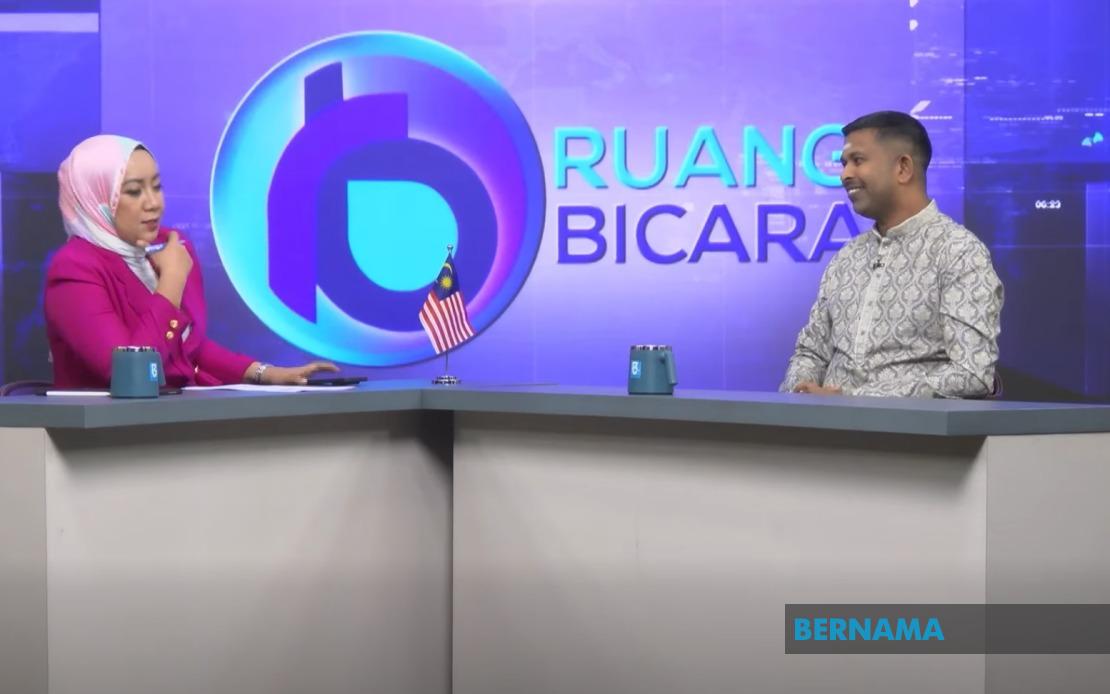
Strengthening the Malay language's position as Malaysia's national language demands a comprehensive, coordinated effort engaging government agencies, educational institutions, private corporations, and citizens alike, according to a prominent legal academic and language policy advocate. Prof Dr Ramalinggam Rajamanickam, who holds dual roles as Faculty of Law Professor at Multimedia University and member of the Dewan Bahasa dan Pustaka Board of Governors, underscored this necessity during a television discussion on national language issues, highlighting that constitutional protections alone are insufficient without active stakeholder participation.
The constitutional foundation for Malay language supremacy is unambiguous, resting firmly on Article 152 of the Federal Constitution, which designates it as the nation's official language. Beyond this foundational provision, the National Language Act 1963/67 provides additional legislative scaffolding, mandating the use of Malay in all official governmental transactions and communications. However, Ramalinggam stressed that these legal instruments remain dormant without institutional commitment and societal compliance. He emphasised that every Malaysian citizen bears a personal responsibility to uphold and preserve the linguistic dignity of the national language, transforming language preservation from an abstract constitutional principle into a lived practice across all domains of national life.
Contrary to assumptions that the Malay language faces an existential usage crisis, Ramalinggam identified the real challenge as one of quality rather than quantity. Current usage levels remain generally adequate across most sectors, yet the integrity of linguistic practice increasingly deteriorates through phenomena such as "bahasa rojak"—the casual mixing of Malay, English, and other languages in informal communication. This linguistic hybridisation, while perhaps acceptable in casual social interactions and digital platforms, becomes problematic when it encroaches upon formal, official, and professional contexts where grammatical precision and linguistic purity are essential.
The distinction between permissible informal code-switching and unacceptable degradation of formal language use constitutes a critical nuance often overlooked in public discourse. Social media abbreviations and colloquial language mixing pose minimal concern in casual online environments where spontaneity and brevity dominate communication norms. However, government documents, academic publications, professional correspondence, and official pronouncements demand adherence to standardised Malay grammar, syntax, and vocabulary. This bifurcation of standards reflects mature language policy that acknowledges contemporary communication realities while maintaining institutional linguistic integrity.
Implementation of these standards requires active governmental oversight and ministerial responsibility, Ramalinggam argued. The Ministry responsible for national language affairs must establish monitoring mechanisms to ensure compliance with existing legislation across governmental institutions and official communications channels. Simultaneously, universities must recalibrate their institutional priorities, positioning Malay as a genuine vehicle for knowledge production and academic discourse rather than merely a ceremonial language relegated to opening ceremonies and official protocols. This elevation of status does not necessitate abandonment of English proficiency; rather, it demands that both languages receive appropriate institutional investment and curricular emphasis according to their distinct national purposes.
The technological frontier presents both unprecedented challenge and opportunity for Malaysia's national language. Artificial intelligence development, digital innovation, and technological advancement increasingly occur within an English-language-dominated ecosystem, creating pressure for Malaysia to abandon linguistic autonomy in favour of English-medium technological engagement. Ramalinggam fundamentally inverted this paradigm, arguing that Malaysia should not passively await technological adaptation to Malay linguistic norms. Instead, the nation must proactively empower the Malay language to function as a technological medium itself, enabling it to drive innovation rather than merely consume externally-developed technological products.
Realising this vision requires unprecedented coordination among multiple institutional sectors. Government bodies must allocate resources and establish policy frameworks supporting Malay-language technology development. Universities must establish research programmes in computational linguistics, Malay-language artificial intelligence, and digital language processing. Professional linguists and technology experts must collaborate on developing Malay-language terminology for emerging technological fields, ensuring the language evolves to capture cutting-edge scientific and technical concepts. Private technology companies must recognise commercial opportunities in developing Malay-language applications and digital services. Without this orchestrated, multi-sectoral commitment, the Malay language risks becoming progressively marginalised in the technological domains increasingly defining economic competitiveness and social communication.
Historically, the Malay language possessed regional prestige and influence far exceeding its current status. Once functioning as the lingua franca facilitating trade and cultural exchange across Southeast Asia, Malay maintained international scholarly interest and linguistic legitimacy. This historical precedent remains directly relevant, as contemporary international interest in the language persists in unexpected quarters. China, Japan, and India maintain active Malay-language academic and cultural programmes, indicating enduring international recognition of the language's cultural and commercial significance. These existing international constituencies could be mobilised as allies in elevating global Malay-language status, transforming it from a regional language into a genuinely cosmopolitan medium of knowledge exchange and technological innovation.
The argument for linguistic empowerment does not rest upon parochial nationalism or zero-sum competition between languages. Ramalinggam explicitly rejected any false dichotomy between Malay-language advancement and multilingualism, contending that individual and national capacity for linguistic plurality need not diminish commitment to the national language. Malaysia's linguistic ecology accommodates English, Mandarin, Tamil, and other languages alongside Malay, and this diversity enriches the national intellectual environment. However, within this polyglot landscape, the national language must retain primacy as the symbol of national unity, collective identity, and cultural continuity. Preserving this symbolic function does not preclude extensive individual multilingualism or institutional engagement with international languages.
The concept of national language as national identity marker carries particular resonance in Malaysian context, where linguistic unity historically reinforced fragile national cohesion across ethnically and religiously diverse populations. The Malay language functioned as a unifying mechanism transcending communal boundaries, enabling inter-communal dialogue and national integration. In contemporary Malaysia, where social polarisation and communal tensions periodically resurface, the national language's identity-consolidating function becomes increasingly valuable rather than anachronistic. Intentional degradation of the national language's status and quality inadvertently erodes symbolic resources available for national unity construction, rendering linguistic preservation simultaneously a practical governance concern and existential identity matter.
Implementing systematic language enhancement requires sustained governmental commitment extending beyond rhetorical endorsement. The Ministry responsible must establish clear measurable objectives regarding Malay-language quality improvement across governmental institutions, educational institutions, and media organisations. Standards must be enforced through institutional accountability mechanisms and professional accountability for language quality in official communications. Simultaneously, positive incentives should encourage excellence in Malay-language production, whether through academic recognition of Malay-language publications, professional advancement for linguistically proficient government communicators, or media awards recognising superior Malay-language journalism and broadcasting.
Universities occupy especially strategic positions within this language-enhancement ecosystem. As knowledge-production institutions, universities must position Malay as a legitimate medium for academic inquiry, research publication, and scholarly debate. This positioning does not require abandoning English-language academic work but rather establishing parallel systems where significant research and knowledge production occur in the national language. Graduate students must be equipped to produce sophisticated, technically precise Malay-language scholarship. Institutional publishing initiatives must prioritise Malay-language academic publication. Internationally-trained academics must contribute to Malay-language knowledge production, ensuring the language evolves to accommodate contemporary scholarly discourse without sacrificing linguistic integrity or technical precision.
The collective national endeavour Ramalinggam advocates transcends romantic language preservation and enters pragmatic governance territory. A nation's linguistic capacity directly affects governmental efficiency, educational quality, and competitive economic positioning. Permitting the national language to deteriorate constrains governmental communicative capacity, diminishes educational effectiveness, and handicaps national technological development. Conversely, proactively strengthening Malay-language quality and technological relevance generates multiple spillover benefits extending far beyond cultural symbolism into concrete governance, educational, and economic domains. Malaysia's future prosperity depends partly upon whether national leadership summons the collective will and institutional coordination necessary to accomplish this transformation.

