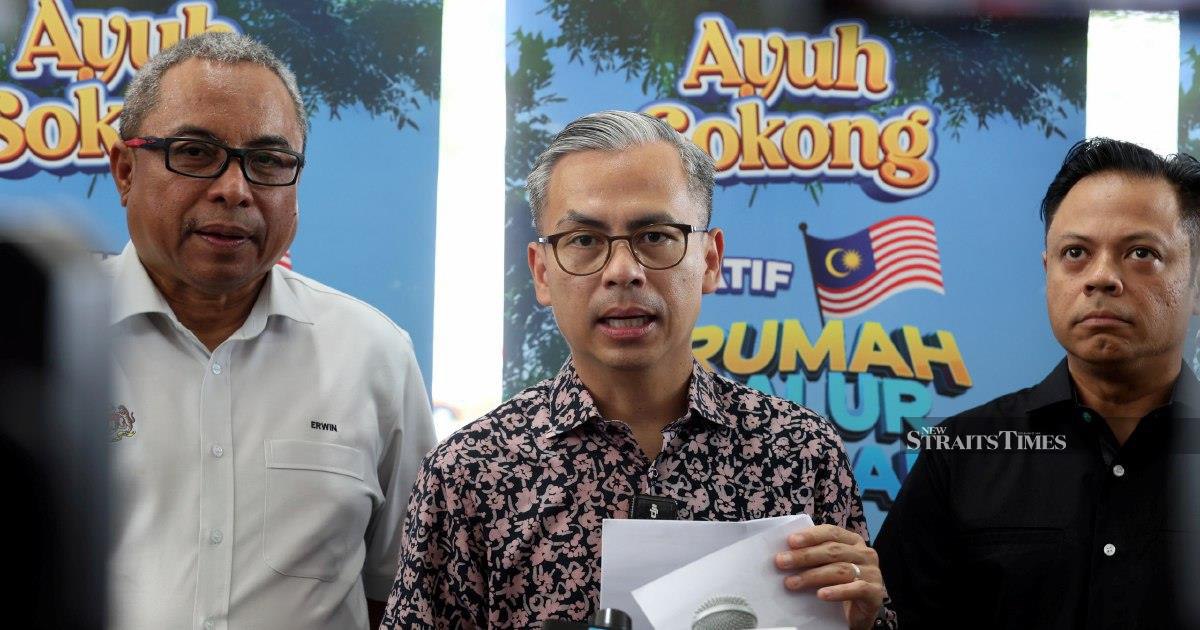
Prime Minister Datuk Seri Anwar Ibrahim has directed the Election Commission to compile a comprehensive updated report evaluating Sarawak's application to establish 17 additional state assembly seats. The directive, communicated through government spokesman Datuk Seri Fahmi Fadzil, signals the federal government's formal engagement with a proposal that would materially reshape the electoral architecture of Malaysia's largest state by area.
Sarawak currently operates with 82 state assembly constituencies, and the addition of 17 seats would increase this to 99, fundamentally altering the balance of representation across the state's diverse geography and population centres. The expansion would have cascading implications for political competition in the state, potentially fragmenting existing voting patterns and creating new electoral dynamics that could benefit different political coalitions depending on how the new boundaries are drawn and which communities gain additional representation.
The Election Commission's task extends beyond simple seat multiplication. Boundary delineation forms the technical heart of the exercise, with the need to ensure constituencies maintain roughly equivalent population sizes while respecting geographic constraints unique to Sarawak. The state's dispersed population across vast territories, coupled with significant Dayak communities in rural areas and concentrated urban populations in cities like Kuching and Miri, presents complex cartographic challenges that must balance demographic representation with practical governance considerations.
For Malaysian observers, this development carries broader constitutional weight. Under Article 113 of the Federal Constitution, state assembly sizes can be adjusted, but such changes require careful deliberation regarding their impacts on representation ratios and democratic principles. The commission must weigh whether the proposed expansion truly reflects population growth and demographic shifts, or whether it primarily serves political recalibration. Transparency in methodology will prove crucial for maintaining public confidence in electoral processes.
Sarawak's specific context deserves examination. As a state with distinct constitutional arrangements stemming from its colonial history and entry into Malaysia under the Malaysia Agreement 1963, any alteration to its electoral structure carries symbolic and practical significance. The state enjoys considerable autonomy in internal affairs, yet federal oversight of electoral boundaries reflects the shared responsibility inherent in Malaysia's constitutional framework. This tension between state autonomy and federal standards regularly surfaces in discussions about representation.
The timing of this directive reflects ongoing negotiations between the federal government and Sarawak's leadership regarding resource allocation, revenue sharing, and political accommodations. Electoral expansion frequently accompanies broader political settlements, whether explicit or implicit. The number 17 itself warrants attention—neither arbitrary nor cosmetic, it suggests calculations based on demographic projections and perhaps anticipated patterns of political alignment.
For regional observers, Sarawak's electoral reconfiguration resonates beyond state boundaries. Southeast Asian nations regularly grapple with balancing population-based representation against geographic considerations and minority community recognition. How Malaysia's Election Commission approaches this challenge—particularly regarding indigenous Dayak representation and urban-rural equity—may offer instructive lessons and cautionary tales for neighbouring democracies facing similar pressures.
The updated report will likely examine several dimensions: current population distributions across existing constituencies, projected growth patterns in urban and rural areas, infrastructure connectivity affecting voter accessibility, and demographic composition of proposed new constituencies. Particular attention will focus on whether the expansion predominantly benefits urban areas where populations have concentrated, or whether it includes mechanisms to strengthen representation for remote indigenous communities whose voices have historically carried less electoral weight.
Implementing seat expansion entails considerable logistical complexity beyond boundary drawing. Election administration costs increase with more constituencies requiring separate campaign infrastructure, polling stations, and verification mechanisms. Voter roll maintenance becomes more demanding across additional jurisdictions. Political parties must adjust candidate recruitment and campaign strategies across a larger electoral map. These practical considerations often receive less public attention than the political implications, yet they fundamentally shape whether electoral reforms function effectively.
Stakeholder reactions will prove revealing in coming weeks. Incumbent assemblymen may view expansion differently depending on whether their constituencies gain additional seats or face boundary changes. Political parties will calculate whether the redistributed seats favour their organizational strengths or competitor advantages. Civil society organizations focused on electoral reform will scrutinize whether the proposal genuinely enhances democratic representation or merely adjusts power distributions without deepening democratic participation.
The federal government's engagement through the Election Commission underscores that electoral architecture decisions remain ultimately rooted in the technical body rather than purely political forums, though the line between technical expertise and political preference rarely appears completely clean. The commission's credibility depends on demonstrating that demographic data, not partisan considerations, drives recommendations. Public scrutiny of the commission's methodology and findings will illuminate whether Malaysian electoral processes maintain genuine independence from political pressure.
Within the broader Malaysian context, this development reflects the ongoing negotiation between established political structures and demands for electoral reform. Sarawak's 17-seat proposal joins conversations about federal constituencies, proportionality, and representation quality occurring throughout the federation. Each adjustment sends signals about how seriously electoral authorities take principles of democratic representation versus administrative convenience or political accommodation.

