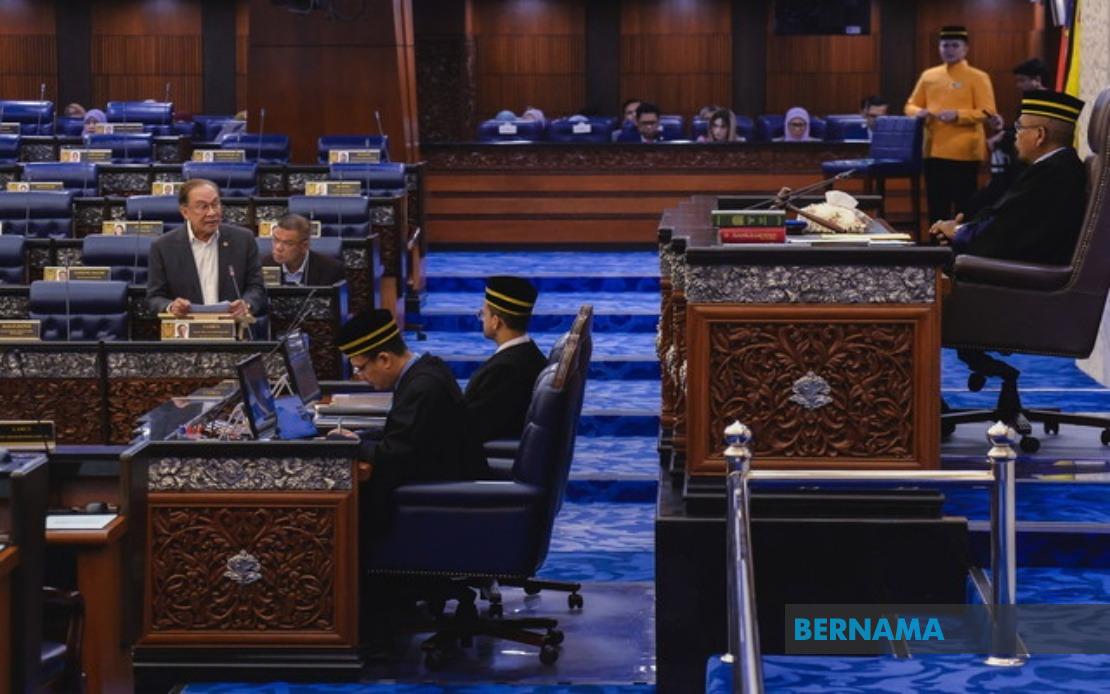
Prime Minister Datuk Seri Anwar Ibrahim has reaffirmed that Malaysia's election laws strictly prohibit government officials from announcing new projects or policies during campaign periods, a restriction that will apply to the forthcoming state elections in Johor, Melaka, and Negeri Sembilan. Speaking during Minister's Question Time in Parliament on June 30, Anwar clarified that this prohibition is enshrined in Section 24B of the Election Offences Act 1954 and remains a cornerstone of the nation's electoral integrity framework.
The Prime Minister's statement came in response to a parliamentary query from Datuk Seri Dr Shahidan Kassim from Perikatan Nasional, who sought confirmation on whether the ban continues to apply and what enforcement mechanisms are in place. Anwar's response underscores the government's commitment to maintaining a level playing field during elections, a principle that has drawn increasing scrutiny given Malaysia's complex multi-party political landscape and concerns about the misuse of state machinery in campaign seasons.
The regulation, rooted in electoral law established nearly seven decades ago, reflects a fundamental principle in democratic governance: preventing those in power from leveraging government resources and announcements as campaign tools. The restriction applies universally across all levels of government administration, meaning federal authorities, state governments, and local municipal councils are equally bound by the prohibition once nomination day is declared. This comprehensive approach ensures that no tier of government can circumvent the rules by strategically announcing projects through alternative administrative channels.
However, Anwar introduced an important distinction that serves as a clarification for government departments and agencies seeking to execute their duties during election periods. Projects that have already secured approval and funding allocation under previous federal budgets remain eligible for announcement and implementation throughout the campaign season. This carve-out acknowledges the practical reality that government operations must continue and that previously committed public expenditure cannot be indefinitely delayed because of electoral calendars. The distinction between pre-approved initiatives and newly conceived projects is therefore crucial for both compliance and administrative continuity.
The clarification addresses a persistent gray area in Malaysian electoral practice. Previous state elections have occasionally witnessed allegations of improper project announcements timed suspiciously close to nomination periods, prompting voter cynicism about whether governments systematically time announcements to influence campaign messaging. By reinforcing the legal framework and emphasizing the distinction between old and new commitments, Anwar signals an intention to tighten oversight and reduce ambiguity that could otherwise permit procedural manipulation.
Enforcement of these restrictions traditionally falls to the Election Commission and relevant authorities, though Anwar did not elaborate on specific mechanisms that will be deployed ahead of the three upcoming state elections. The absence of detailed enforcement protocols in his parliamentary statement may reflect either a deliberate choice to avoid telegraphing enforcement strategies, or conversely, potential gaps in the institutional capacity to monitor announcements across multiple government agencies in real time. Given the decentralized nature of Malaysian government, monitoring compliance across federal, state, and municipal levels presents a genuine logistical challenge.
For states like Johor, Melaka, and Negeri Sembilan, which will conduct elections under this framework, the ruling has direct consequences for both government and opposition campaigns. Ruling coalition parties will face constraints on their ability to announce new infrastructure projects or policy initiatives as campaign momentum builds, potentially limiting their ability to counter opposition messaging centered on unfulfilled promises or development deficits. Conversely, opposition parties cannot credibly argue that the government is simply announcing projects in violation of law, since the rules apply symmetrically to all electoral participants.
The broader context for this restatement reflects Malaysia's ongoing efforts to professionalize its electoral environment and address structural concerns about democratic fairness. As Southeast Asian democracies increasingly grapple with the fusion of electoral competition and state resources, Malaysia's explicit legal framework stands out as comparatively robust. However, the gap between law and enforcement remains a persistent challenge. Previous elections have occasionally produced accusations of subtle violations—such as announcements framed as policy reviews rather than new initiatives, or project groundbreakings timed for maximum campaign visibility—that navigate the letter of the law while potentially breaching its spirit.
Anwar's parliamentary intervention also signals to government bureaucrats that senior political leadership is monitoring compliance, which may encourage stricter self-regulation within the administrative apparatus. When prime ministers publicly reaffirm election rules, they create expectations that subordinate officials will enforce these norms rigorously. This can paradoxically improve compliance more effectively than formal inspections, since organizational cultures respond to visible political commitment from leadership.
The implications for regional observers and international election monitors are equally significant. Malaysia's willingness to articulate and defend election rules demonstrates institutional maturity, even as questions persist about enforcement consistency. Countries like Thailand, the Philippines, and Indonesia face similar challenges reconciling continuous government operations with campaign-period restrictions, and Malaysia's approach offers comparative lessons—both successes and cautionary examples of implementation gaps.
Looking ahead to the Johor, Melaka, and Negeri Sembilan elections, both government and opposition campaigns will operate under these formally restated constraints. Whether this translates into meaningful behavioral change among political actors remains an open question that will likely determine public confidence in the electoral process. The principle is clear; translating it into consistent practice across competing political interests and decentralized administrative structures represents the enduring challenge.

