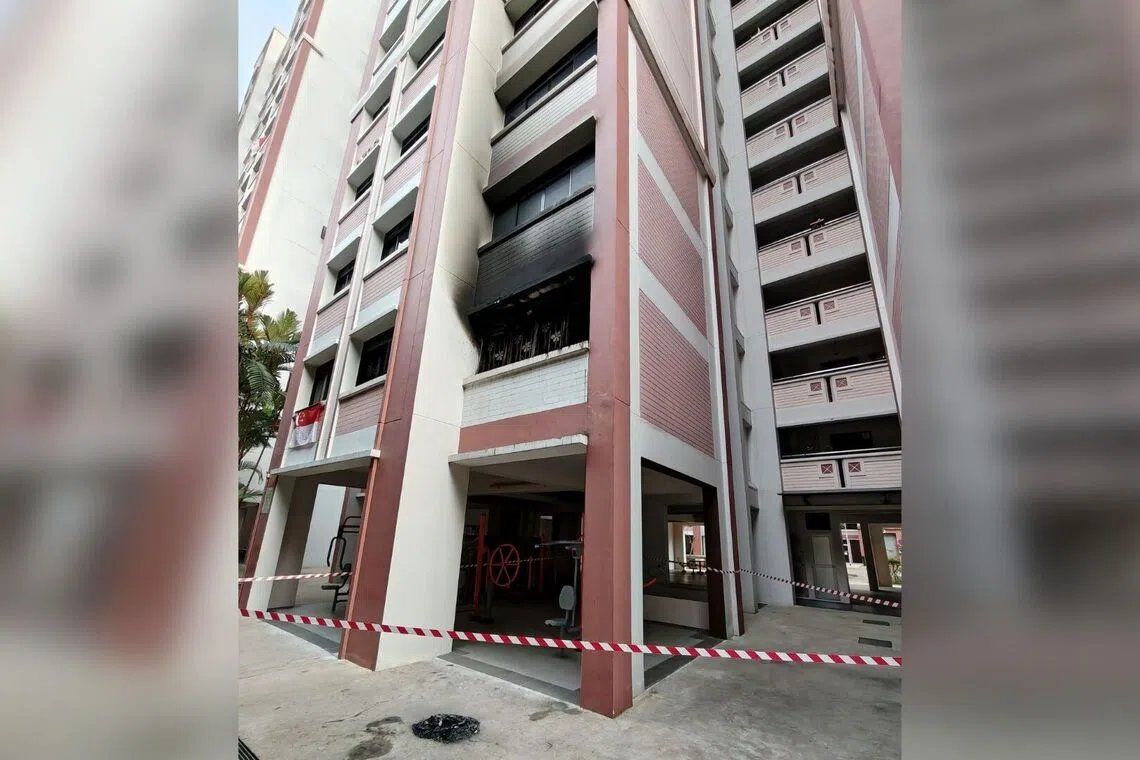
An elderly man was rushed to hospital in the early hours of Thursday after a fire engulfed a bedroom in a public housing flat in the Buangkok area of Singapore. The Singapore Civil Defence Force (SCDF) received an emergency alert at approximately 12.25am regarding the blaze at Block 979B Buangkok Crescent, responding swiftly to contain what could have been a more serious incident in the residential estate.
The fire was confined to the contents of a bedroom on the second floor of the affected unit, limiting the scope of damage and preventing the flames from spreading to neighbouring units. Firefighters deployed a water jet to extinguish the flames, bringing the situation under control within a short timeframe. One resident was subsequently transported to Sengkang General Hospital for medical assessment and treatment, though the exact nature and extent of injuries remained initially unclear.
Later that morning, Ang Mo Kio GRC Member of Parliament Victor Lye provided further details about the incident and the condition of the affected resident. According to Lye's Facebook post at about 1pm on August 20, the elderly man had sustained cuts to his feet during the incident but was subsequently discharged from hospital after receiving treatment. The update offered reassurance to the community that the situation, while serious, had not resulted in prolonged hospitalisation or more severe injuries.
What distinguished this incident from a potential tragedy was the decisive intervention of a young neighbour living in an adjacent unit. The ITE student, who happened to be in the vicinity when the fire broke out, acted with commendable presence of mind and courage. Using a fire extinguisher stored in the building, the student worked to suppress the flames whilst simultaneously ensuring that residents of the affected flat could escape to safety. In total, three people were led out of the unit by the quick-thinking student, whose actions likely prevented further injuries or fatalities.
Member of Parliament Lye took the opportunity to publicly acknowledge the heroic response from the young resident, using his social media platform to express gratitude for the student's swift and selfless intervention. Such recognition serves an important function in community safety awareness, highlighting how ordinary citizens with basic knowledge of fire safety equipment can make a profound difference in emergency situations. The commendation also reflects the importance of maintaining accessible fire safety equipment in residential buildings and ensuring residents understand how to use such devices.
Following the incident, the affected family was offered support through official channels. Lye visited the flat personally to provide reassurance and discuss available assistance options with the residents. The Residents' Network centre was made available as a temporary refuge for the family while assessments and recovery efforts proceeded. However, the family opted instead to remain with their neighbours, choosing the comfort and familiarity of staying with nearby residents whom they clearly trusted during their time of crisis.
The incident underscores several important dimensions of housing safety in Singapore's densely populated HDB estates. Second-floor units, whilst offering relative safety from ground-level risks, still present challenges in fire scenarios where evacuation must proceed carefully. The concentration of multiple residential units in close proximity means that swift action is essential to prevent fires from spreading horizontally to neighbouring homes, potentially affecting dozens of families simultaneously. The rapid response from both SCDF and civilian neighbours demonstrates how community vigilance complements official emergency services.
Fire safety in public housing blocks remains a critical concern for urban planners and residents alike. The presence of functional fire extinguishers and residents trained in their basic operation can substantially reduce the time between fire discovery and initial suppression efforts. In this case, the student's ability to act quickly with available equipment likely prevented the fire from reaching a stage where it would have become uncontrollable without professional intervention. Such incidents serve as reminders that fire safety education in schools and community centres pays tangible dividends during emergencies.
The cause of the fire remains under investigation by authorities, who will examine whether the incident resulted from electrical faults, cooking-related accidents, or other factors. Understanding the origin of such fires is crucial for preventing similar incidents across Singapore's extensive HDB portfolio. Each investigation contributes to a broader body of knowledge that informs building codes, maintenance protocols, and resident education programmes. For Malaysian readers, Singapore's approach to managing fire safety in high-density housing offers valuable lessons, particularly as Malaysian cities expand their public housing stocks and grapple with similar safety challenges.
This incident also highlights the role of inter-generational support and neighbourhood cohesion in managing housing emergencies. The ITE student's willingness to help complete strangers in immediate danger reflects social values that prioritise collective safety over personal risk. Furthermore, the affected family's decision to remain with neighbours rather than relocating to formal relief centres suggests strong community bonds typical of long-established HDB estates, where residents have built relationships of trust and mutual support over years of proximity.

