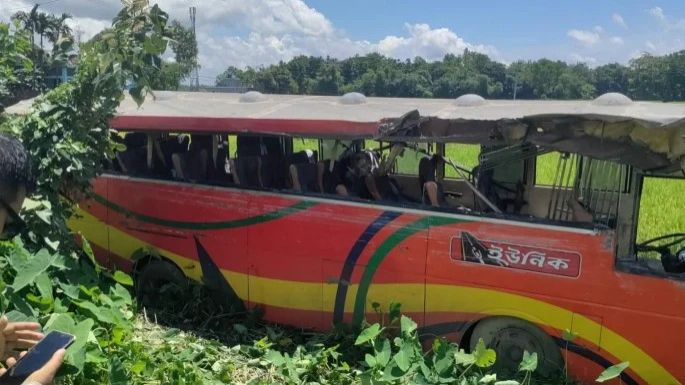
A devastating collision between two passenger buses in Bangladesh's Sylhet region, approximately 240 kilometres northeast of Dhaka, claimed eight lives on Friday morning, with a further 25 people sustaining injuries from the impact. The accident, which occurred around 7:30 a.m. local time, has prompted authorities to launch an investigation into the circumstances surrounding the incident, though preliminary findings are still being compiled.
Golam Mostafa, the officer-in-charge at Sylhet's Osmani Nagar police station, confirmed the casualty figures to journalists attending the scene. The distribution of injuries across the two vehicles suggests the force of the collision was substantial, with many survivors transported to nearby medical facilities for treatment. The identification and notification of deceased passengers, many of whom may have been travelling long distances, is expected to take several days as authorities work through administrative procedures.
The incident underscores a persistent vulnerability in Bangladesh's transportation infrastructure that has long troubled policymakers and safety advocates across the region. The nation continues to grapple with alarmingly high fatality rates associated with road accidents, a phenomenon driven by an interconnected web of systemic failures that extends far beyond individual driver error or mechanical failures.
A primary contributor to Bangladesh's accident rates is the deteriorating condition of highway networks throughout the country. Many of the nation's major routes, particularly those connecting provincial cities like Sylhet to the capital, suffer from inadequate maintenance schedules, surface degradation, and insufficient markings. These infrastructure deficiencies compound during monsoon seasons when flooding and landslides further compromise roadway integrity, creating hazardous conditions that drivers struggle to navigate safely.
Vehicle maintenance represents another critical weak point in Bangladesh's road safety ecosystem. The majority of buses operating on inter-city routes are considerably older than their counterparts in neighbouring countries, with many operators deferring costly repairs and relying instead on makeshift fixes performed by roadside mechanics. Brake systems, steering mechanisms, and tyre conditions frequently fall below acceptable safety standards, yet regulatory checks remain sporadic and inconsistently enforced. The financial pressures facing transport operators create perverse incentives to prioritise speed over safety, as faster journeys translate into additional revenue per vehicle per day.
Driver behaviour and compliance with traffic regulations constitute perhaps the most visible dimension of Bangladesh's road safety challenge. Speeding, reckless overtaking, and failure to maintain safe following distances are endemic to highways in the region. Many operators structure driver compensation systems that reward speed, inadvertently encouraging dangerous practices. Furthermore, driver training standards vary widely, with many operating commercial vehicles lacking formal qualification or having obtained licences through inadequate testing procedures that fail to assess practical competency or hazard awareness.
The role of traffic enforcement deserves particular scrutiny when examining why collision rates remain elevated despite occasional awareness campaigns. The traffic department operates with limited resources, insufficient personnel deployed across extensive road networks, and in some cases, a perception of selective or inconsistent enforcement. Checkpoints may appear sporadically, and penalties, while technically prescribed, are sometimes negotiated informally rather than applied uniformly. This inconsistency erodes deterrent effects and fails to establish the cultural shift toward compliance that sustained safety improvements require.
For Malaysian readers and others across Southeast Asia, the Sylhet accident serves as a cautionary reminder of the shared challenges confronting the region's transportation systems. While Malaysia has invested significantly in highway infrastructure and enforcement mechanisms, many corridors throughout Southeast Asia mirror conditions described in the Bangladesh context. Cross-border bus services operating between Malaysia and Thailand, or those utilising lesser-developed routes within the region, face similar pressures. The Sylhet collision reflects a broader regional problem requiring coordinated policy responses.
The economic dimensions of road safety in Bangladesh also warrant consideration. Each fatality represents not merely a statistical casualty but the loss of an income earner, often affecting extended family networks dependent on remittances or wage employment. Injuries impose substantial costs on families and the healthcare system, diverting resources from other development priorities. International studies suggest that comprehensive road safety investments—encompassing infrastructure, enforcement, and driver education—generate substantial economic returns through reduced productivity losses and healthcare expenditures.
Authorities in Bangladesh have periodically announced initiatives intended to strengthen road safety frameworks, yet implementation remains inconsistent and funding often proves insufficient for sustained programmes. The Sylhet incident will likely prompt renewed calls for stricter vehicle inspection protocols, enhanced driver licensing requirements, and elevated penalties for violations. However, translating such announcements into sustained behavioural change requires institutional commitment and resources that extend considerably beyond rhetorical responses to individual accidents.
As investigations proceed into the specific causes of Friday's collision, the broader systemic failures that characterise Bangladesh's road safety landscape remain unchanged. Transport operators, government agencies, and civil society organisations across the region would benefit from treating such incidents not as isolated events requiring temporary responses, but as symptoms of structural problems demanding comprehensive, sustained intervention. Without such a shift in approach, similar tragedies will likely recur with troubling regularity along Bangladesh's highways.

