Eight individuals now face serious federal charges stemming from an alleged conspiracy to mount a violent attack on a high-profile mixed martial arts event hosted at the White House during US President Donald Trump's 80th birthday celebration, the Department of Justice announced this week. The charges include conspiracy to provide material support to terrorists, conspiracy to commit murder on federal government property, and conspiracy to murder a federal government official—offences that carry potential life sentences upon conviction if prosecutors prove their case beyond reasonable doubt.
The alleged plot represented a sophisticated and multi-layered attack strategy, according to court filings. Prosecutors contend that the suspects intended to deploy explosive-laden drones around the venue to create panic and force evacuations. Once attendees began fleeing the specially constructed arena, the conspirators planned to position snipers at strategic locations to target what law enforcement described as "high-value targets" among those trying to escape. The apparent goal was to inflict maximum casualties during the confusion and panic that would follow the initial drone detonation.
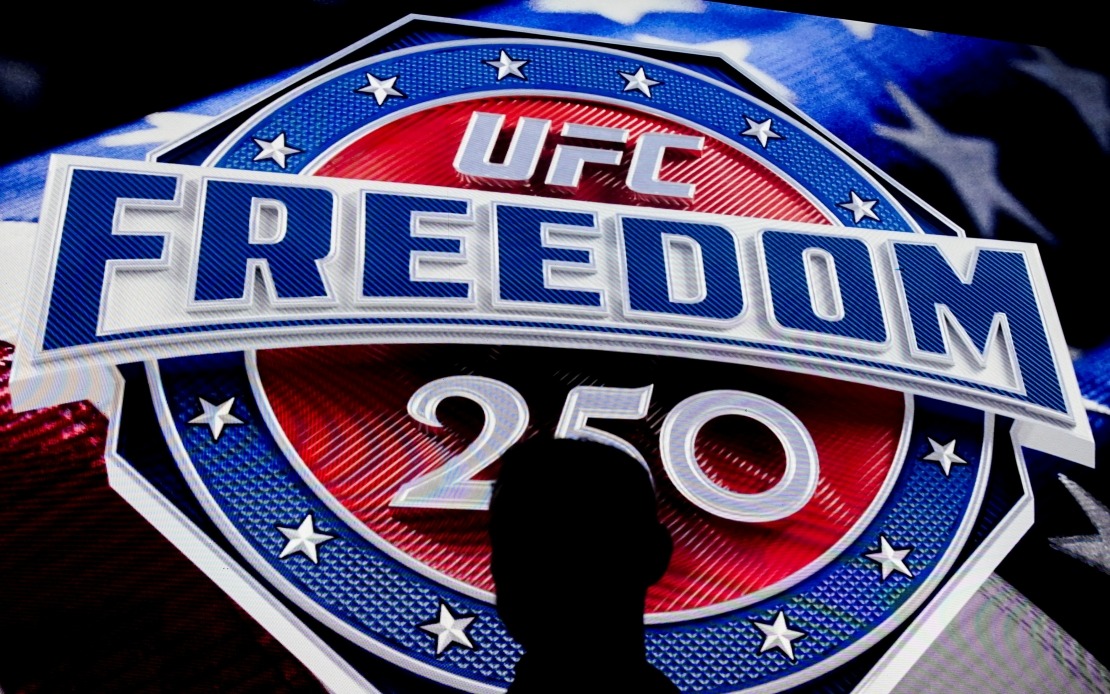
The Ultimate Fighting Championship hosted the event, designated "UFC Freedom 250," on June 14 in an arena built specifically for the occasion on the South Lawn of the White House. Among those in attendance were President Trump himself, members of his immediate family, and several cabinet-level officials, making the venue and audience profile extraordinarily high-value from a security perspective. The timing coincided with Trump's birthday, though organizers framed the event officially as part of celebrations marking the 250th anniversary of American independence, despite that nation's Independence Day falling on July 4.
Authorities had previously announced the arrests of seven suspects linked to the alleged conspiracy. However, an eighth defendant, a 21-year-old man from West Virginia, was apprehended only this week. According to court documents, this younger suspect was specifically designated by the alleged conspirators to serve as one of the snipers in their operational plan, highlighting the apparent deliberation and role-assignment within the group.
The charges brought by a federal grand jury in Columbus represent the culmination of what appears to have been an extensive law enforcement investigation. The specificity of the allegations—including details about drone deployment, sniper positioning, and targeting of particular individuals—suggests that investigators gathered substantial evidence, possibly including surveillance footage, communications between the suspects, or informant testimony. The fact that charges proceeded to a grand jury indicates prosecutors believed they had sufficient probable cause to move forward with prosecution.
The incident underscores persistent security challenges facing the United States, particularly regarding threats to high-profile government officials and high-value public gatherings. The sophistication of the alleged plan—incorporating both unmanned aerial systems and coordinated ground-based shooters—demonstrates the evolution of potential terrorist tactics in the modern era. Drone technology, once primarily the domain of military and intelligence agencies, has become increasingly accessible to civilian actors, creating new vulnerabilities for security planners.
For Southeast Asian observers, the case carries implications regarding regional security considerations. Malaysia and other ASEAN nations host numerous international events and increasingly attract high-profile political gatherings and sporting competitions. The operational methods allegedly contemplated in the White House plot—drone attacks coordinated with ground-based violence—represent a threat model that security services across the region should consider when planning protection for major events and dignitaries.
The involvement of multiple suspects suggests either a structured organization or at least significant coordination among individuals who shared common ideological motivations. Understanding how individuals from potentially different backgrounds came together around this alleged plot, what radicalized them, and how their planning proceeded undetected until discovery will be crucial information for counterterrorism officials assessing broader threat landscapes. The case also highlights the ongoing challenge of identifying homegrown extremism before plots advance to operational stages.
The legal proceedings ahead will likely reveal additional details about the alleged conspiracy, including communications between suspects, their stated motivations, and the extent of operational planning they had achieved. Defense attorneys for the accused will presumably argue insufficiency of evidence or challenge the characterization of protected speech as conspiracy, standard legal tactics in terrorism prosecutions. Ultimately, conviction will require prosecutors to prove not merely that the individuals held extremist views, but that they engaged in specific concrete steps toward executing the alleged attack plan.
From a broader geopolitical perspective, the incident occurred during a period of heightened domestic tensions within the United States and elevated international security concerns. The fact that such a plot could advance to the level of arrest and formal charges suggests both the genuine nature of the threat and the effectiveness of domestic intelligence and law enforcement capabilities in identifying and interdicting such schemes before execution. However, it also indicates that terrorists and extremists continue to identify high-value targets and develop operational approaches, necessitating sustained vigilance and investment in security measures.
The case demonstrates why major international events require extraordinary security preparations, particularly when they include high-ranking government officials, family members, and cabinet-level attendees. The temporary arena built on the White House South Lawn presumably incorporated significant protective measures, but the alleged plot targeted the evacuation phase—when the target-rich environment disperses in an uncontrolled manner. This highlights how perpetrators constantly seek to identify vulnerabilities in security protocols, particularly during transition periods when crowds move between controlled and uncontrolled spaces.

