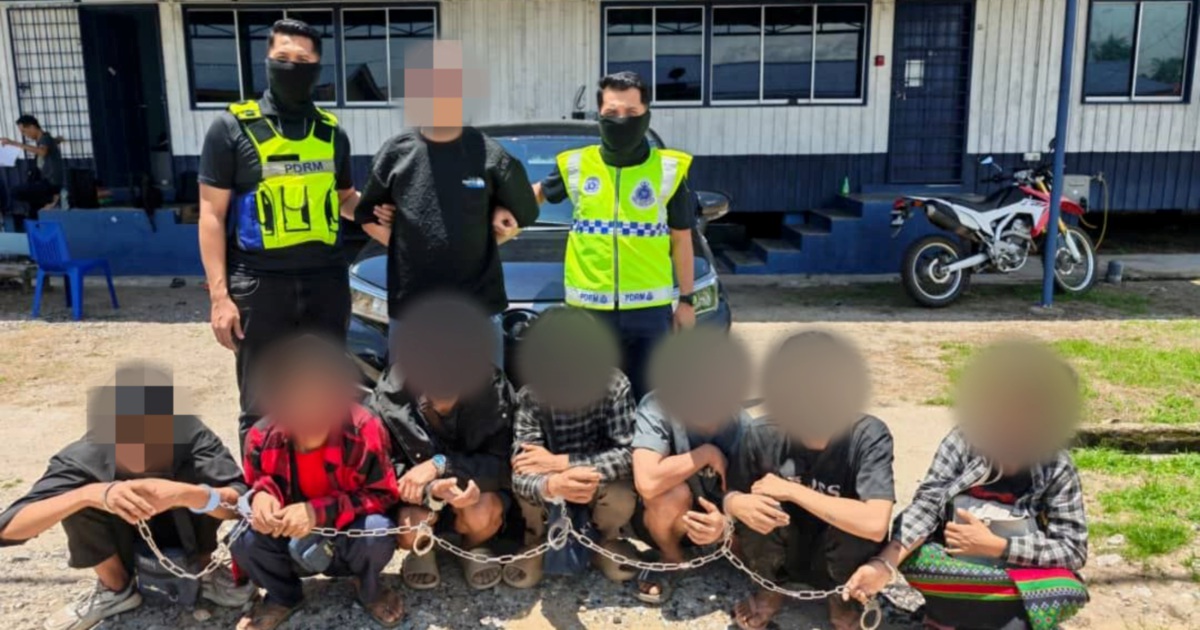
Police in Kelantan have arrested eight people as part of an ongoing crackdown on human trafficking networks operating across the region, in an early morning operation that has shed light on the persistent migrant smuggling problem afflicting the state. The operation, conducted in Kota Baru, resulted in the detention of a Malaysian national suspected of serving as a key facilitator in transporting seven undocumented Myanmar nationals across state lines. The arrest underscores the continuous efforts by law enforcement to dismantle organised smuggling operations that exploit vulnerable migrant workers seeking employment in Malaysia.
The case highlights a critical challenge facing Malaysian authorities in managing irregular migration flows, particularly from neighbouring Myanmar, where political instability and economic hardship have driven thousands to attempt entry into Malaysia through illegal channels. The involvement of Malaysian nationals in these operations is especially troubling, as it demonstrates how domestic facilitators provide crucial logistical support that enables traffickers to operate with relative impunity across international borders. These intermediaries often possess knowledge of police patrol routes, checkpoints, and enforcement patterns, allowing smuggling networks to adjust their methods and evade detection.
Kelantan's geography makes it particularly vulnerable to smuggling activity. The state shares extensive land borders with Thailand and, through northern routes, provides relatively accessible pathways for migrants seeking alternative entry into Malaysia without official documentation. The porous nature of these border regions, combined with limited enforcement resources, creates opportunities for organised crime networks to establish reliable trafficking corridors. Migrants, often desperate and willing to pay substantial sums to smugglers, become trapped in cycles of debt bondage and exploitation as they struggle to regularise their status.
The seven Myanmar nationals recovered during the operation represent only a fraction of the undocumented migrants believed to be present in Malaysia. Official estimates suggest tens of thousands of irregular migrants remain unregistered across the country, contributing to a shadow economy that generates billions in illicit revenue for smuggling syndicates and corruption networks. These migrants frequently experience abuse, wage theft, and unsafe working conditions, with limited recourse to legal protection or law enforcement assistance due to their precarious immigration status.
The arrest operation demonstrates police commitment to tackling human trafficking, though observers note that sporadic enforcement actions must be complemented by sustained intelligence gathering and inter-agency coordination to effectively dismantle organised networks. The Malaysian police have increasingly focused on identifying and prosecuting domestic facilitators, recognising that targeting local enablers disrupts operational logistics more effectively than pursuing individual migrants. However, conviction rates remain modest, partly because smuggling operations function through loosely affiliated networks of independent actors rather than hierarchical criminal organisations, making it difficult to establish prosecutorial chains of command.
Regional cooperation remains essential for addressing migrant smuggling comprehensively. Thailand and Myanmar, through which migrants transit, face their own enforcement challenges and resource constraints. The lack of harmonised border management protocols across Southeast Asia allows smugglers to exploit jurisdictional gaps and inconsistencies in legal frameworks. Malaysia, as a primary destination country, must coordinate with transit nations to establish information-sharing mechanisms and joint operations targeting major trafficking hubs.
The economic factors driving Myanmar nationals toward Malaysia remain largely unaddressed. Decades of military conflict, ethnic tensions, and economic collapse have left millions of Burmese citizens impoverished and desperate for employment opportunities. Malaysia's relatively stronger economy and established Myanmar migrant communities create natural pull factors that smuggling networks readily exploit. Without addressing root causes of forced migration, enforcement actions alone will prove insufficient to stem irregular flows.
For Malaysian employers and communities, the smuggling problem carries significant implications. Undocumented workers depress wage standards, undercut local labour competition, and strain public services including healthcare and education. Simultaneously, migrants themselves remain vulnerable to exploitation, constituting a largely invisible underclass that operates outside regulatory frameworks designed to protect workers. Resolving these tensions requires balanced policies that neither criminalise desperation nor enable the profit-driven operations of criminal networks.
The case also raises questions about compliance among transport operators and vehicle owners who, wittingly or otherwise, facilitate smuggling operations. Increased awareness campaigns targeting the logistics sector, coupled with stringent accountability measures for those knowingly providing services to trafficking networks, may reduce operational capacity. Vehicle registration databases linked to enforcement systems could enable more efficient tracking of suspected smuggling routes.
Moving forward, the eight arrests represent both an enforcement success and a reminder of the scale of underlying challenges. Sustaining pressure on smuggling networks through continued police operations, while simultaneously addressing demand drivers through regional development assistance and coordinated border management initiatives, offers the most realistic pathway toward meaningful reduction in irregular migration. The involvement of a Malaysian national particularly underscores the need for comprehensive community engagement and awareness-raising regarding complicity in human trafficking operations.

