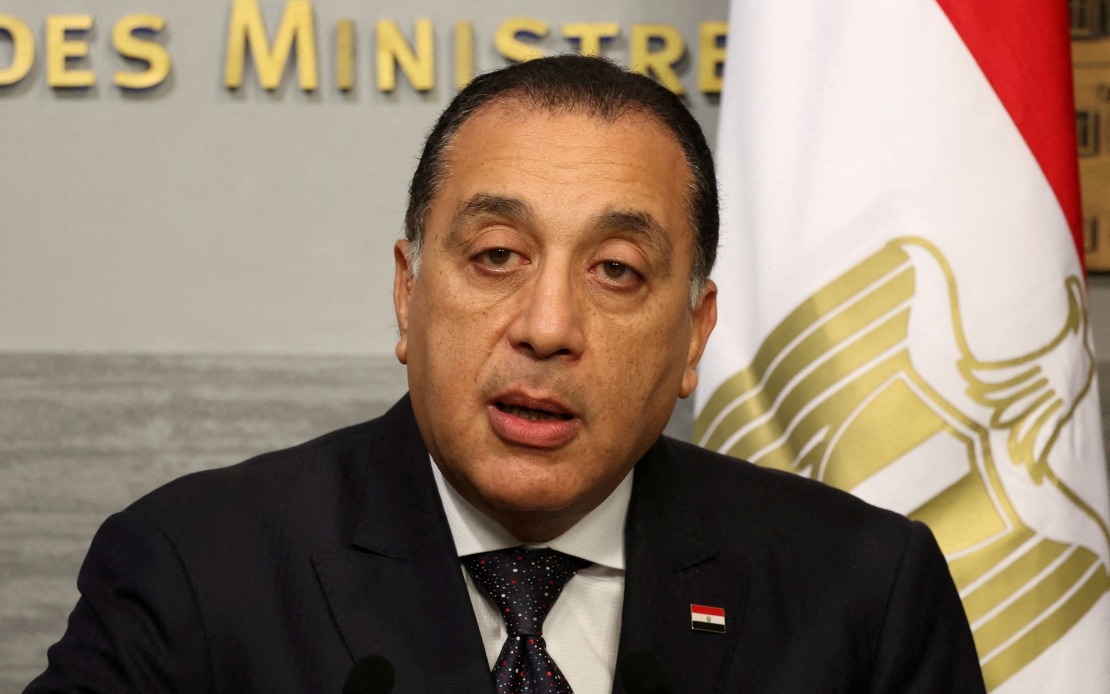
Egypt's government has reaffirmed its commitment to completing the El Dabaa Nuclear Power Plant according to its agreed timeline, with Prime Minister Mostafa Madbouly declaring that construction is advancing steadily towards a landmark 2028 grid connection target. The announcement came during discussions with Alexey Likhachev, chief executive of Russia's state nuclear corporation Rosatom, as engineers completed installation of the reactor pressure vessel for the plant's second unit. This milestone underscores the pace at which the long-stalled project is moving, representing a significant step in Egypt's transformation of its energy infrastructure.
The El Dabaa facility, situated along Egypt's Mediterranean coast in Matrouh Province approximately 300 kilometres from Cairo, will ultimately comprise four reactor units when fully operational. Each unit is designed to generate 1,200 megawatts of electricity, translating to a combined capacity of 4,800 megawatts that would substantially augment Egypt's power generation capacity. Beyond the 2028 connection of the first reactor, the remaining three units are expected to become operational by 2030, establishing the country's nuclear baseload generating capability within the broader regional energy landscape.
For Egypt, a nation grappling with mounting electricity demand alongside recurring power shortages that have constrained economic activity, the nuclear plant represents far more than a technical achievement. The government has framed the project as integral to a wider energy diversification strategy aimed at reducing dependence on fossil fuels and expanding the proportion of clean energy sources feeding into the national grid. Egypt's existing power generation relies heavily on natural gas and hydroelectric power from the Aswan High Dam, both subject to supply constraints and environmental pressures. Nuclear energy insertion would provide a stabilising force to the system while advancing the country's climate commitments.
The bilateral relationship between Egypt and Russia has anchored this ambitious undertaking since the foundational contracts were executed in December 2017. Moscow's state nuclear enterprise Rosatom has provided not only the reactor technology and engineering expertise but also substantial financing mechanisms that Egyptian authorities might otherwise have struggled to secure domestically. Likhachev's presence at the recent ceremony and his acknowledgement of Egyptian government cooperation signals continued Russian commitment to seeing the project through to completion, notwithstanding broader geopolitical tensions that have strained international partnerships in other domains.
The timing of Egypt's nuclear development carries particular significance for the wider Middle East and North Africa region, where energy security has emerged as a critical policy concern. Several neighbouring states, including the United Arab Emirates, have already operationalised nuclear facilities, establishing a regional precedent and technical framework. Egypt's entry into nuclear generation would position it alongside these peers and enhance its capacity to support both domestic consumption and potential future export of electrical power to neighbouring markets. The scale of the El Dabaa project—four reactors rather than a single demonstration unit—reflects Egyptian leadership's confidence in the technology and its commitment to meaningful energy transition.
For Malaysian observers and regional Southeast Asian stakeholders, Egypt's nuclear programme illustrates the complex calculus facing developing economies as they pursue energy security and climate objectives simultaneously. The Malaysian government itself has periodically explored nuclear energy as a long-term option, and Egypt's experience offers instructive lessons regarding the extended timelines, substantial capital requirements, and necessity of sustained international partnerships required for such ventures. The Russian involvement also demonstrates how geopolitical alignments shape energy infrastructure decisions in ways that extend beyond purely technical or economic considerations.
The project's advancement also underscores Egypt's broader infrastructure modernisation drive, particularly as Prime Minister Madbouly has prioritised major development initiatives to address the nation's structural economic challenges. Nuclear power generation, once fully realised, would free up natural gas supplies currently consumed by power plants for other industrial uses and export, generating additional revenue streams. The plant's location in Matrouh Province, a developmentally under-resourced region relative to the Nile Delta, additionally represents a geographic diversification of national energy assets and potential economic stimulus to peripheral areas.
Construction pace has accelerated measurably since initial groundbreaking in 2020, with the recent completion of the second reactor's pressure vessel installation marking substantial manufacturing and assembly progress. Rosatom has deployed considerable technical resources to overcome engineering challenges inherent in establishing nuclear infrastructure within Egyptian environmental and geological conditions. The organisation has also worked to build local Egyptian capacity, training domestic engineers and technicians to operate and maintain the facility once operational—a critical requirement for long-term sustainability and autonomous operation.
Regulatory and safety frameworks have been established under Egyptian atomic energy authority supervision and in consultation with international bodies, though civil society organisations have periodically raised concerns regarding geological stability and emergency preparedness protocols. The El Dabaa site's proximity to the Mediterranean and the region's seismic activity profile necessitated rigorous site-specific engineering to ensure structural resilience against natural hazards. Egyptian authorities have maintained that all such assessments have been completed to international standards and that transparent safety communication with surrounding communities remains an ongoing priority.
The financing structure supporting El Dabaa merits attention, as it reflects Egypt's broader indebtedness challenges and reliance on concessional lending from external partners. While specific financial arrangements between Cairo and Moscow remain partially opaque, Russian government credits have reportedly underwritten a substantial proportion of the project's estimated multi-billion-dollar cost. This financing model, while enabling Egypt to pursue the plant, simultaneously entrenches long-term obligation to Russian interests and influence—a dynamic that intersects with Egypt's own geopolitical positioning between Western and non-aligned partnerships.
Looking beyond 2030, Egypt faces the prospect of managing four operating nuclear reactors within its electricity system and demonstrating mastery of fuel cycle management, waste disposal, and decommissioning protocols. These dimensions of nuclear stewardship extend well beyond initial generation and require institutional capacity-building, international cooperation frameworks, and sustained budgetary allocation across multiple decades. Success would strengthen Egypt's hand in regional energy markets and climate negotiations; failure or operational disruption could reverberate across an already fragile power system supporting 100 million inhabitants and a major regional economy.

