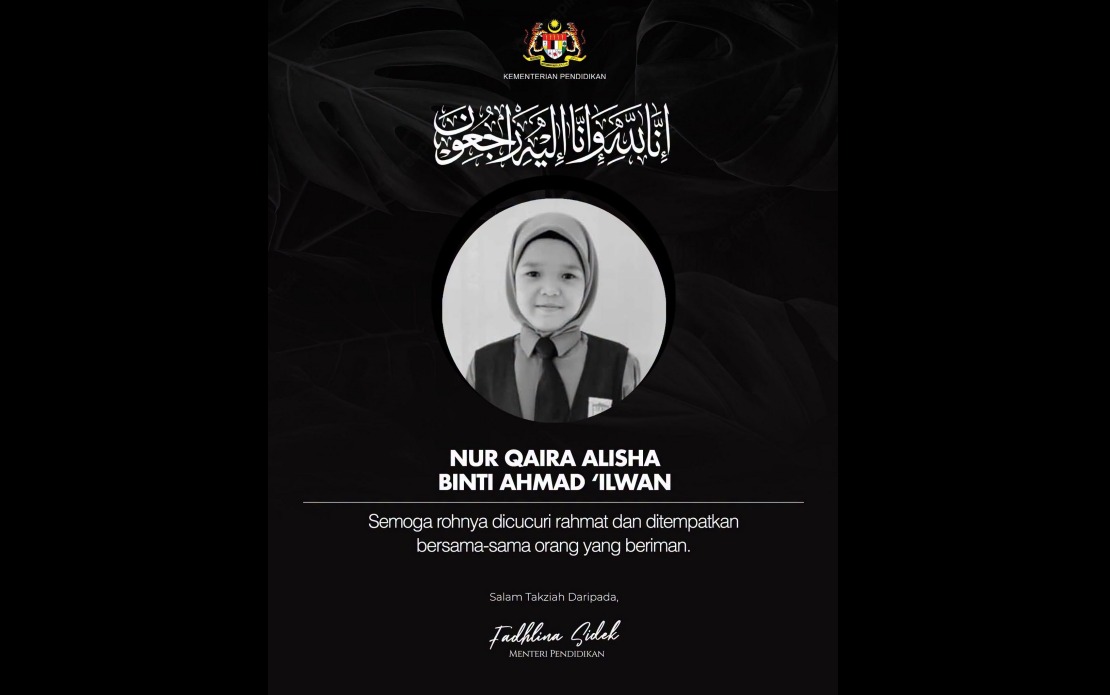
Education Minister Datuk Seri Fadhlina Sidek has instructed the Ministry of Education's Integrity Unit to pursue further investigations into circumstances surrounding the death of Year Four pupil Nur Qaira Alisha Ahmad Ilwan, following a formal complaint lodged by her family. The minister confirmed that the Kedah State Education Department had already conducted preliminary inquiries and that any subsequent action will be conducted in accordance with established protocols and guided by principles ensuring fairness to all stakeholders involved in the matter.
Fadhlina reiterated that student safety and wellbeing rank among the ministry's paramount concerns, emphasizing that institutional responses to such incidents must be thorough and principled. She acknowledged the immense grief faced by the family and expressed condolences, hoping they would find solace and emotional strength during this difficult period. The minister's public statement signals the severity with which the education authorities are treating the case, particularly given its potential implications for school protocols regarding student health and activity participation.
Nur Qaira had lived with dilated cardiomyopathy since infancy, diagnosed when she was just three months old. This progressive heart condition had necessitated formal exemption from participating in competitive sports and strenuous physical activities at school, with the family having provided medical documentation to the institution outlining her limitations. Despite these safeguards being in place, the family alleges that during sports house selection activities on April 15, a teacher directed Nur Qaira to compete in a running event regardless of her documented medical status.
Nine days following the sports day incident, Nur Qaira was rushed to Sultanah Bahiyah Hospital exhibiting severe symptoms including acute vomiting and pronounced facial swelling. Medical assessment revealed that her condition had deteriorated significantly, with physicians diagnosing acute decompensation of her underlying dilated cardiomyopathy—essentially a sudden worsening of her heart's ability to function. Despite receiving hospital care, her condition proved irreversible, and the young student passed away while under treatment.
The case has raised critical questions about communication protocols between medical professionals, parents, and educators regarding student health restrictions. Schools throughout Malaysia typically maintain records of students with chronic conditions, yet implementation of these safeguards appears inconsistent across institutions. This incident highlights a potential gap where administrative awareness of medical limitations may not translate into consistent enforcement at the classroom and activity-coordination level, particularly during sporting events where multiple staff members may be involved.
The involvement of the Integrity Unit represents an escalation beyond routine departmental investigation, suggesting the ministry recognizes potential administrative or procedural failures that require formal scrutiny. This specialized unit typically examines cases involving possible misconduct or policy violations within educational institutions. The family's complaint appears to center on whether school personnel exercised appropriate duty of care and whether established protocols for managing students with serious health conditions were properly followed.
For Malaysian parents with children experiencing chronic illnesses, this case underscores the importance of maintaining clear, updated communication with schools beyond submitting initial medical letters. Many families have begun requesting formal meetings with school administrators, providing copies of medical documentation to multiple staff members, and establishing written confirmations of activity exemptions. Educational institutions have similarly begun reviewing their systems for flagging students with documented restrictions to prevent such incidents from occurring.
The broader Southeast Asian education landscape has seen increasing attention to student health management following several high-profile incidents in recent years. Regional education standards organizations have begun developing more comprehensive frameworks for managing students with complex medical needs, recognizing that simple exemption letters may be insufficient without systematic institutional procedures. Malaysia's handling of this investigation may influence how neighboring countries approach similar safeguarding protocols.
The investigation's outcome will likely inform revised guidelines for Malaysian schools regarding documentation, staff training, and oversight mechanisms for students with serious health conditions. Schools may be required to implement more robust systems for ensuring that activity restrictions follow students across different school contexts and are communicated to all potentially involved staff members, not merely recorded in central files. Enhanced training for teachers and activity coordinators regarding recognition of health restriction documentation could prevent future tragedies.
Fadhlina's commitment to supporting the bereaved family during the investigation period acknowledges both the emotional trauma and the need for transparent, compassionate institutional response. The ministry's actions will be closely observed by parent groups and education advocacy organizations, as they signal whether systemic failures will be candidly addressed or whether accountability measures will remain symbolic. The case ultimately reflects a tension inherent in schools' dual responsibilities: fostering developmental experiences through activities while protecting vulnerable students whose participation could prove medically dangerous.

