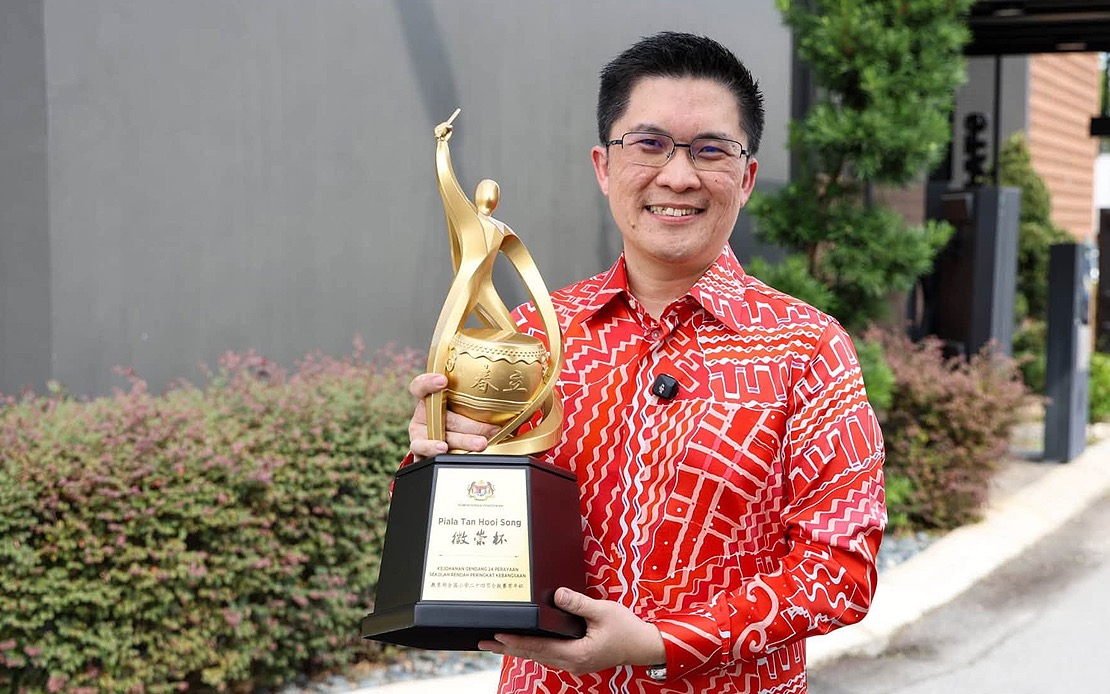
Malaysia's Education Ministry has committed to pursuing international recognition for Gendang 24 Perayaan, a distinctive percussion art form that has become increasingly central to the nation's cultural identity. Deputy Education Minister Wong Kah Woh announced the intention to submit a formal application to the United Nations Educational, Scientific and Cultural Organisation, seeking designation of the art form as a recognised cultural heritage. The declaration comes at a moment of significant momentum for the discipline, with the ministry recognising the need for structured, long-term efforts to ensure the tradition thrives across generations.
Wong made the announcement during remarks at the closing ceremony of the National Primary Schools Gendang 24 Finals Competition, held at Stadium Indera Mulia in Ipoh. The competition brought together 16 elite primary school teams and 417 students representing schools across Malaysia, offering a vivid demonstration of how deeply the art form has penetrated educational institutions nationwide. The spectacle underscored both the cultural vitality of Gendang 24 Perayaan and the genuine enthusiasm young Malaysians have developed for preserving indigenous artistic traditions in an increasingly globalised world.
According to Wong, preliminary groundwork for the UNESCO application has already begun. In May, senior officials from the ministry convened to chart a strategic pathway forward, examining what institutional and logistical support could be marshalled to strengthen the application. Beyond the formal UNESCO submission, Wong indicated that the ministry had engaged in broader consultations at both governmental and grassroots community levels. These discussions have focused on identifying substantive reforms and procedural innovations capable of bolstering the long-term health and expansion of Gendang 24 Perayaan as a living cultural practice.
One particularly significant initiative emerging from this planning process is the Train the Trainers programme, which targets school educators as multipliers. By equipping classroom instructors with expertise and confidence in teaching Gendang 24 Perayaan, the ministry hopes to substantially broaden its reach within the formal education system. Rather than relying on external specialists or cultural organisations alone, the scheme embeds instruction directly within schools, making participation more accessible and sustainable. This pedagogical approach recognises that institutional adoption and teacher-led instruction are essential vehicles for embedding cultural practices within the curriculum.
Gendang 24 Perayaan itself carries considerable historical weight within Malaysia's cultural landscape. The art form was established in 1988 by two pioneering cultural figures, the late Tan Hooi Song and Tan Chai Puan, who designed it to be accessible yet technically rich. By 2009, just over two decades after its creation, the national government formally recognised Gendang 24 Perayaan as Intangible National Heritage, conferring official status and lending governmental legitimacy to preservation efforts. The progression from a nascent cultural invention to state-recognised heritage illustrates both the genuine artistic merit of the form and Malaysia's growing attention to safeguarding contemporary cultural expressions alongside more traditional ones.
The expansion trajectory of Gendang 24 Perayaan over the past three decades is remarkable. What began as a modest endeavour involving only a handful of school teams has evolved into a nationwide movement encompassing hundreds of educational institutions. This organic growth suggests that the art form has struck a cultural nerve, resonating authentically with Malaysian educators and young people seeking meaningful connections to local heritage. The breadth of participation reflects not merely top-down promotion but genuine grassroots appetite for the discipline, a factor that significantly strengthens the case for international recognition.
The inaugural national competition organised jointly by the Sports, Co-curricular and Arts Division of the Education Ministry and the Malaysia Gendang 24 Perayaan Association, with backing from Yayasan Sime Darby as principal sponsor, represents a significant institutional milestone. Such structured competitions validate the art form within the sporting and cultural establishment, create pathways for elite practitioners to gain recognition, and furnish a tangible platform through which younger generations can showcase their capabilities. The event also signals deeper integration of Gendang 24 Perayaan into Malaysia's formal institutional structures, moving it beyond informal cultural transmission.
For Southeast Asian observers and Malaysia's regional partners, the Education Ministry's UNESCO initiative carries broader implications. The bid reflects Malaysia's positioning of itself as a guardian of distinctive cultural traditions at a moment when globalisation threatens the vitality of localised artistic practices. By seeking international recognition, the government implicitly argues that Gendang 24 Perayaan merits protection and promotion alongside heritage forms of greater antiquity. This stance may encourage neighbouring countries to undertake similar documentation and formalisation efforts for their own contemporary and traditional artistic expressions.
The strategic value of UNESCO recognition extends beyond mere prestige. International designation would enhance funding opportunities, increase tourist interest, and provide a protective framework against cultural appropriation or dilution. It would also validate the investment the Education Ministry has made in incorporating Gendang 24 Perayaan into curricula and teacher training programmes. Should the application succeed, Malaysia would gain a powerful tool for demonstrating commitment to cultural preservation at a time when many developing nations struggle to maintain traditions against competing pressures of modernisation.
The coordination between governmental bodies, educational institutions, and civil society organisations in advancing this agenda illustrates a relatively mature approach to heritage preservation. Rather than depending solely on legislation or ministerial decree, the effort mobilises teachers, students, cultural practitioners, and corporate sponsors. This multi-stakeholder model may prove more durable than top-down mandates alone, as it builds genuine constituency investment in the art form's continuation. The Train the Trainers initiative particularly exemplifies this collaborative philosophy, recognising that teachers are crucial agents in transmitting cultural knowledge.
Looking forward, the success of the UNESCO application will depend substantially on the quality of documentation and the strength of evidence demonstrating Gendang 24 Perayaan's cultural significance and ongoing practice. The Education Ministry will likely need to compile detailed records of the art form's history, current practitioners, pedagogical frameworks, and community participation. The existence of established competitions, formalised training programmes, and hundreds of participating schools provides compelling material to support such an application. Moreover, the fact that the art form continues to evolve and attract new adherents—rather than existing merely as a historical relic—strengthens its candidacy.
The broader context for this initiative includes Malaysia's efforts to position itself as a culturally sophisticated nation capable of fostering contemporary artistic innovation alongside respect for heritage. Gendang 24 Perayaan exemplifies how modern Malaysian identity can be built on indigenous aesthetic traditions adapted for contemporary contexts. Rather than treating cultural heritage as museum pieces frozen in time, the ministry's approach treats living traditions as dynamic practices capable of growth and renewal. This philosophy aligns with international best practice in cultural preservation and may resonate positively with UNESCO assessors evaluating the application.
Ultimately, the Education Ministry's commitment to pursuing UNESCO recognition for Gendang 24 Perayaan represents an investment in Malaysia's cultural future. By embedding the art form within schools, training educators to transmit knowledge, and seeking international validation, policymakers are constructing sustainable infrastructure for transmission across generations. The competition results, demonstrating hundreds of young Malaysians' engagement with the tradition, suggest that this investment enjoys substantial social traction. Should UNESCO approval materialise, it would affirm that Gendang 24 Perayaan has transcended its role as a localised artistic experiment to become a genuinely significant cultural expression worthy of global recognition and protection.

