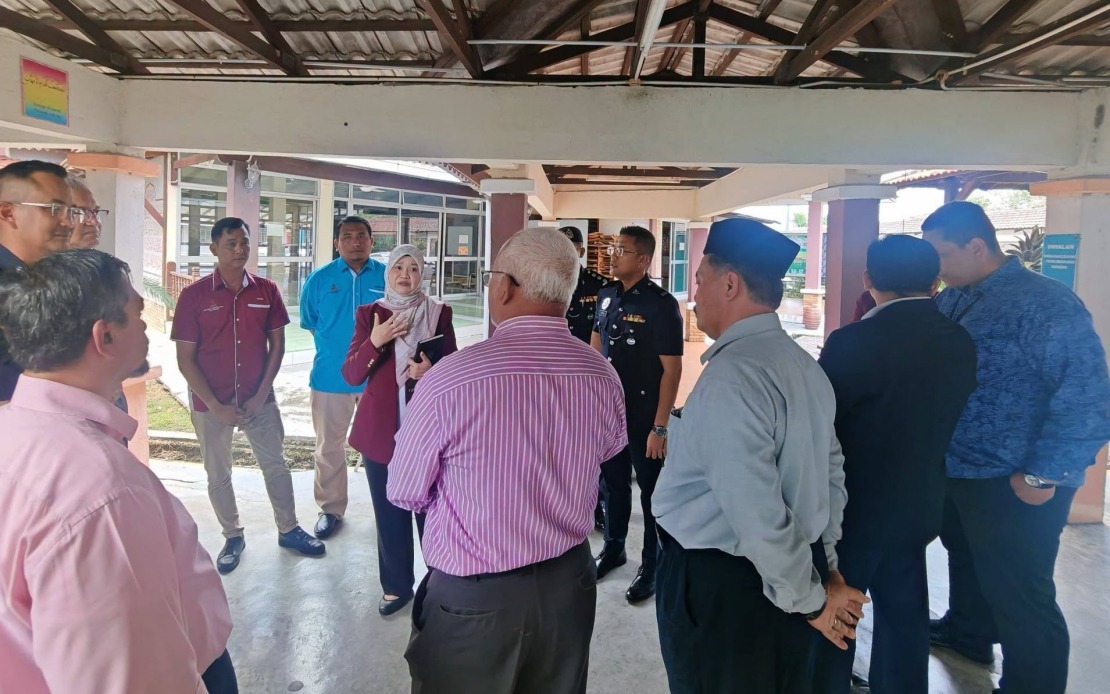
Education Minister Fadhlina Sidek made an unannounced visit to a secondary school in Banting, Kuala Langat on Saturday afternoon following a serious security incident that morning in which a Form Three student was stabbed by another female pupil. The minister arrived at the institution at 1.20 pm to assess the situation firsthand and meet with school leadership, underscoring the gravity with which the government views such violence within educational settings. The stabbing, which occurred around 9.50 am, marks another troubling incident in Malaysian schools and has reignited concerns about student safety and campus security protocols across the country.
According to Kuala Langat district police chief Supt Mohd Akmalrizal Radzi, officers responded swiftly to the emergency call and secured the school premises while establishing a preliminary investigation. The suspect, identified as another female student, was taken into custody immediately and is assisting police with their inquiries. The victim sustained injuries from the knife attack but remains in stable condition and is receiving medical treatment at Banting Hospital. The rapid police response prevented further escalation, though the psychological impact on the school community remains significant.
In her public statement, Fadhlina emphasised that authorities have prioritised both the victim's medical care and the emotional wellbeing of other students and staff affected by the traumatic incident. She called upon the public to exercise restraint and avoid spreading unverified information on social media, a persistent challenge during crisis situations in Malaysia where rumour-mongering can worsen community anxiety and hamper police investigations. The minister's emphasis on verified communication reflects growing awareness among government officials about misinformation's role in amplifying public concern during sensitive incidents involving schools.
The incident has prompted local political leaders to reassess school security measures across their constituencies. V. Paparaidu, the Banting assemblyman and Selangor Human Resources and Poverty Eradication Committee chairman, used the incident to advocate for enhanced security protocols, specifically highlighting the need for stricter monitoring at school gates and entry points. He stressed that unauthorised individuals must be prevented from accessing school grounds, a relatively straightforward measure that many Malaysian schools have struggled to implement consistently due to resource constraints and competing demands on administrative time.
Pararaidu's intervention reflects a broader pattern among Malaysian politicians of responding to security incidents with calls for tighter campus access controls. However, his remarks also acknowledge that security cannot function in isolation—the responsibility extends to creating a school environment where students feel protected and can pursue their education without intimidation or fear. His comments resonate with parents nationwide who have increasingly questioned whether existing school security measures adequately protect children during the entire school day, from arrival through dismissal periods when monitoring is often at its weakest.
The Selangor State Education Department responded promptly by deploying psychosocial support teams to the school, recognising that trauma from such incidents can have lasting effects on young people and educators alike. These counselling services are essential for processing what has occurred and helping the school community return to normal functioning. Malaysian education officials have learned from previous incidents that immediate psychological intervention can prevent longer-term behavioural and academic consequences among affected students, making such support a standard protocol in serious school incidents.
This stabbing incident adds to a growing conversation in Malaysian society about violence in schools and the underlying factors that motivate such behaviour. While the circumstances leading to the stabbing remain under investigation, the occurrence raises questions about peer conflict resolution mechanisms within schools, the availability of mental health support for students, and whether existing disciplinary frameworks adequately address interpersonal tensions before they escalate to violence. Schools in Malaysia have traditionally relied on counsellors and discipline masters, but many operate with insufficient staffing to provide meaningful intervention at scale.
The incident also highlights vulnerability gaps in Malaysia's school security architecture. Unlike some other countries that employ uniformed security personnel at school gates, many Malaysian institutions depend on voluntary cooperation from staff and informal monitoring arrangements. While resource limitations explain this reality, the trade-off has become increasingly untenable as high-profile incidents accumulate. Parents and educators are now demanding more systematic, professionally managed security systems that can detect and prevent weapons from entering school premises.
Beyond immediate security responses, the stabbing underscores the need for comprehensive mental health services accessible to students. Many young people struggle with emotional regulation, peer relationships, and conflict resolution but lack structured outlets for processing these challenges within the school system. If the investigating student was experiencing psychological distress or social difficulties, early intervention through school counselling could potentially have altered the trajectory toward violence. Malaysian schools require significantly expanded mental health infrastructure to identify struggling students and provide therapeutic support before crises occur.
The case also raises systemic questions about how schools handle inter-student conflicts and discipline. The progression from conflict to physical violence suggests that either escalation was extraordinarily rapid or that warning signs went unnoticed or unaddressed. School leaders and the Education Ministry should examine whether current frameworks for identifying troubled relationships and intervening early are sufficiently robust. This requires training for teachers to recognise early indicators of serious interpersonal conflict and clear protocols for escalating concerns to counselling and administration teams.
Moving forward, the incident will likely fuel political and public debate about school safety nationwide. State and federal education officials will face pressure to audit security measures across all schools and establish minimum standards for gate monitoring, staff training, and emergency response procedures. While such measures are necessary, they must be balanced against preserving schools as welcoming learning environments rather than fortress-like institutions. The challenge for Malaysian policymakers lies in implementing effective security without creating environments of fear or excessive surveillance that undermines the educational mission.
Fadhlina's personal visit to the school signals that the ministry recognises the seriousness of the matter and is committed to supporting affected institutions. Her emphasis on maintaining school as a safe space while urging public patience with the investigation reflects a measured approach to crisis management. The weeks ahead will test whether this incident catalyses meaningful changes in school safety protocols or whether it becomes one more troubling chapter in Malaysia's ongoing struggle to protect students within educational settings.

