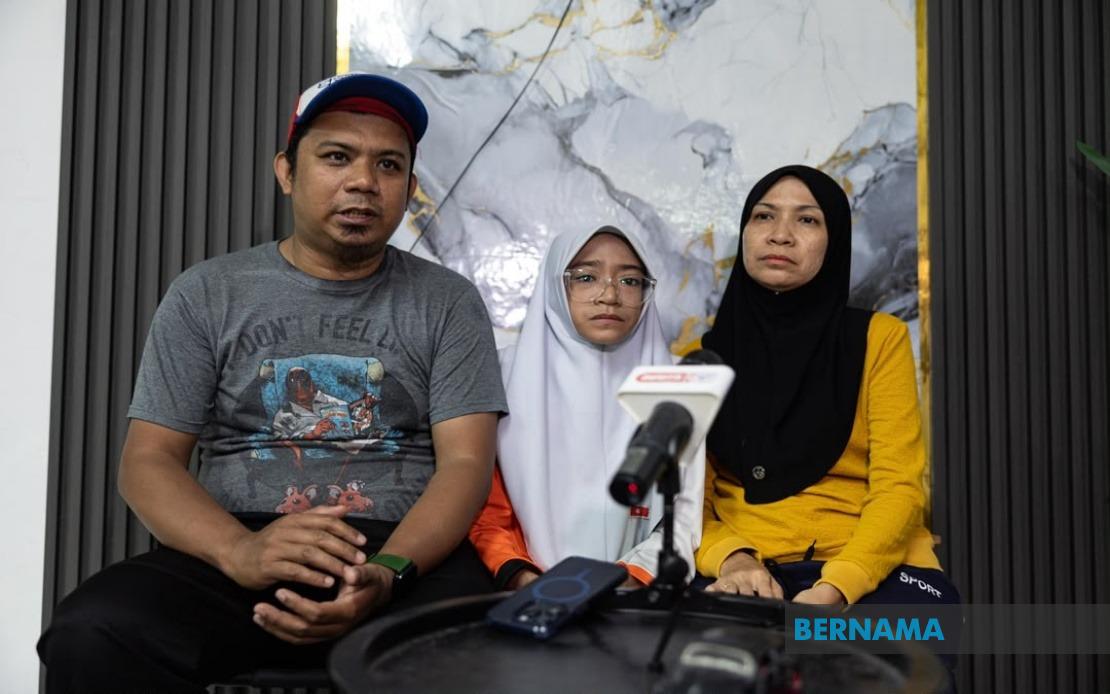
Education Minister Fadhlina Sidek and the Tun Hussein Onn Teachers' Foundation (YGTHO) have stepped in to provide crucial financial assistance for a teenager facing spinal corrective surgery. The combined contribution of RM10,000 will cover the medical costs for 13-year-old Arissa El Zahra Reduan's scoliosis procedure, scheduled at Raja Permaisuri Bainun Hospital (HRPB) in Ipoh on September 8. The donation addresses a financial gap that had been preventing the young student from accessing necessary treatment that could otherwise impact her mobility and quality of life during her formative years.
Fadhlina announced the decision through a Facebook post, emphasizing the emotional weight of encountering a child determined to remain engaged in her education despite facing a serious health challenge. Her statement reflected a broader commitment to removing barriers that prevent Malaysian students from pursuing their studies, whether those obstacles are academic or medical in nature. The minister noted that witnessing Arissa's resolve to continue attending school proved motivating enough to mobilize institutional support through the foundation's resources.
The Education Minister delivered the news personally through a video call to Arissa and her mother, a gesture that allowed the family to receive confirmation directly rather than through intermediaries. During the conversation, Fadhlina outlined the practical steps her office would undertake to ensure the funds reached the hospital promptly and the surgery could proceed without delay. She reassured the teenager that the financial burden had been entirely resolved, allowing the family to focus exclusively on the medical preparation and Arissa's psychological readiness for the procedure.
Scoliosis, an abnormal lateral curvature of the spine, presents significant health risks if left untreated during adolescence. In severe cases, the condition can restrict lung capacity, cause chronic pain, and limit physical activity throughout adulthood. For a 13-year-old still developing physically, timely surgical intervention through spinal fusion or rod placement can prevent long-term complications. The September 8 operation date provides a window during the school calendar that minimizes disruption to Arissa's academic progress, though her recovery period will require careful management of physical activity.
The Tun Hussein Onn Teachers' Foundation serves as an important charitable vehicle within Malaysia's education sector, historically supporting initiatives that address welfare concerns affecting students and educators. By partnering with the Education Ministry on this case, YGTHO demonstrated how such foundations can respond nimbly to individual hardship situations that fall outside standard government assistance programmes. The decision also signals an evolving approach to ministerial engagement with public welfare issues, where social media platforms enable direct communication with affected families and real-time resolution of urgent needs.
Arissa's father, Reduan Saad, had previously made a public appeal for the RM10,000 required to proceed with the surgery after exhausting other financial options. His willingness to seek assistance publicly, combined with media coverage that brought attention to his daughter's situation, created the conditions for this intervention. The case illustrates how transparency in healthcare costs and family circumstances can sometimes unlock institutional support, though it also highlights the broader challenge that many Malaysian families lack accessible pathways to secure funds for expensive medical procedures without resorting to public appeals.
The contribution reflects an implicit recognition within government that medical expenses represent a significant barrier to health equity, particularly for families of modest means. While Malaysia's public healthcare system provides subsidized services, specialized procedures with extended hospital stays can still impose substantial out-of-pocket costs for equipment, facility charges, and post-operative care. The RM10,000 intervention bridges that gap for Arissa, though it simultaneously underscores the reality that thousands of other Malaysian children facing similar conditions may lack comparable access to ministerial assistance.
Fadhlina's public commitment to Arissa's recovery extends beyond the initial financial contribution. Her statement indicates that her office will coordinate with Raja Permaisuri Bainun Hospital to ensure the teenager receives optimal treatment planning and post-operative support. This hands-on approach transforms the donation from a simple financial transfer into a more comprehensive institutional engagement with the family's medical journey. Such oversight can prove valuable in navigating hospital systems and ensuring that follow-up rehabilitation and monitoring occur according to best practices.
The timing of the announcement, arriving just weeks before the scheduled procedure, provides Arissa and her family with immediate relief and the psychological benefit of knowing that medical treatment is imminent. For adolescents facing serious surgery, the period of uncertainty preceding confirmation often generates anxiety that can affect their emotional and physical preparation. By expediting the decision and publicly committing to fund the operation, the minister's office has effectively removed a major source of stress from the family's situation.
Looking forward, Arissa's surgical outcome will become a benchmark for evaluating the effectiveness of the intervention. Successful spinal correction would enable her to resume normal activities and complete her schooling without physical limitations, justifying the ministry's investment in her health. The case may also serve as a template for how government officials and charitable foundations can identify and support other students facing comparable medical emergencies that threaten their educational continuity and long-term wellbeing.

