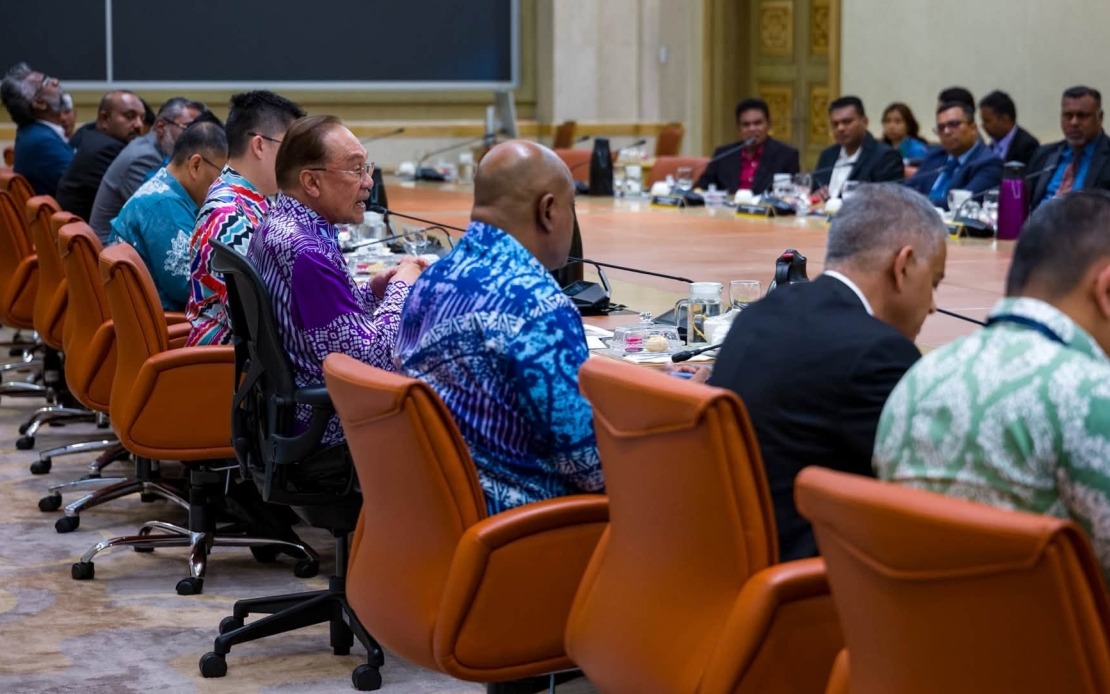
Prime Minister Datuk Seri Anwar Ibrahim has identified education, welfare support, professional development and job opportunities as the cornerstone pillars needed to advance the Indian community in Malaysia. Speaking through a Facebook announcement on July 23, Anwar outlined these priorities following consultations with representatives from Indian community organisations, signalling a renewed focus on a demographic group that has historically faced economic and social challenges within the nation's multiethnic landscape.
The Prime Minister's emphasis on education strikes at the heart of intergenerational mobility. Access to quality schooling remains uneven across Malaysia, with rural and urban fringe communities—where Indian Malaysians are disproportionately represented—often suffering from underfunded institutions, teacher shortages and inadequate facilities. By placing education at the forefront of his agenda, Anwar appears to recognise that breaking cycles of poverty requires investment in human capital from an early age. This approach aligns with broader Southeast Asian trends, where governments increasingly view education as the primary lever for reducing inequality and building competitive workforces.
Equally significant is Anwar's call for comprehensive welfare systems. Malaysia's social safety net, while expanding, remains fragmented and often fails to reach the most vulnerable segments effectively. The Indian community, which includes a substantial working-poor population and households dependent on informal economies, would benefit from more integrated welfare frameworks covering healthcare, housing assistance and income support. The government's acknowledgment of this gap suggests a shift towards more targeted, community-specific interventions rather than one-size-fits-all policies that may overlook particular vulnerabilities.
Skills development emerged as another critical element in Anwar's roadmap. In an era of rapid technological change and global economic competition, technical training and digital literacy have become essential for maintaining employability. Indian Malaysians, like other disadvantaged communities, often lack access to quality vocational training centres and apprenticeship opportunities. By prioritising skills enhancement, the government signals recognition that employment barriers are not merely about job scarcity but about qualification gaps and misalignment between available skills and market demand.
The Prime Minister's directive to the Malaysian Indian Transformation Unit (MITRA) and related agencies to adopt more proactive grassroots engagement indicates dissatisfaction with existing implementation mechanisms. Rather than top-down policy deployment, Anwar is pushing for agency representatives to work directly within communities, identifying genuine needs and ensuring programmes reach intended beneficiaries. This reflects international lessons about development work: that programmes designed without ground-level consultation often fail to achieve their objectives or reach unintended populations.
Anwar's emphasis on accountability and good governance signals that resource allocation for Indian community advancement will be subject to scrutiny. Ensuring that development funds reach those who truly need assistance—rather than being captured by middlemen or distributed inefficiently—has long been a governance challenge in Malaysia. By highlighting this concern, the Prime Minister is setting expectations that MITRA and partner agencies must demonstrate measurable outcomes and transparent benefit distribution.
The underlying philosophy articulated by Anwar—that no segment of society should be left behind—reflects a deliberate inclusive development narrative. For Malaysia, a nation with significant economic disparities cutting across ethnic lines, this positioning counters potential criticism that growth benefits accrue only to privileged segments. It also acknowledges that the Indian community's challenges cannot be reduced to cultural or community-specific factors alone but are systemic issues requiring coordinated government intervention.
For Malaysian readers, particularly those within the Indian community, these statements represent both opportunity and a test of political commitment. Anwar's previous stint in opposition and current role as Finance Minister mean his government controls budgetary instruments necessary to implement such priorities. Whether announced initiatives translate into concrete resource allocation, expanded access to quality schools and training facilities, and genuine employment pathways will determine whether this represents transformative policy or rhetorical positioning.
Regionally, Malaysia's approach to minority community empowerment carries implications for neighbouring Southeast Asian nations grappling with similar demographic complexities. If Malaysia successfully implements integrated education-welfare-employment strategies for marginalised populations, it could offer a replicable model. Conversely, implementation gaps would underscore how development commitments often falter when confronting bureaucratic inertia, resource constraints and competing political priorities across the region's diverse state structures.

