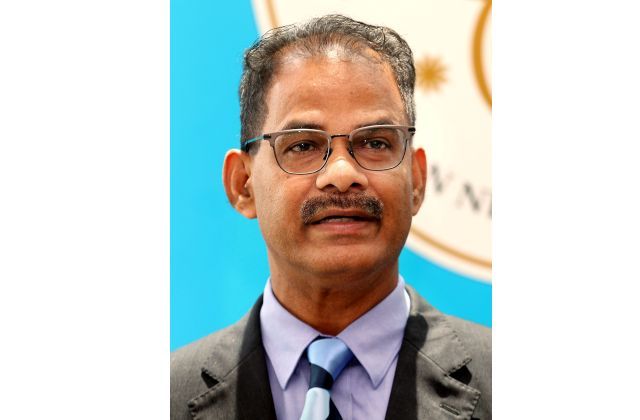
The massive East Coast Rail Link (ECRL) infrastructure undertaking is poised to inject significant employment momentum into Selangor's locomotive manufacturing ecosystem, with authorities projecting the creation of around 2,000 new positions across the sector. Speaking during the state assembly sitting at Bangunan Dewan Negeri Selangor in Shah Alam on Tuesday (Aug 11), V. Papparaidu, the state's human resources and poverty eradication committee chairman, outlined how the RM50.27 billion national project represents a substantial opportunity for local workforce development, particularly for younger Malaysians seeking entry into the rail manufacturing and allied industries.
Crucially, approximately 80% of the positions that will emerge from the ECRL initiative require local manpower, underscoring the domestic employment-generation potential of this transport infrastructure undertaking. This employment concentration reflects both Malaysia's strategic approach to major development projects and the alignment of ECRL's labour requirements with the skills profile of Selangor's existing and prospective workforce. For policymakers and economic planners, this figure signals a meaningful opportunity to channel youth unemployment into high-value manufacturing roles whilst strengthening the state's competitive positioning within the broader Southeast Asian rail and logistics landscape.
Recognising that infrastructure projects alone cannot guarantee successful job-worker matching, the Selangor state government has adopted a proactive approach to equipping its population with industry-relevant competencies. Papparaidu emphasised that the administration intends to provide targeted education and vocational training aligned precisely with the technical demands emerging from the ECRL and related locomotive manufacturing activities. This commitment reflects a growing recognition across Malaysia that infrastructure investments yield optimal returns when paired with complementary human capital development strategies that ensure local workers possess the requisite technical foundations to secure and excel within newly created positions.
The state's strategic response encompasses several established initiatives designed to bridge the gap between job-seeking populations and employer recruitment needs. The Kerjaya Selangor programme, executed in partnership with the Social Security Organisation (PERKESO) through the MyFuture Jobs digital platform, represents a contemporary approach to labour market intermediation. Rather than relying on conventional job placement methods, this initiative leverages data-driven matching mechanisms that consider applicants' educational qualifications, existing skill sets, and demonstrated industry competencies to facilitate placements that benefit both employees and employers. Such technology-enabled solutions reflect how Malaysian policymakers are adapting to modern labour market complexities.
Complementing digital platforms with face-to-face engagement opportunities, the state government has implemented JobCare Selangor, a job fair initiative that provides TVET (Technical and Vocational Education and Training) graduates direct interview access to prospective employers. These events represent critical touchpoints where aspiring workers can showcase their capabilities whilst employers gain immediate insight into available talent. Between January and July 2024, PERKESO statistics indicated that Selangor produced 10,111 TVET graduates, representing a substantial pipeline of workers positioned to enter technical and skilled employment categories. This output underscores the state's growing capacity to supply specialised labour across multiple industries simultaneously.
The employment landscape across Selangor reveals considerable scope for technical worker absorption beyond the ECRL sector alone. During the same seven-month period, the state registered 78,030 job vacancies requiring diploma-level qualifications or higher, with 3,965 of these positions concentrated within high-skill industries encompassing automotive, semiconductor, and manufacturing domains. The nature of these advertised roles—spanning automotive engineers, data scientists, and software developers—demonstrates that Selangor's economic dynamism depends fundamentally on workers possessing advanced technical competencies. TVET pathways, which integrate theoretical knowledge with practical hands-on training, have emerged as the primary mechanism through which workers transition from educational programmes into these demanding professional roles.
When Nushi Mahfodz, the Semenyih assemblyman, raised questions regarding the state government's readiness to conduct comprehensive skills-matching exercises across different districts, Papparaidu acknowledged that systematic mapping exercises would enhance labour market efficiency. Such exercises would involve collating detailed data from universities and technical institutions regarding graduate outputs by discipline, then correlating this supply-side information with demand-side requirements across Selangor's diverse economic zones. This analytical approach recognises a fundamental reality: Selangor's economic geography is heterogeneous, with industrial clusters concentrated in specific corridors.
The observation that Shah Alam and Pelabuhan Klang districts possess distinct industrial profiles and economic functions compared to other Selangor localities illustrates why blanket, state-wide labour policies may underperform. Shah Alam's automotive and manufacturing concentration differs markedly from Pelabuhan Klang's logistics and port-adjacent industrial ecosystem, which in turn contrasts with the semiconductor and electronics manufacturing focus prevalent in other districts. A district-level mapping exercise would therefore enable policymakers to calibrate vocational training curricula and career guidance initiatives to match the specific sectoral requirements prevailing within particular geographic areas. This differentiated approach would enhance the probability that TVET graduates find employment aligned with their training within their local labour markets.
The Papparaidu response acknowledged that assembling comprehensive graduate data necessitates institutional collaboration across Malaysia's sprawling education and training provider ecosystem. Universities, polytechnics, vocational colleges, and private training providers all contribute to skills supply, yet fragmented data systems currently limit the state government's ability to achieve complete visibility into graduate outputs and employment destinations. Addressing these data gaps would require formal coordination mechanisms through which educational institutions report graduate statistics broken down by discipline, location, and qualification level. Such transparency infrastructure, whilst administratively demanding, would provide the intelligence foundation necessary for evidence-based workforce development planning.
For Selangor's economic future and Malaysia's broader industrialisation trajectory, the ECRL project represents more than mere infrastructure development. The anticipated 2,000 locomotive industry positions constitute a catalyst for examining whether the state's education and training systems effectively convert demographic potential into skilled employment. The convergence of major infrastructure projects, demonstrated employer demand for technical workers, substantial TVET graduate production, and explicit government commitment to skills development creates conditions where coordinated action could yield employment outcomes that benefit workers whilst strengthening Selangor's competitiveness within regional manufacturing and transportation sectors. Whether these potential synergies materialise depends substantially on execution of the mapping exercises, curriculum alignment initiatives, and employer engagement programmes that remain in nascent stages. The coming months will reveal whether rhetoric around skills development translates into systematic changes that elevate employment prospects for Selangor's youth seeking entry into the technical and professional roles that increasingly define the state's economic landscape.

