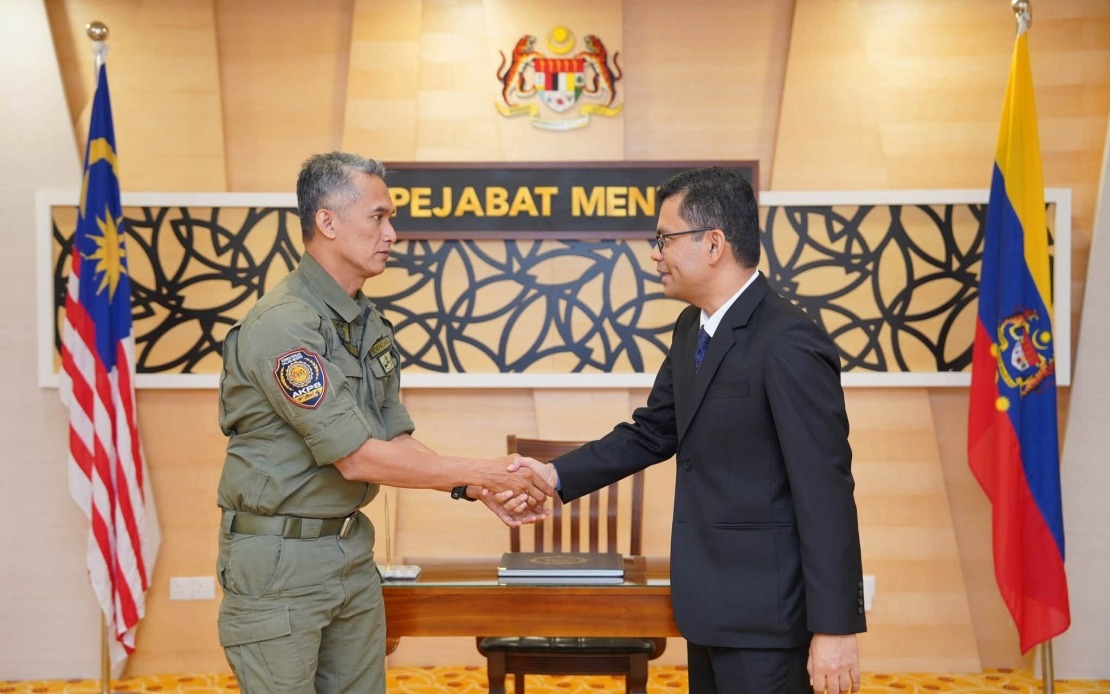
Malaysia's push to overhaul its border management framework took a significant step forward when officials from the Economy Ministry and the newly established Malaysian Border Control and Protection Agency held talks in Putrajaya on strengthening the nation's entry point infrastructure and operational capabilities. The discussions between Economy Minister Akmal Nasrullah Mohd Nasir and AKPS director-general Datuk Seri Mohd Shuhaily Mohd Zain underscored the government's commitment to aligning budgetary priorities with the modernisation agenda of an agency that only commenced full operations three months prior.
The timing of these consultations reflects a critical juncture in Malaysia's border administration landscape. When AKPS began functioning on January 1, 2025, it represented a consolidation of enforcement responsibilities previously scattered across six separate agencies—the Immigration Department, Royal Malaysian Customs Department, Malaysian Quarantine and Inspection Services Department, Health Ministry, Department of Wildlife and National Parks, and Road Transport Department. This structural merger, while administratively efficient, left the nascent organisation with substantial infrastructure and capacity gaps that require urgent attention from the federal budget.
The Economy Ministry indicated that the talks centred on four interconnected pillars that will shape AKPS's development trajectory. Infrastructure enhancement sits at the foundation, addressing the physical facilities and systems inherited from predecessor agencies that operate at varying levels of modernity across the country's land borders, maritime zones, and airports. Equally important is the technological dimension, where Malaysia recognises that manual border processing and fragmented data systems create friction for legitimate commerce and leave security vulnerabilities that organised crime networks exploit with increasing sophistication.
Strategic asset development emerged as a third focus area, suggesting that the government views border management not merely as a security function but as an economic facilitator. Modern ports of entry, properly equipped check facilities, and seamless multimodal connectivity between roads, rail, and maritime infrastructure can significantly reduce dwell times for goods and passengers. For a nation deeply embedded in regional supply chains and dependent on trade through the Strait of Malacca—one of the world's busiest shipping lanes—such efficiency gains translate directly to competitiveness and cost reduction for Malaysian exporters and importers.
The fourth pillar involves operational capacity building, particularly human resource development. The Economy Ministry's endorsement of structured development planning for AKPS reflects recognition that technology alone cannot function without adequately trained personnel who understand both enforcement protocols and the nuances of facilitating legitimate cross-border movement. This is particularly crucial given AKPS's absorption of personnel and procedures from disparate agencies, each with distinct cultures and operational methodologies.
Mohd Shuhaily's earlier comments revealed the scale of transformation underway at AKPS. The agency is prioritising what officials term smart border technology, encompassing integrated biometric systems that can verify traveller identities against multiple databases simultaneously, automated cargo scanning systems that reduce inspection times while maintaining security standards, and real-time data integration powered by artificial intelligence. Such systems, when fully operational, would position Malaysia alongside global best practices employed in developed nations and regional competitors like Singapore and South Korea.
The implications of this border modernisation initiative extend well beyond security considerations. For Malaysian businesses, streamlined border procedures mean faster time-to-market for perishable goods, reduced inventory carrying costs, and improved competitiveness against regional competitors. For the logistics sector, which contributes significantly to Malaysia's GDP and employment, efficient border crossings directly enhance profitability and service delivery. The pharmaceutical, electronics, and palm oil sectors—cornerstones of Malaysian exports—depend particularly on swift movement through customs checkpoints.
Regionally, Malaysia's border upgrade effort fits within a broader Southeast Asian trend toward automated and integrated border management. Thailand's recent investments in border technology at its northern crossings, Vietnam's modernisation of land borders with Cambodia and China, and Indonesia's expansion of container terminal capacity reflect collective recognition that borders increasingly serve as nodes in global supply chains rather than mere security barriers. Malaysia's proximity to Singapore and its role as a transit hub for goods destined for Thailand and beyond amplifies the competitive pressure to match regional standards.
The budgetary discussion between the Economy Ministry and AKPS also signals something subtler about Malaysian governance priorities. The allocation of development funds to border infrastructure and technology suggests that officials recognise the direct relationship between border efficiency and macroeconomic performance. During periods of elevated global uncertainty and supply chain volatility—challenges Malaysia continues to navigate post-pandemic—the ability to move goods and people swiftly across borders becomes a comparative advantage.
However, AKPS faces substantial challenges in executing this modernisation agenda. The agency inherited facilities of varying ages and specifications across numerous locations, from the Tuas checkpoint in Johor to the quieter crossings in Kelantan and Terengganu. Upgrading all these simultaneously while maintaining continuity of operations requires careful phasing and sustained funding commitments that extend across multiple fiscal years. Integration challenges also loom—combining IT systems from the Immigration Department, Customs, and quarantine services into coherent, interoperable platforms presents technical and organisational complexity.
The discussions in Putrajaya represent the formal commencement of translating AKPS's strategic ambitions into concrete budgetary allocations. As the agency moves beyond its initial operational phase toward medium-term development planning, success will ultimately depend on whether the Economy Ministry can secure parliamentary approval for sustained investment, and whether implementation timelines align with the operational realities of a freshly merged organisation still consolidating its institutional identity.
For Malaysian observers of trade and logistics sectors, these developments warrant close monitoring. The decisions made in coming months regarding AKPS funding, technology procurement, and infrastructure priorities will shape the cost and speed of doing business at Malaysia's borders for years to come. The agency's trajectory will also influence regional perceptions of Malaysia as a trade partner and logistics hub—perceptions that carry weight when multinational corporations evaluate supply chain routes and regional distribution centres.

