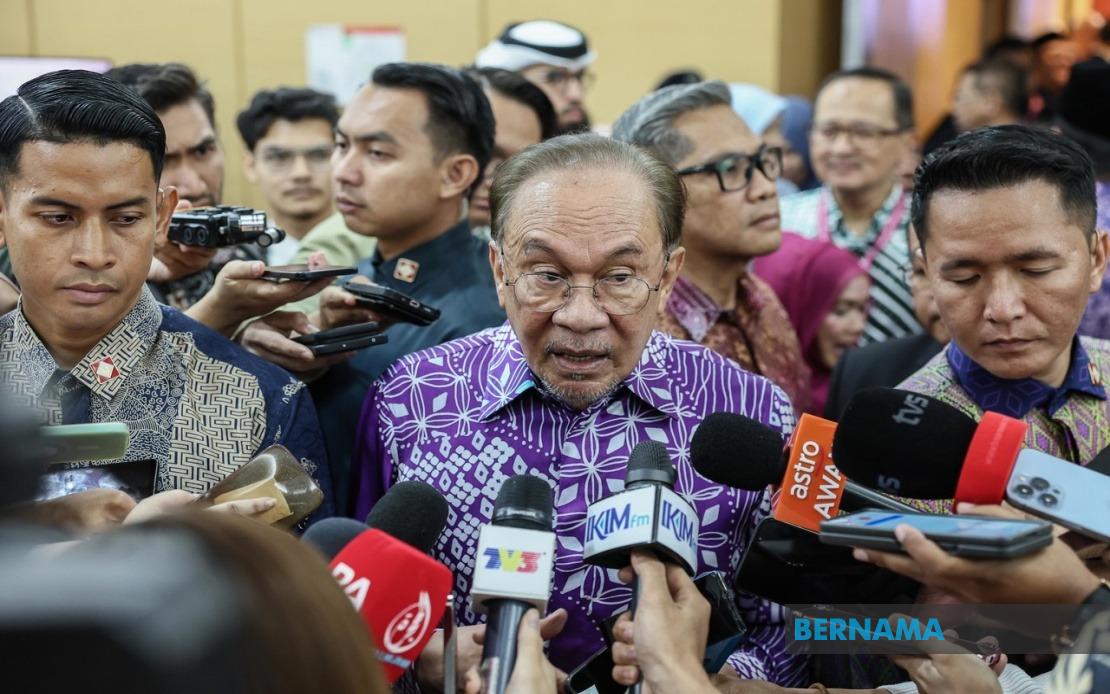
Prime Minister Datuk Seri Anwar Ibrahim has made a forceful case that Malaysia's approach to economic expansion must be fundamentally reoriented around human values and ethical considerations rather than the pursuit of growth for its own sake. Speaking at the Humane Economy Global Discourse conference in Kuala Lumpur on July 23, he contended that as the nation navigates an era of accelerating technological change, policymakers must ensure that economic strategies, technological adoption and public governance remain tethered to principles of dignity and welfare.
The Prime Minister's remarks reflected a philosophical stance that challenges the conventional development paradigm dominant across much of the emerging world. He recognised that Malaysia operates within a competitive global environment where remaining productive, attractive to foreign capital and technologically advanced are legitimate imperatives. Yet he insisted these objectives cannot justify an economic model that treats human flourishing as secondary to GDP expansion and productivity metrics. The framing represents an attempt to chart a middle course between the demands of modern capitalism and the social costs that rapid, unconstrained growth often imposes on ordinary communities.
Anwar identified several transformative technologies likely to reshape economic activity in coming decades, including artificial intelligence, renewable energy systems, advanced manufacturing capabilities and biotechnology innovations. Each of these fields presents Malaysia with both opportunities and risks. The country could potentially capture significant value through investment in these sectors, yet without careful governance rooted in human-centred principles, such technological disruption could also displace workers, concentrate wealth further and exacerbate existing inequalities. His emphasis on "moral purpose" appears to signal that technological adoption must be weighed against its social consequences and distributed benefits.
The concept of a "humane economy" has gained intellectual traction across several international forums and academic circles in recent years, reflecting growing unease with purely market-driven development models. By hosting this global discourse and positioning Malaysia as a champion of this perspective, the Prime Minister is attempting to align the country with a broader international conversation about redefining progress. This positioning could enhance Malaysia's soft power and appeal among progressive policymakers and investors worldwide who increasingly factor environmental and social considerations into their decision-making.
For Malaysian stakeholders, the Prime Minister's remarks carry practical implications across multiple domains. In labour policy, a genuinely human-centred approach would require substantial investment in reskilling programmes and social safety nets to cushion workers displaced by automation. In fiscal policy, it suggests the need for progressive taxation and wealth redistribution mechanisms to ensure that economic gains are broadly shared rather than concentrated among capital owners and top earners. In environmental governance, it implies that renewable energy transitions and manufacturing upgrades must occur with full consideration of local communities' needs and long-term ecological health rather than pure profit maximisation.
The presence of Minister in the Prime Minister's Department (Religious Affairs) Dr Zulkifli Hasan at this event underscores an effort to root the humane economy framework in Malaysia's Islamic values and traditions. This linkage is strategically significant in a Muslim-majority nation where religious principles carry substantial cultural weight. By framing ethical economics as consistent with Islamic teachings on justice, stewardship and communal welfare, the government seeks to build broader domestic consensus around these policy directions and distinguish Malaysian approaches from those in purely secular Western contexts.
The conference also featured Prof Datuk Dr Saadiah Mohamad, Chairman of Forum Ekonomi Manusiawi and director of HEGD 2026, indicating institutional commitment to deepening this discourse beyond rhetorical statements. The establishment of dedicated forums suggests the government intends to translate philosophical principles into concrete policy frameworks and implementation mechanisms. Such institutionalisation matters because without structured mechanisms for translating values into governance practice, ethical statements risk remaining aspirational rather than transformative.
For the broader Southeast Asian region, Malaysia's emphasis on humanising economic policy could catalyse discussions in neighbouring countries facing similar pressures of rapid technological change and globalisation. Thailand, Indonesia, Vietnam and the Philippines confront comparable challenges in balancing growth imperatives against social cohesion and worker protections. If Malaysia develops credible, evidence-based models for integrating human-centred principles into its economic governance, these could offer instructive alternatives to the approach pursued by more purely market-oriented competitors.
Critically, Anwar's framing inverts the conventional relationship between economics and ethics. Rather than treating moral considerations as constraints on economic optimisation, he positions ethical principles as foundational to sound economic strategy. This inversion challenges the persistent belief that markets function most efficiently when left to operate according to their own internal logic. Instead, it suggests that economies embedded within moral frameworks may ultimately prove more stable, more resilient and more capable of sustaining growth that enjoys genuine social legitimacy.
The Prime Minister's argument also carries implicit acknowledgment that Malaysia's existing development trajectory, whilst delivering aggregate growth, has generated distributional consequences that fuel social grievances and political discontent. Rural areas, lower-income urban communities and workers in declining industries have not uniformly benefited from economic expansion. By repositioning development around human dignity rather than headline GDP growth, he signals willingness to recalibrate policy priorities toward those left behind by previous growth phases.
Looking ahead, the practical test of these principles will lie in whether they translate into measurable policy shifts. Questions remain about how Malaysia will operationalise "moral purpose" in budgeting decisions, regulatory frameworks and investment priorities. Will certain sectors be discouraged because their growth model conflicts with human dignity? Will labour protections be substantially strengthened? Will wealth concentration be addressed through tax reform? The answers to such questions will determine whether this represents genuine philosophical reorientation or primarily rhetorical repositioning designed to enhance the government's progressive credentials.

