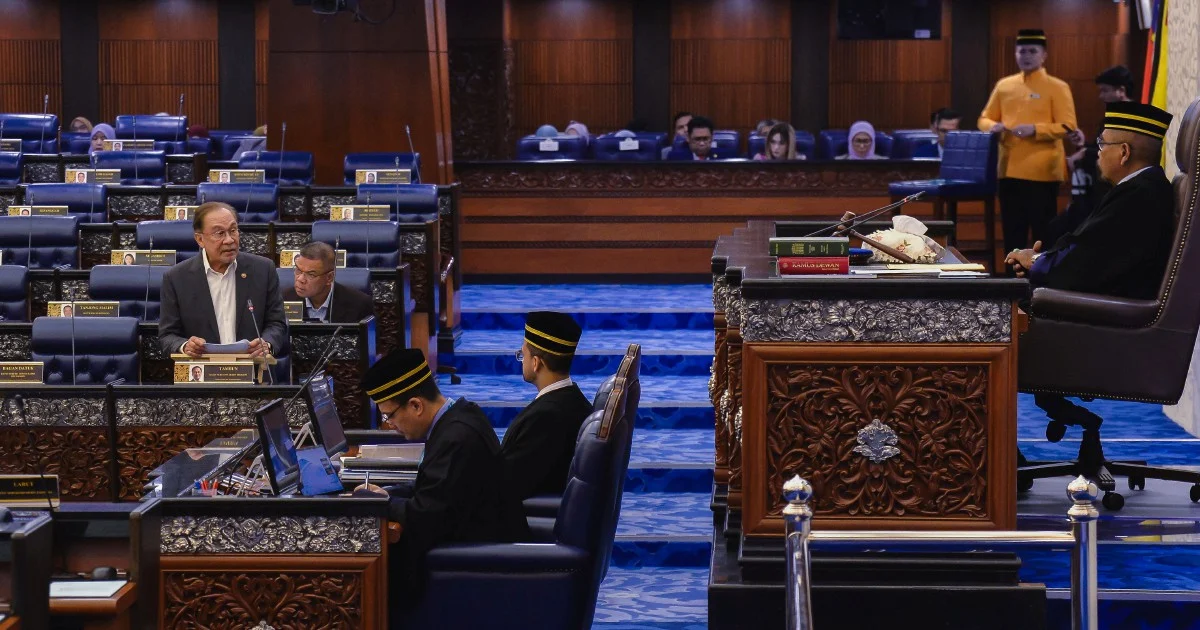
The Election Commission will enforce election guidelines strictly, with powers to act decisively against caretaker governments that breach protocols by making policy announcements or financial decisions during election periods, according to Prime Minister Datuk Seri Anwar Ibrahim. This statement underscores the commission's commitment to maintaining the integrity of Malaysia's electoral process and preventing outgoing administrations from using their remaining authority to influence the political landscape through spending or policy commitments.
Caretaker governments occupy a delicate constitutional position in Malaysia's democratic framework. Once Parliament is dissolved and a general election is called, the sitting government enters a transitional phase where its powers are technically limited to routine administrative functions. The underlying principle is to prevent an administration on its way out from cementing decisions that a newly elected government might want to reverse, or from using public resources to gain electoral advantage. However, the practical boundaries of what constitutes a breach have historically remained somewhat ambiguous, leading to disputes over individual announcements and spending commitments.
The Prime Minister's reaffirmation that the EC possesses enforcement authority in this domain carries particular weight for Malaysia's political system. Previous elections have witnessed tensions between caretaker administrations and opposition parties over the scope of allowable government action. Some announcements have provoked accusations of electioneering through public spending, while others have been defended as necessary continuity of government operations. By explicitly confirming the EC's mandate to scrutinise and penalise financial decisions, Anwar has signalled that arbitrary or manifestly political spending will not escape official oversight.
The definition of "decisions with financial implications" remains crucial to interpreting this policy. The spectrum is broad: allocations of development funds, awarding of contracts, initiation of capital projects, and even announcements of subsidies or welfare payments all carry financial consequences. Drawing the line between legitimate operational spending and electioneering is never straightforward. A caretaker government might argue that continuing infrastructure work or maintaining social assistance programmes falls within routine administration, while opposition figures could contend that timing announcements to maximise electoral benefit constitutes a breach. The EC's willingness to intervene suggests it will apply judgment to assess the intent and scale of financial decisions rather than adopting a blanket prohibition.
For Malaysian voters, this enforcement stance offers a degree of reassurance that the electoral playing field will not be dramatically tilted through last-minute government spending sprees. In democracies where caretaker conventions are weak or unenforced, outgoing administrations have used their final months to announce large projects, grant contracts to favoured businesses, or commit public money in ways that benefit their electoral prospects or entrench their legacy. By explicitly warning caretaker governments of EC sanctions, Anwar's statement aims to deter such practices before they occur rather than attempting to unwind them afterward.
The broader context in Southeast Asia is instructive. Several neighbouring democracies maintain caretaker conventions, though enforcement varies significantly. Thailand, Indonesia, and the Philippines have experienced episodes in which caretaker governments were accused of using remaining authority inappropriately. Malaysia's Election Commission, as a dedicated electoral body with statutory powers, is better positioned than many regional counterparts to impose meaningful consequences. This comparative advantage, when properly exercised, can strengthen public confidence in election fairness and the integrity of transitions between administrations.
The announcement also reflects evolving norms within Malaysia's political culture. As democratic practices mature and voter expectations increase, there is growing recognition that clean electoral contests require discipline not just during campaign periods but throughout the entire transition to a new government. Caretaker governments that respect the spirit of election guidelines—by avoiding splashy announcements and major financial commitments—help normalise the principle that departing administrations should focus on continuity and stability rather than legacy-building or electoral manoeuvring.
Practical enforcement presents challenges, however. The EC must distinguish between defensible routine operations and suspect discretionary decisions. A caretaker finance minister's approval of quarterly government spending to meet payroll and maintain services is unavoidable; a sudden announcement of new development corridors with associated budget allocations may cross the line. The commission's credibility will depend on its ability to apply consistent, transparent criteria and to explain its decisions to both the public and political parties. Perceived bias in enforcement—if the EC appears to overlook breaches by certain parties or to penalise others excessively—would undermine the whole framework.
For civil servants and government agencies operating during caretaker periods, the clarity provided by this statement is valuable. Officials now have explicit notice that major financial commitments or policy announcements will face electoral commission scrutiny. This encourages administrative prudence and reduces the temptation for caretaker ministers to use their remaining authority to push through pet projects. The knowledge that sanctions are possible creates an internal incentive structure that supports election guidelines without requiring the EC to police every routine transaction.
Looking ahead, the effectiveness of this approach will be tested in practice. The next general election—whenever it is called—will reveal whether the EC's stated enforcement authority translates into actual intervention and whether political parties accept or challenge such decisions. If caretaker governments comply voluntarily out of respect for democratic norms, the threat of EC action may rarely need to be exercised. Conversely, if major breaches occur and the EC acts decisively, those cases will establish important precedents for future election cycles.
Prime Minister Anwar's statement ultimately reflects a recognition that Malaysia's electoral credibility depends on the fairness of transitions between administrations. By empowering the Election Commission to act against caretaker governments that exceed their proper bounds, particularly through decisions with significant financial consequences, the government signals that adherence to democratic principles extends beyond polling day. This commitment, if sustained through consistent implementation, strengthens the foundations of Malaysia's democracy and reassures voters that electoral contests will be conducted on genuinely level terms.

