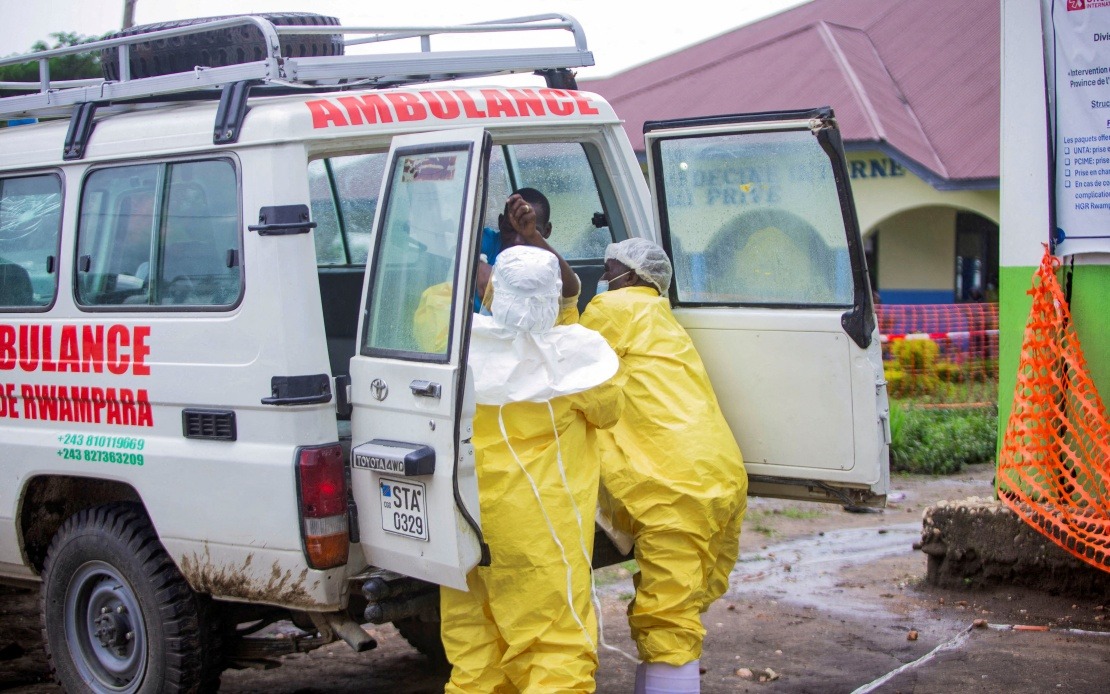
The Democratic Republic of the Congo is grappling with an escalating Ebola outbreak that has now spread into five provinces, signalling the disease's expansion beyond its initial containment zone. Health authorities released updated figures on Sunday covering data through Friday, revealing a nationwide tally of 1,873 confirmed cases accompanied by 672 deaths. The inclusion of Haut-Uele and Tshopo provinces in the official situation report marks the first time these regions have been formally documented as affected areas, indicating the outbreak's geographical reach continues to expand in ways that complicate containment strategies.
The outbreak's geographic pattern reveals a worrying progression of transmission across the mineral-rich eastern regions of the country. Beyond the two newly identified provinces, the virus has been confirmed in Ituri, North Kivu, and South Kivu. Health investigators have determined that cases emerging in Haut-Uele and Tshopo maintain epidemiological links to the original outbreak epicentre in Ituri province, suggesting the virus spread through population movements and direct contact networks rather than jumping randomly to disconnected communities. This tracking proves critical for understanding how Ebola circulates through the DRC's complex social and geographic landscape, where internal migration and trade routes facilitate disease transmission across vast territories.
The strain on medical infrastructure has become acute as treatment capacity nears critical limits. Current figures indicate that 763 patients are either in isolation or receiving active hospital care, while the occupancy rate at treatment facilities has climbed to 95.1 percent. This near-saturation of bed availability creates serious logistical challenges for health authorities attempting to isolate new cases and provide appropriate clinical management. When treatment centres operate at such high capacity, the margin for surge capacity essentially disappears, potentially forcing difficult triage decisions if case numbers continue their upward trajectory.
Recoveries provide a modest counterbalance to the grim mortality statistics. A total of 306 individuals have recovered from confirmed infections, demonstrating that some patients, particularly those receiving timely supportive care, can overcome the infection. However, this recovery figure remains dwarfed by the death toll, reflecting the virus's devastating lethality rate in this outbreak. Additionally, 299 suspected cases remain under investigation, with 91 deaths recorded among this cohort, suggesting that confirmed case numbers may climb further as investigations conclude and suspected cases are either confirmed or ruled out through diagnostic testing.
The responsible agent causing this outbreak, identified as the Bundibugyo ebolavirus, represents one of several known Ebola virus species. The outbreak was formally declared on May 15, meaning the region has been contending with this public health emergency for nearly two months by the time these July figures were released. The Bundibugyo variant has historically caused outbreaks with lower fatality rates compared to certain other Ebola species, yet the death toll in the DRC outbreak remains substantial, highlighting the interaction between viral pathogenicity and local healthcare capacity.
For Malaysian and Southeast Asian observers, this outbreak underscores persistent vulnerabilities in disease surveillance and outbreak response capabilities across Africa, particularly in regions with limited healthcare infrastructure and complex political situations. The DRC's ongoing security challenges in its eastern provinces complicate response efforts, as armed groups and displacement restrict health workers' access to affected communities. The expansion into new provinces demonstrates how quickly Ebola can outpace containment efforts when communities lack awareness, trust in health authorities is compromised, or mobility restrictions cannot be effectively enforced.
The situation carries indirect implications for regional health security planning. Southeast Asia's experience with emerging infectious diseases, from SARS to COVID-19, demonstrates how rapidly outbreaks can transcend borders in an interconnected world. While the DRC's geographic distance from Malaysia may seem protective, the principle remains relevant: monitoring and understanding major disease outbreaks globally helps national health systems prepare for potential regional spread. International health organisations continue tracking the DRC situation closely, and regional authorities benefit from such surveillance data when planning pandemic preparedness strategies.
The treatment facility capacity crisis visible in these statistics reflects fundamental healthcare system limitations that extend beyond Ebola response. The DRC struggles with chronic underfunding and infrastructure deficits that hamper responses to routine health challenges, much less extraordinary epidemic threats. Building sustainable surge capacity requires investments that many developing nations struggle to justify during peacetime, yet such investments become desperately needed when outbreaks occur. This cyclical problem affects not only the DRC but numerous countries across Africa and parts of Asia.
Moving forward, the DRC's public health response must navigate several difficult challenges simultaneously. Expanding treatment capacity while maintaining quality care standards, improving case detection and isolation, conducting effective contact tracing across increasingly affected areas, and maintaining community trust and engagement all demand resources and coordination that existing systems strain to provide. The fact that new provinces continue entering the outbreak picture suggests current containment measures remain insufficient, though determining whether this reflects failure in implementation or the inherent difficulty of controlling a virus with these transmission characteristics requires deeper analysis of response operations on the ground.

