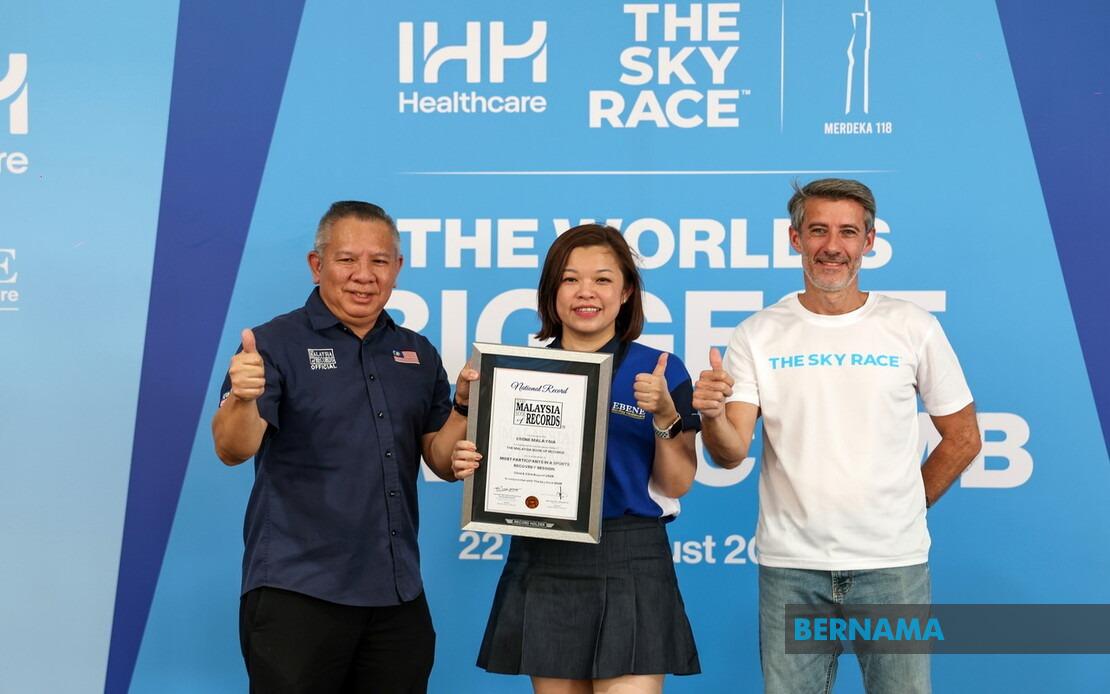
EBENE Bio-Ray Healthcare is leveraging a Malaysia Book of Records attempt to underscore the significance of sports recovery in maintaining an active lifestyle, particularly among runners and tower-running enthusiasts who participated in Sky Race 2026. The event, held at Stadium Merdeka on August 22 and 23, drew approximately 8,000 runners and fitness enthusiasts, providing a substantial platform for the healthcare support company to advance its advocacy around preventative knee care and recovery protocols.
The record attempt centres on achieving the "Most Participants in a Sports Recovery Session," with the company having already exceeded its original target of 1,000 participants. According to Goh Sa Ki, Marketing and E-Commerce Director at EBENE, this initiative reflects the brand's commitment to educating the active population about recovery as an integral component of sports participation, not merely an afterthought once injury occurs. This messaging carries particular resonance in Malaysia, where running communities and fitness movements have expanded substantially over the past decade, yet public awareness of proper recovery mechanics remains comparatively limited.
The partnership between EBENE and Sky Race 2026 reveals an emerging trend in Southeast Asian sports marketing: the alignment of commercial health product promotion with grassroots athletic events. Rather than positioning itself solely as a vendor, EBENE has embedded recovery education into the event experience itself. The company established a dedicated Sports Recovery Zone featuring professional sports massage and guided stretching sessions, transforming spectator and participant downtime into functional recovery opportunities. This approach demonstrates how brands can integrate messaging into lived experience rather than relying exclusively on traditional advertising channels.
Tower running, the featured discipline at Sky Race, presents particular physical demands that validate EBENE's emphasis on preventative care. The vertical climbing format creates intense biomechanical stress concentrated in the knees, lower back, and leg musculature—areas vulnerable to acute strain and chronic overuse injuries. Goh noted that compression socks and knee guards serve dual purposes: preparing the body before exertion and facilitating recovery during the critical post-exercise window. This pre-activity, during-activity, and post-activity framework reflects modern sports science understanding of how proper equipment and support reduce injury risk across the entire athletic continuum.
The broader implications of EBENE's campaign extend beyond commercial positioning. The company's emphasis on proactive knee care—addressing support needs before discomfort emerges—represents a philosophical shift in how Malaysians might approach fitness and wellness. Conventional thinking often treats support products as remedial, purchased only after pain develops. EBENE's positioning inverts this logic, suggesting that integrated knee support from the onset of athletic participation prevents the deterioration that necessitates more intensive intervention later. For Malaysia's growing population of amateur runners and fitness enthusiasts, this messaging may reshape purchasing and self-care decisions.
The record attempt itself functions as a marketing mechanism with quantifiable reach and credibility. The Malaysia Book of Records provides third-party validation that resonates with consumers far more effectively than unsubstantiated company claims. By organising 1,000-plus participants into a single coordinated recovery session, EBENE generates both media coverage and social proof—the visual and experiential evidence that substantial numbers of active Malaysians engage with sports recovery practices. This becomes particularly valuable in markets where fitness adoption rates are still developing and consumers seek community validation for their participation.
EBENE's three-decade track record in the healthcare support category provides contextual weight to its current positioning. The company's longevity in this specialised market indicates sustained investment in product development and market understanding. For Malaysian consumers evaluating knee support and compression products, the brand's established presence offers institutional credibility that newer entrants cannot quickly replicate. This institutional stability becomes relevant when consumers must choose between numerous imported options and locally embedded brands.
The "Move with EBENE" activation series, of which this Sky Race partnership represents the fifth iteration, suggests a systematic approach to building brand association with active lifestyles. Rather than isolated sponsorships, EBENE is constructing a portfolio of touchpoints where target consumers encounter consistent messaging around movement, recovery, and sustained activity. This accumulation of brand exposures across multiple events and contexts creates stronger neural associations than single-instance advertising can achieve.
From a regional perspective, EBENE's strategy reflects how multinational health companies are localising their approaches within Southeast Asian markets. By anchoring campaigns in local events like Sky Race and local credentialing mechanisms like the Malaysia Book of Records, the brand demonstrates cultural and operational sophistication. This approach respects Malaysian market dynamics while maintaining global brand standards—a balance many international companies struggle to achieve effectively.
The event data itself—8,000 participants across the two-day period—indicates the substantial scale of running and fitness culture in Malaysia's urban centres. This audience represents both current consumers and prospects for expanded engagement with recovery-focused products. For EBENE, the conversion opportunity extends beyond immediate sales to building long-term relationships with individuals who experience tangible benefits from proper recovery support during the event itself.
Looking forward, the record attempt and associated recovery initiatives may establish precedent for how sports events in Malaysia integrate health and wellness education. If similar integrated approaches become standard practice, Malaysian athletes will benefit from normalised access to professional guidance on injury prevention and recovery optimisation. The cultural impact of such normalisation could gradually shift how active Malaysians conceptualise their relationship with supportive equipment and professional recovery services.
For fitness enthusiasts considering participation in future running events or tower-running challenges, the visibility of EBENE's recovery offerings at Sky Race 2026 communicates an important message: established sporting events now incorporate wellness infrastructure alongside competitive opportunities. This integrated approach potentially lowers barriers to entry for newer athletes who might otherwise undertake strenuous physical challenges without adequate preparation or recovery support, thereby promoting safer and more sustainable engagement with athletic pursuits across Malaysian communities.

