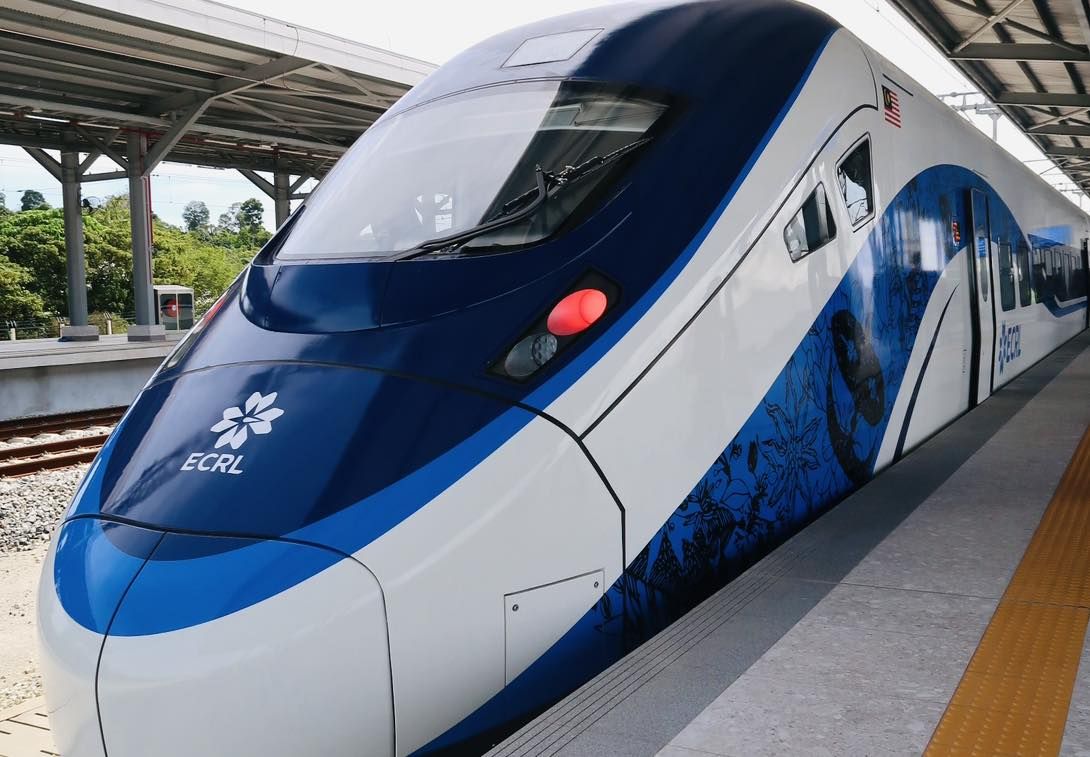
Malaysia's East Coast Rail Link (ECRL) is shaping up to be far more than a transportation backbone, with government projections placing its cumulative economic contribution at between RM80 billion and RM90 billion by 2047. This substantial forecast underscores the administration's vision for the RM50.27 billion infrastructure megaproject as a transformative engine for regional development and modernisation, particularly benefiting the historically under-resourced eastern seaboard.
Deputy Economy Minister Datuk Mohd Shahar Abdullah outlined the mechanisms driving these returns during recent remarks in Kuantan, emphasising that the ECRL's success hinges on 21 Economic Accelerator Projects (EAPs) strategically positioned to capitalise on the new transport corridor. Rather than viewing the rail line as a standalone infrastructure asset, Mohd Shahar characterised it as a catalyst for sustainable economic expansion, investment attraction, and employment generation—priorities that align with the government's broader MADANI Economy framework that places inclusive growth at the centre of policy-making.
Three key logistics hubs are already designated as nodal points within the ECRL ecosystem. Pasir Puteh in Kelantan will command 213 acres (86.2 hectares), substantially larger than its counterparts in Kemaman, Terengganu, where 68 acres (27.5 hectares) have been earmarked, and Temerloh, Pahang, allocated 50 acres (20.2 hectares). These hubs represent the government's strategy to decentralise Malaysia's logistics infrastructure, historically concentrated along the west coast, and to activate dormant economic potential in communities adjacent to the rail network.
One flagship initiative exemplifying this approach is the Perodua logistics hub at Paya Besar in Kuantan, whose first phase is scheduled for completion by 2029. This venture reflects a deliberate effort to anchor major manufacturing and logistics enterprises within the ECRL corridor, thereby generating upstream employment and supporting ancillary industries in transportation, warehousing, and supply-chain management. Such partnerships between government planning and private-sector investment are essential to translating infrastructure into tangible economic activity.
Mohd Shahar, who represents Paya Besar as Member of Parliament, was careful to position the ECRL as complementary to, rather than competitive with, existing maritime and land routes serving Southeast Asia. This framing carries significance for Malaysia's standing within regional trade networks, as it signals that the rail corridor will function as an additional artery in the broader logistics ecosystem rather than cannibalising existing ports and shipping lanes. The distinction matters for reassuring international partners and investors that Malaysia's infrastructure strategy enhances rather than disrupts established trade patterns.
A critical dimension of the ECRL's potential lies in its capacity to narrow economic disparities between Malaysia's developed west coast and the comparatively less industrialised east coast. Federal spending and infrastructure investment have historically tilted westward, concentrating manufacturing hubs, financial services, and consumer markets around Kuala Lumpur, Selangor, and Penang. The ECRL offers a structural opportunity to redistribute growth drivers, empower eastern states with enhanced connectivity, and create localised clusters of economic activity that retain wealth and employment opportunities within their respective regions.
Government allocations for these projects are being channelled through frameworks outlined in the 13th Malaysia Plan, which employs the Malaysia Development Composite Index and the MyRMK system to direct resources with purported precision toward areas of greatest need. This systematic approach contrasts with historical patterns of discretionary spending and aims to introduce greater accountability and evidence-based targeting of development initiatives. Whether these mechanisms deliver on their promise remains an open question, but their formal adoption signals a governance shift toward results-oriented infrastructure planning.
The physical specifications of the ECRL underscore its dual-purpose design. The 665-kilometre railway will operate 11 six-car electric multiple unit (EMU) trains for passenger services, facilitating both commuter travel and inter-city connectivity. Complementing these are 12 electric locomotives for cargo purposes, reflecting the primacy of freight in the project's economic rationale. The emphasis on electric propulsion—for both passengers and freight—aligns with Malaysia's environmental commitments and offers operational cost advantages through reduced fuel consumption over the rail network's lifespan.
The ECRL's scheduled completion in December 2026, with operational commencement in January 2027, places the project within touching distance of full deployment. The timeline is significant for Malaysian policymakers and investors alike, as it determines when the Economic Accelerator Projects can begin leveraging the rail corridor's connectivity advantages. Early operational performance will offer crucial data on ridership, freight volumes, and induced economic activity, informing decisions about potential expansion, frequency adjustments, and ancillary service development.
For Southeast Asian observers, the ECRL's trajectory carries broader implications. Malaysia's successful execution of this megaproject could serve as a template for regional infrastructure ambitions, particularly among nations seeking to harness transport infrastructure for inclusive development. Conversely, shortfalls in achieving projected GDP contributions would invite scrutiny of assumptions embedded in similar megaproject business cases across the region. The RM80 to RM90 billion projection, therefore, functions as both an economic forecast and a test case for infrastructure-led development strategy in Southeast Asia's middle-income growth phase.

